
How to Become a Software Testing Engineer in 2026: Complete Career Guide
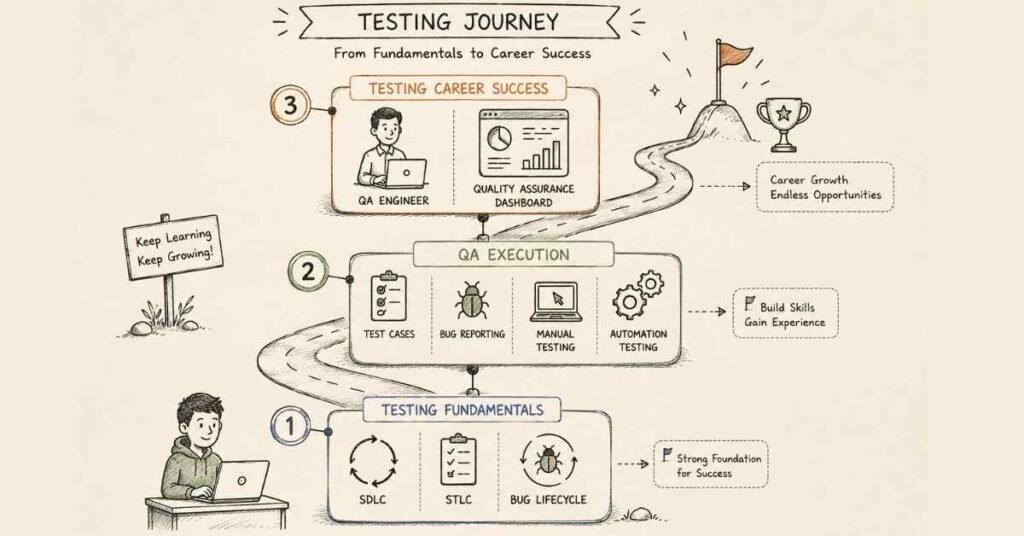
Table of Contents
Software testing engineers are the people who make sure products work before customers ever see them, and that makes the role one of the most important in any tech company. If you enjoy finding bugs, improving product quality, and working with tools that catch problems early, software testing can give you a stable and growing career in India. This guide will show you the exact roadmap to become job-ready in 2026, whether you are a fresher, an IT professional, or someone switching careers.
What a Software Testing Engineer Does
A software testing engineer checks whether software behaves the way it should. The job is to find defects, verify features, and make sure applications are reliable, secure, and easy to use.
Testing is not just about clicking buttons. It is about understanding requirements, planning test cases, reporting bugs clearly, and helping teams ship better products.
Main responsibilities
- Review requirements and identify test scenarios.
- Create test cases and test plans.
- Perform manual testing and automation testing.
- Log defects with clear steps and evidence.
- Retest fixes and verify results.
- Work with developers, business teams, and product teams.
- Support release readiness and quality assurance.
Visit Software Testing Frontlines Edutech →
Why Software Testing Is a Smart Career
Software testing is a smart career because every software product needs quality checks. Whether a company builds banking apps, e-commerce platforms, or internal tools, testing is essential.
The field also has a good entry path for freshers. You do not need to start as a developer to build a strong tech career. If you learn testing concepts, tools, and practical project work, you can enter the industry faster.
Why students choose it
- Lower entry barrier compared to many engineering roles.
- Strong demand in IT services, product companies, and startups.
- Good career stability because quality is always needed.
- Multiple paths into manual QA, automation QA, API testing, and performance testing.
- Easy to move into SDET or QA lead roles later.
Software Testing Roles Compared
Software testing has several career paths. Each one has different skills, tools, and growth opportunities.
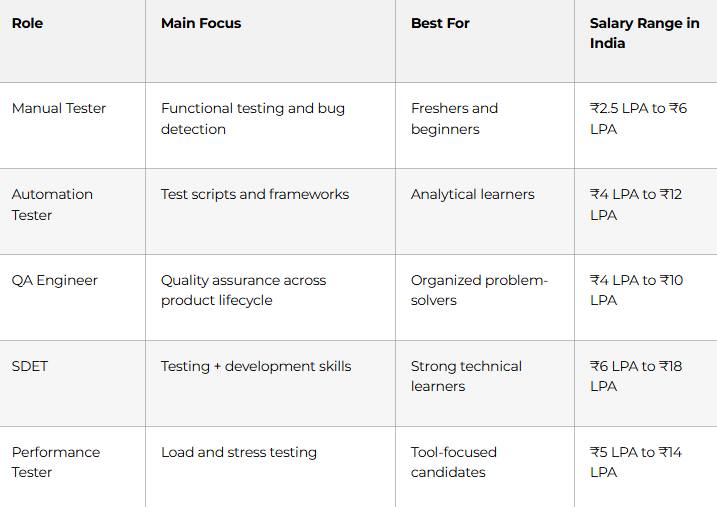
If you are starting out, manual testing is the easiest entry point. If you want faster salary growth, automation testing and SDET roles are strong long-term goals.
Explore Software Testing Career Paths →
Complete Learning Roadmap
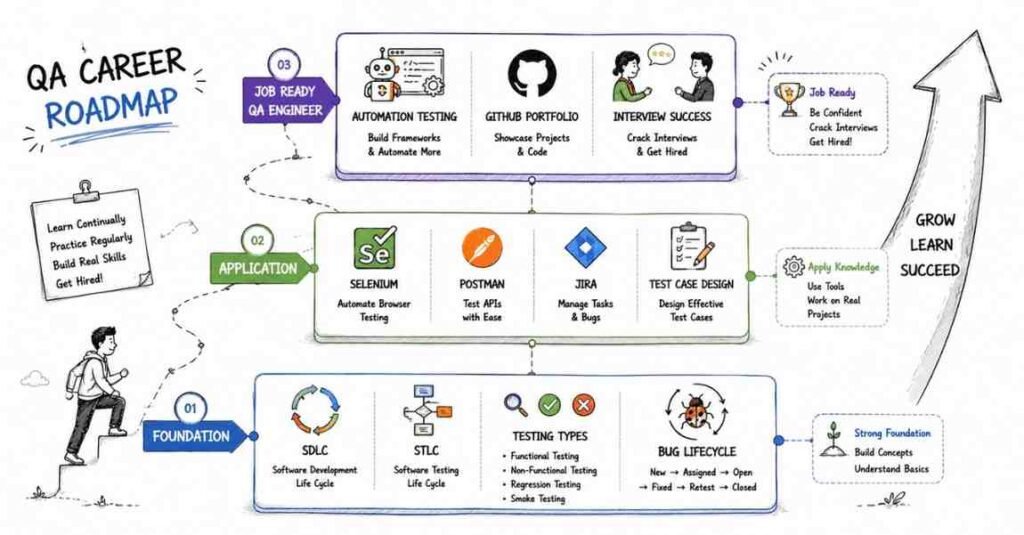
Phase 1: Testing Fundamentals
Before touching tools, learn the basics of quality assurance and test design. This is where you understand why testing matters and how defects are found.
Focus on:
- Software development life cycle.
- Software testing life cycle.
- Verification vs validation.
- Types of testing.
- Test case design techniques.
- Bug life cycle.
- Severity vs priority.
Phase 2: Manual Testing Skills
Manual testing is the foundation of software quality work. You need to know how to read requirements and test features carefully.
Learn these areas:
- Functional testing.
- Smoke testing.
- Sanity testing.
- Regression testing.
- Exploratory testing.
- User acceptance testing.
- Cross-browser testing.
- Mobile app testing.
Phase 3: Test Case Writing
Good test cases show that you understand product behavior. A strong tester can write simple, clear, and complete test cases.
Each test case should include:
- Test case ID.
- Title.
- Preconditions.
- Steps.
- Test data.
- Expected result.
- Actual result.
- Status.
Phase 4: Automation Basics
Once manual testing is clear, move into automation. Automation helps you test repetitive scenarios faster and more consistently.
Learn:
- Programming basics in Java or Python.
- Selenium WebDriver.
- Locators and waits.
- TestNG or PyTest.
- Page Object Model.
- Data-driven testing.
- Framework basics.
- Git and version control
Phase 5: API and Advanced Testing
Modern software testing goes beyond the UI. Many applications depend heavily on APIs and backend services.
Learn:
- API testing with Postman.
- REST basics.
- Status codes.
- Request and response validation.
- JSON handling.
- Database testing basics.
- Performance testing basics.
- Security testing basics.
View Technology Software Testing Roadmaps →
Manual Testing and Automation Testing
A strong software testing engineer should understand both manual and automation testing. Manual testing is best for discovering user experience issues and validating new features. Automation testing is best for repeated checks and regression work.
Manual testing skills
- Requirement analysis.
- Test case design.
- Exploratory testing.
- Defect reporting.
- Retesting and verification.
Automation testing skills
- Writing scripts.
- Running test suites.
- Framework design.
- Handling dynamic elements.
- Integrating tests into CI/CD.
Tools to learn
- Selenium.
- TestNG.
- PyTest.
- Postman.
- Jira.
- Git.
- Jenkins.
- JMeter.
Salary Expectations in India
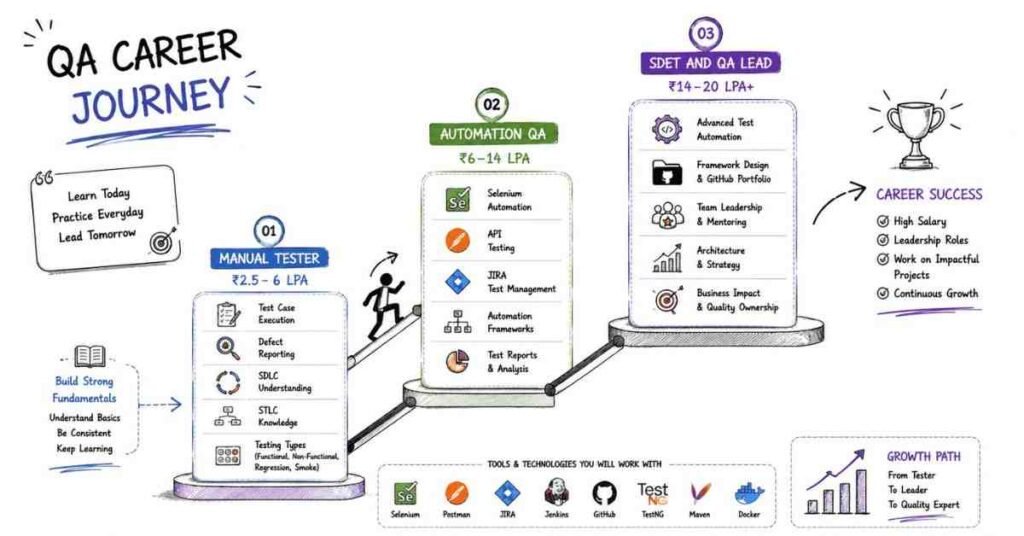
Salary depends on skills, tool knowledge, company type, and project experience. Manual testing usually starts lower, while automation and SDET roles pay more.
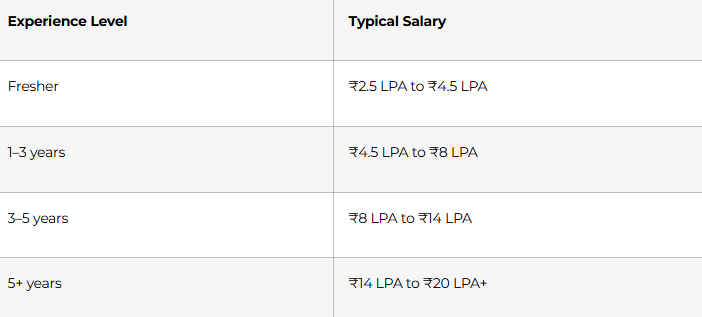
Testing professionals who combine automation, API testing, and CI/CD knowledge usually move ahead faster. Product companies and SaaS firms often pay more than basic support-service projects.
Portfolio That Gets Interviews
Your portfolio should prove that you can test real applications. Recruiters like candidates who can show bug reports, test cases, automation scripts, and project documents.
What to include
- Sample test plan.
- Test case document.
- Bug report examples.
- Selenium or automation project.
- API test collection in Postman.
- Basic performance test report.
- GitHub repository with code and notes.
Portfolio checklist
- Keep everything neatly organized.
- Add screenshots where useful.
- Show business impact where possible.
- Mention tools and frameworks clearly.
- Make sure your work is easy to review.
Job Search Strategy
A software testing resume should show both process knowledge and hands-on practice. Many freshers fail because they list only theory and no projects.
Resume keywords
- Manual testing
- Test case design
- Bug reporting
- Selenium
- TestNG
- Postman
- API testing
- Regression testing
- Jira
- Jenkins
- Agile testing
- SQL basics
Where to apply
- LinkedIn Jobs
- Naukri
- Indeed
- company career pages
- testing and QA communities
- startup and service company boards
Interview preparation
Be ready to answer questions like:
- What is the difference between severity and priority?
- How do you write a test case?
- What is regression testing?
- How do you test a login page?
- What is the difference between manual and automation testing?
- How do you validate an API response?
Explore Software Testing Interview Guides →
30-Day Starter Plan
If you want to begin now, follow this simple plan.
Week 1
- Learn SDLC and STLC.
- Understand testing types.
- Read about bug life cycle.
- Create basic notes on QA concepts.
Week 2
- Practice writing test cases.
- Learn how to report bugs.
- Study severity and priority.
- Test sample websites manually.
Week 3
- Learn Selenium basics.
- Understand locators and browser commands.
- Create your first automation script.
- Practice Git basics.
Week 4
- Learn Postman and API testing.
- Build one simple testing project.
- Prepare your resume.
- Apply for internships and junior QA roles.
Why Learn Software Testing at Frontlines Edutech
Frontlines Edutech is a practical choice for students and working professionals who want structured learning, regional support, and job-focused QA training. The best programs combine manual testing, automation testing, project work, and interview preparation.
What to look for in training
- Manual testing foundation.
- Selenium and automation practice.
- API testing with Postman.
- Real project assignments.
- Resume and interview support.
- Regional-language explanation if needed.
Frequently Asked Questions
Q1.How long does it take to become a software testing engineer?
A.It usually takes 3 to 6 months of consistent learning to become job-ready, depending on how much practical work you do and how fast you learn tools.
Q2.Is software testing a good career in India?
A.Yes, it is a strong career because every software product needs quality assurance. It is especially good for freshers who want a practical entry into IT.
Q3.Which skill should I learn first?
A.Start with manual testing concepts such as SDLC, STLC, test cases, and bug reporting. After that, move into Selenium, API testing, and automation frameworks.
Q4.Do I need coding to become a software testing engineer?
A.You do not need advanced coding for manual testing, but automation testing requires basic programming knowledge. Java or Python is usually the best place to start.
Q5.What is the best specialization for beginners?
A.Manual testing is the easiest starting point. After that, automation testing and API testing are the best next steps for salary growth.
Q6.Can I get a job without experience?
A.Yes, if you have practical projects, test cases, bug reports, and basic tool knowledge. Internships and hands-on practice help a lot.
Q7.Which tools should I learn first?
A.Start with Jira, Selenium, Postman, Git, and TestNG or PyTest. These cover the most common entry-level QA tasks.
Q8.Is software testing remote-friendly?
A.Yes, many QA roles are remote-friendly because testing work can often be done online with the right access and coordination.
Q9.What kind of projects should I show in interviews?
A.Show test cases, bug reports, automation scripts, API test collections, and sample test plans. Employers want proof that you can test real features clearly and consistently.