
90-Day Software Testing Course Roadmap: From Beginner to Job-Ready QA Engineer
Table of Contents
This 90-day software testing roadmap is designed to take you from complete beginner to job-ready QA engineer with a practical, step-by-step plan. You will start with manual testing fundamentals and test case design, then move into defect reporting, SQL basics, Selenium automation, API testing, Agile, and real projects before finishing with interview preparation. The goal is simple: help students in Hyderabad, Telangana, Andhra Pradesh, and across India learn the testing skills that employers actually ask for. Software testing roles are in demand because every app and website needs quality checks before release. By the end of 90 days, you should be ready for entry-level QA jobs with confidence and a solid project portfolio.
Why Software Testing Is a Smart Career Choice
Software testing is one of the most practical careers in IT because every product needs to be checked before users see it. Companies need testers who can find bugs, verify requirements, create test cases, and make sure software behaves correctly. That is why testing skills are useful across IT services, product companies, fintech, healthcare, e-commerce, and consulting.
This is also a field where practical knowledge matters more than memorizing theory. If you can design test cases, report defects clearly, understand SQL, and automate basic test scenarios, you already have what many employers want. That is why this roadmap focuses on hands-on learning from the beginning.
- Software testing protects product quality before release.
- It is used across IT services, product companies, and enterprise teams.
- Entry-level candidates can grow quickly with strong project work.
- The skill set is useful for both freshers and working professionals.
- QA knowledge often leads to strong long-term career growth.
90-Day Learning Plan
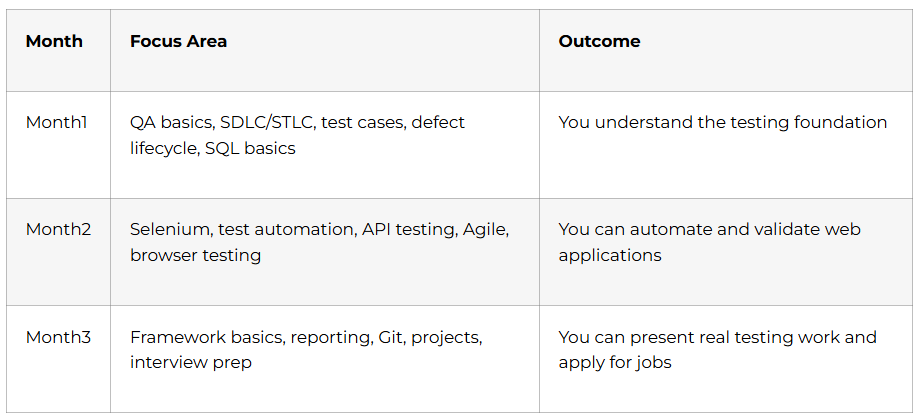
Month 1: Manual Testing Foundations
Month 1 is all about building the base. If you skip the basics, the advanced topics will feel confusing later. QA concepts, test design, and defect management are the everyday language of software testing, so this month gives you the confidence to work on real projects.
Week 1: Testing Basics
Software testing is the process of checking whether software works correctly and meets business expectations. Learn the difference between verification and validation, and understand why testing is needed at every stage of development. You should also know the role of a QA engineer inside a software team.
- Learn what software testing is.
- Understand verification vs. validation.
- Study the role of a QA engineer.
- Explore why bugs happen.
- Practice identifying simple defects.
Week 2: SDLC and STLC
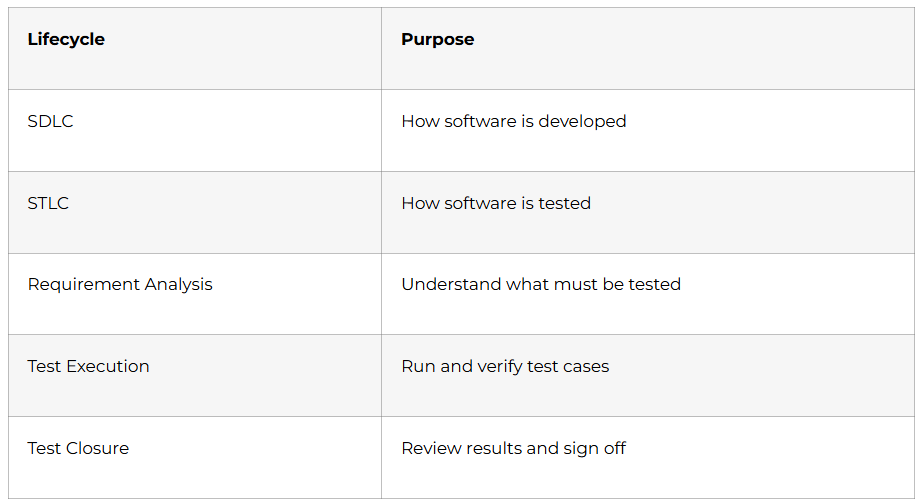
A tester needs to understand how software is built and tested. Learn the Software Development Life Cycle and the Software Testing Life Cycle. Understand requirements gathering, planning, design, execution, and closure. This week is important because good testing starts with knowing the full process.
Week 3: Test Cases and Defect Reporting
Test cases are one of the most important tools in manual testing. Learn how to write test cases with steps, expected results, actual results, and priorities. Also study defect reporting so you can communicate bugs clearly to developers and stakeholders. Good testing is not just about finding problems; it is about describing them properly.
- Learn how to write test cases.
- Practice positive and negative scenarios.
- Understand severity and priority.
- Write clear defect reports.
- Review bug life cycle basics.
Week 4: Month 1 Review and Mini Project
By the end of Month 1, you should be able to explain testing basics, write simple test cases, and report defects properly. Use this week to revise key concepts and build a small project such as testing a login page or an e-commerce checkout flow with test scenarios and defect samples.
Month 2: Automation and API Testing
Month 2 is where you begin to work like a modern QA professional. You move from manual checking to browser automation, API validation, and tool-based testing. This is the stage where software testing starts feeling like a practical job skill instead of a theory subject.
Week 5: Selenium Basics
Selenium is one of the most popular tools for web automation testing. Learn browser handling, locating elements, clicking buttons, entering text, and reading page results. You should understand how automation helps reduce repetitive manual work and improve test speed.
- Learn Selenium project setup.
- Understand browser automation basics.
- Practice locating web elements.
- Use clicks, inputs, and assertions.
- Build simple automated test scripts.
Week 6: Selenium with Test Framework Ideas
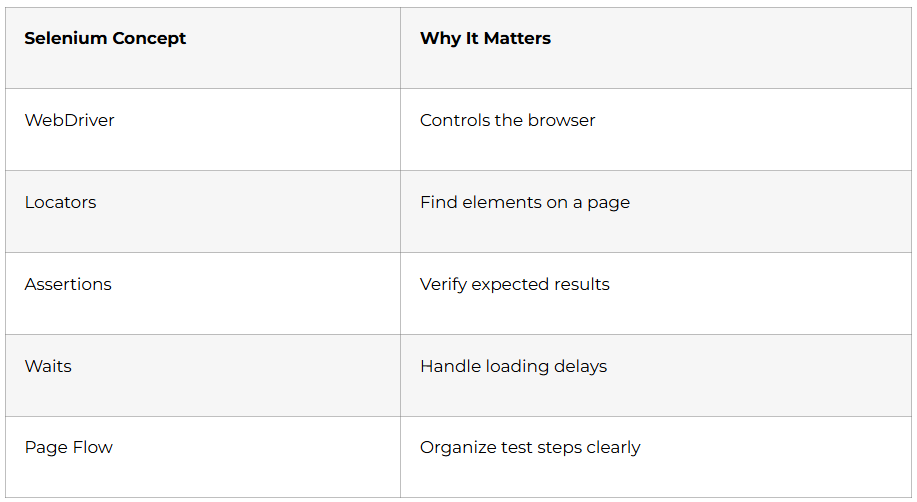
After basic Selenium, focus on structure and reusability. Learn how test scripts are organized and why automation projects need clean design. Understand assertions, waits, and basic test flow management. This week helps you write scripts that are easier to maintain.
Week 7: API Testing
Modern applications depend heavily on APIs. Learn what APIs are, how requests and responses work, and how testers validate them. Study GET, POST, PUT, DELETE, JSON, headers, and response status codes. API testing is important because many bugs happen in the backend before the user even sees the interface.
- Learn REST API basics.
- Understand request and response structure.
- Practice validating JSON data.
- Study status codes and headers.
- Explore simple API testing tools.
Week 8: Agile and Browser Testing
Agile is the way many software teams work today. Learn sprint planning, user stories, stand-ups, and how testers fit into Agile teams. Also study cross-browser testing and responsive checks because users access applications on different devices and browsers. By the end of Month 2, you should be able to test apps across both manual and automated workflows.
Month 3: Test Strategy, Reporting, and Career Readiness
Month 3 focuses on making you job-ready. You will combine the tools you learned, practice reporting workflows, and prepare projects that you can show employers. A good QA portfolio proves that you can test, document, and explain software quality work, not just memorize terms.
Week 9: SQL for Testers
SQL helps testers verify data stored in databases. Learn SELECT, WHERE, ORDER BY, joins, and basic filtering so you can validate backend data. SQL is a highly useful skill in interviews because many QA roles expect database checking ability.
- Learn basic SQL queries.
- Understand how to verify data in tables.
- Practice joins and filters.
- Review test data validation ideas.
- Use SQL for backend confirmation.
Week 10: Test Reporting and Bug Tracking
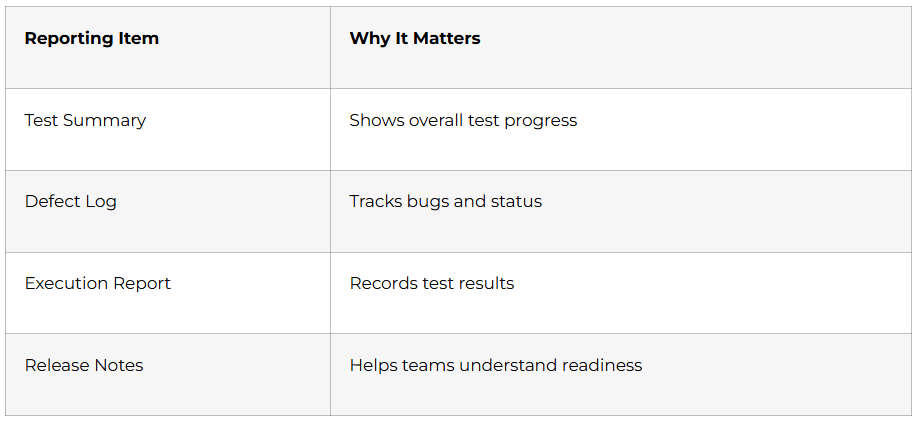
Reporting is a major part of QA work because teams need to know what was tested, what failed, and what is ready to release. Learn how to prepare test summary reports, defect logs, and status updates. Also understand how bug tracking tools help teams manage issues from discovery to closure.
Week 11: Git and Project Building
Use this week to build portfolio projects that prove your skills. Store test scripts and reports in GitHub, and create a small project around a login system, shopping cart, or booking flow. Make sure your project includes test cases, defect reports, API checks, and automation scripts where possible.
Week 12: Interview Prep and Portfolio Launch
The final week should be used for resume building, LinkedIn optimization, portfolio updates, and interview practice. Be ready to explain your testing process, the defects you found, and how you validated quality. Employers want students who can think clearly, write well, and improve product reliability.
Software Testing Career Paths and Salary Guide
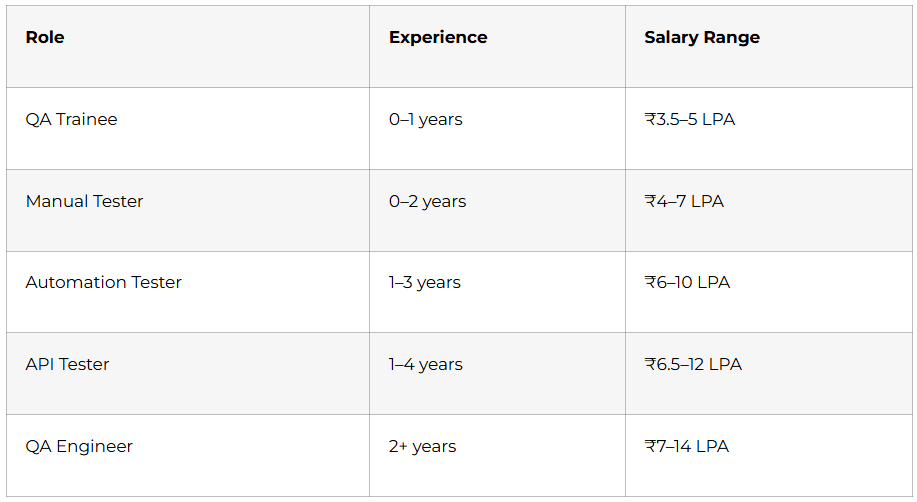
Software testing salaries depend on skills, project quality, and company type, but the field remains one of the most beginner-friendly tech careers. Hyderabad, Bangalore, Pune, Chennai, and Gurgaon are active hiring locations. Candidates who know manual testing, Selenium, API testing, SQL, and bug reporting usually stand out quickly.
Why Choose Frontlines Edutech
Frontlines Edutech helps students learn practical, job-focused skills in a way that feels clear and achievable. The training is designed for beginners who want real testing understanding, not just theory. Students also benefit from guided learning, interview support, and a roadmap that matches current industry needs.
- Hands-on learning with real projects.
- Beginner-friendly explanations for complex topics.
- Job-focused curriculum with practical outcomes.
- Support for resumes, interviews, and career preparation.
- Training aligned with Indian hiring expectations.
Frequently Asked Questions
Q1: Do I need coding experience to learn software testing?
No, you do not need advanced coding experience to start. Basic computer knowledge is enough for the first month, and automation tools are introduced gradually.
Q2: What is the salary for a software testing fresher in India?
A software testing fresher in India can typically expect around ₹3.5 to ₹5 LPA, depending on the role, company, and skill level. Candidates with automation and SQL skills can earn more.
Q3: Is software testing a good career for beginners?
Yes, software testing is a strong career option for beginners because every software product needs quality checks. It offers good demand, structured roles, and clear growth paths.
Q4: What will I learn in this 90-day roadmap?
You will learn manual testing, SDLC/STLC, test cases, defect reporting, Selenium, API testing, Agile, SQL, reporting, and interview preparation. You will also work on practical projects and portfolio building.
Q5: Can I get a job after learning software testing in 90 days?
Yes, you can become job-ready in 90 days if you practice regularly and build projects. A strong portfolio and interview preparation are important for getting shortlisted.
Q6: Does software testing use SQL heavily?
Yes, SQL is an important part of testing work. Testers often use SQL to validate backend data and confirm that the database matches the application output.
Q7: What kind of jobs can I apply for after this course?
You can apply for QA trainee, manual tester, automation tester, API tester, and QA engineer roles. With more experience, you can grow into senior QA and test lead positions.
Q8: Is software testing used in real companies?
Yes, software testing is used by IT services firms, product companies, banks, hospitals, and enterprise teams to ensure quality before release. That is what makes it such a practical career path.
Published by Frontlines Edutech | blog.frontlinesedutech.com
For enrollments: +91-83330 77727 | support@frontlinesedutech.com