
How to Become a SAP ABAP Developer in 2026: Complete Career Guide
Table of Contents
SAP ABAP developers build and customize business applications inside the SAP ecosystem, which makes the role highly valuable in enterprise companies across industries. If you can learn Core ABAP, S/4HANA, CDS Views, RAP, and integrations, you can build a strong and stable career in India. This guide shows you the exact roadmap to become job-ready in 2026, whether you are a fresher, a programmer, or someone moving into SAP development from another background.
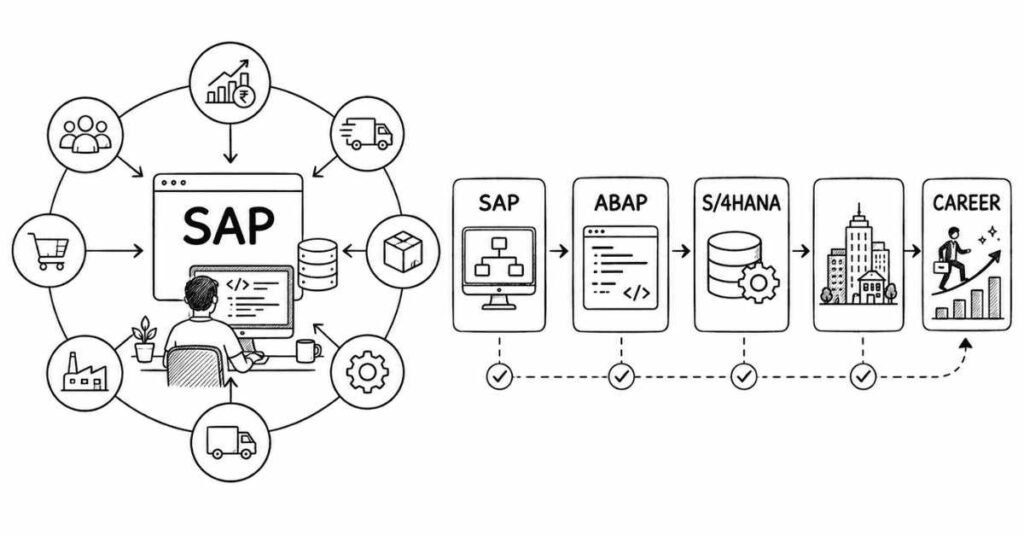
What a SAP ABAP Developer Does
A SAP ABAP developer writes and maintains custom programs inside SAP systems. The work includes reports, forms, data processing logic, enhancements, and modern SAP development objects.
In simple terms, a SAP ABAP developer helps companies adapt SAP to their business needs by building custom functionality and making SAP processes work smoothly.
Main responsibilities
- Write custom ABAP programs.
- Create reports, forms, and interfaces.
- Build enhancements and exits.
- Work with SAP tables and data.
- Develop object-oriented ABAP solutions.
- Support migration to S/4HANA.
- Build CDS Views and RAP objects.
- Test, debug, and maintain SAP code.
Why SAP ABAP Is a Smart Career
SAP ABAP is a smart career because SAP remains one of the most widely used enterprise systems in the world. Large organizations rely on it for finance, procurement, logistics, HR, and operations, which creates steady demand for skilled ABAP developers.
The role is also practical because it combines programming, business processes, and enterprise systems knowledge. That makes it a strong choice for people who want a specialized and long-term IT career.
📍 Follow the Complete SAP ABAP Roadmap
Why students choose it
- Strong enterprise demand.
- Stable career path.
- Useful across many industries.
- Good salary growth with experience.
- Strong relevance in SAP S/4HANA projects.
SAP ABAP Roles Compared
SAP has multiple technical and functional paths, and ABAP is one of the most important development tracks.
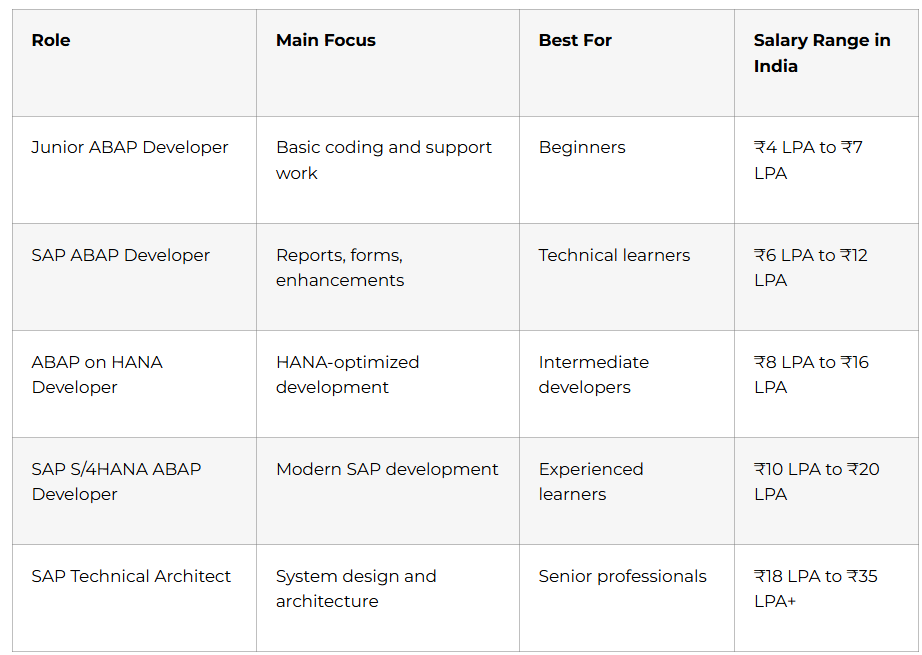
If you are starting out, the ABAP developer path is a strong choice because it gives you a clear entry into enterprise SAP projects and long-term career growth.
🛤️ Discover the SAP ABAP Career Path
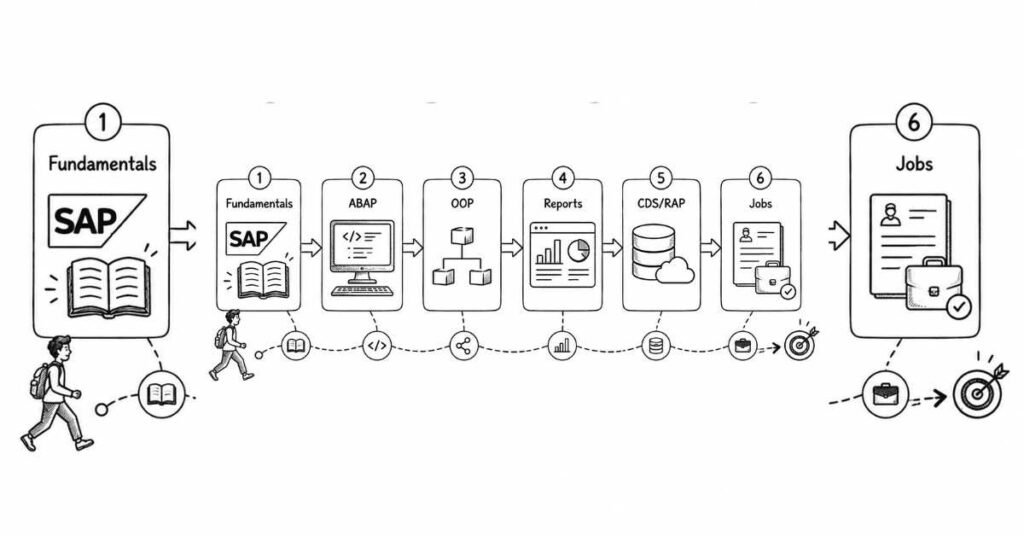
Complete Learning Roadmap
Phase 1: SAP Fundamentals
Before learning ABAP, you need to understand how SAP works as a business platform. This foundation helps you understand the logic behind programs and reports.
Focus on:
- SAP basics and modules.
- Client, system, and landscape concepts.
- Tables and data structures.
- User roles and authorization basics.
- Business process overview.
- Transport and development basics.
Phase 2: Core ABAP Programming
Core ABAP is the foundation of everything else. You need to understand syntax, logic, and data handling before moving to advanced topics.
Learn:
- Variables and data types.
- Internal tables.
- Work areas and field symbols.
- Loops and conditionals.
- Modularization techniques.
- Subroutines and function modules.
- Reports and selection screens.
- Debugging basics.
Phase 3: Object-Oriented ABAP
Modern SAP development depends on object-oriented coding. This makes your programs cleaner, reusable, and easier to maintain.
Learn:
- Classes and objects.
- Encapsulation.
- Inheritance.
- Polymorphism.
- Interfaces.
- Constructor and method handling.
- Exception handling.
Phase 4: SAP Data and Reports
Most ABAP work involves handling data correctly and presenting it in useful formats. This is where reporting and data access become important.
Learn:
- Transparent tables.
- Joins and data retrieval.
- ALV reports.
- Selection screens.
- Interactive reports.
- Smart Forms and Adobe Forms.
- Data dictionary objects.
Phase 5: S/4HANA, CDS, and RAP
Modern SAP development has moved beyond only classic ABAP. Companies now expect knowledge of newer S/4HANA tools and patterns.
Learn:
- SAP HANA basics.
- Code optimization for HANA.
- CDS Views.
- AMDP basics.
- RAP framework.
- OData services.
- Fiori integration basics.
Phase 6: Integrations and Deployment
ABAP developers often work with interfaces and data exchange between systems. This makes integration knowledge very useful.
Learn:
- RFC basics.
- BAPI usage.
- IDocs.
- API concepts.
- Transport management.
- Error handling.
- Testing and debugging workflows.
Core ABAP, S/4HANA, and CDS
These are the most important pillars of a modern SAP ABAP career.
Core ABAP skills to master
- Reports and forms.
- Internal tables.
- Function modules.
- Enhancements and exits.
- Debugging.
- Modular programming.
S/4HANA skills to master
- HANA-aware coding.
- Performance optimization.
- Modern SAP architecture.
- Migration awareness.
- Simplified data structures.
CDS and RAP skills to master
- CDS View creation.
- Associations and annotations.
- RAP business objects.
- Modern data exposure.
- API-ready development.
Salary Expectations in India
Salary depends on your SAP module knowledge, project experience, and familiarity with modern SAP development. Developers who know both Core ABAP and S/4HANA concepts usually grow faster.
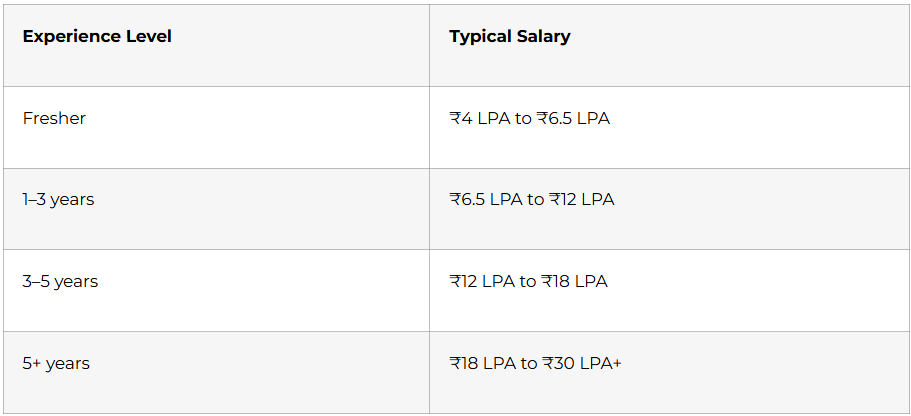
Professionals who move into HANA, RAP, or SAP technical architecture can reach even better salary growth.
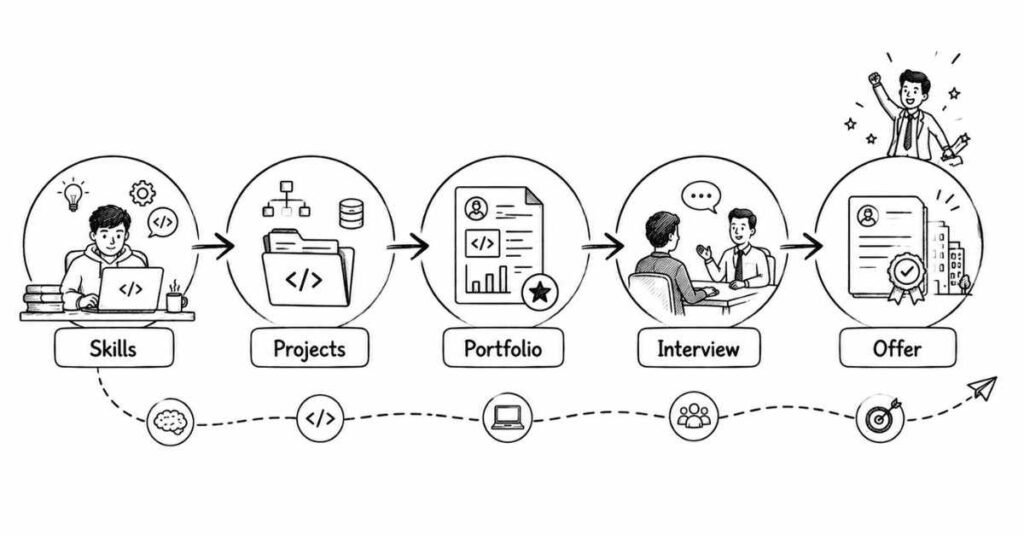
Portfolio That Gets Interviews
A strong portfolio helps you prove that you can build real SAP solutions. Recruiters want to see practical work, not just training certificates.
What to include
- ABAP report program.
- Internal table project.
- ALV report.
- Smart Form or Adobe Form.
- CDS View example.
- OData or RAP demo.
- Debugging and enhancement case study.
Portfolio checklist
- Show business problem and solution.
- Include screenshots or documentation.
- Explain tables, logic, and output.
- Keep code clean and readable.
- Mention SAP concepts used.
- Demonstrate both classic and modern ABAP skills.
Job Search Strategy
An ABAP resume should clearly show technical depth and SAP platform understanding. Employers want developers who can support enterprise systems and adapt to modern SAP development.
Resume keywords
- SAP ABAP
- Core ABAP
- CDS Views
- RAP
- Smart Forms
- ALV reports
- Internal tables
- Enhancements
- RFC
- BAPI
- IDoc
- S/4HANA
Where to apply
- LinkedIn Jobs
- Naukri
- Indeed
- SAP partner companies
- enterprise IT services firms
- ERP implementation companies
Interview preparation
Be ready to answer questions like:
- What is SAP ABAP used for?
- What are internal tables?
- What is the difference between standard and hashed tables?
- How do you debug an ABAP program?
- What is the purpose of CDS Views?
- What is the RAP framework?
- How do enhancements work in SAP?
🎯 Preparing for SAP ABAP Interviews?
30-Day Starter Plan
If you want to begin now, follow this simple plan.
Week 1
- Learn SAP basics.
- Understand tables and data structures.
- Review ABAP syntax.
- Practice simple programs.
Week 2
- Learn internal tables.
- Build reports and selection screens.
- Practice debugging.
- Explore ALV output.
Week 3
- Study object-oriented ABAP.
- Learn forms and enhancements.
- Practice modular programming.
- Review integration basics.
Week 4
- Explore CDS and RAP basics.
- Build one portfolio project.
- Update your resume and LinkedIn.
- Start applying for junior ABAP roles.
Why Learn SAP ABAP at Frontlines Edutech
Frontlines Edutech is a practical choice for students and working professionals who want structured learning, regional support, and career-focused training. The best programs combine Core ABAP, S/4HANA concepts, CDS Views, RAP, and project-based learning in a way that makes job readiness realistic.
What to look for in training
- Strong Core ABAP foundation.
- S/4HANA and HANA exposure.
- CDS and RAP practice.
- Reports, forms, and enhancements.
- Resume and interview support.
- Regional-language explanation if needed.
Frequently Asked Questions
How long does it take to become a SAP ABAP developer?
It usually takes 4 to 8 months of consistent learning to become job-ready, depending on your background and how much practical project work you complete.
Is SAP ABAP a good career in India?
Yes, it is a strong career because many large companies depend on SAP for enterprise operations and need developers who can customize and support it.
Which skill should I learn first?
Start with SAP basics and Core ABAP. After that, move into internal tables, reports, debugging, and object-oriented ABAP.
Do I need coding experience to become an ABAP developer?
You need basic programming logic, but you do not need advanced coding at the beginning. Many learners enter ABAP after learning simple procedural programming concepts.
What is the best specialization for beginners?
Core ABAP with reporting and debugging is the best starting point. Once you are comfortable, move into S/4HANA, CDS Views, and RAP.
Can I get a job without experience?
Yes, if you have practical projects, a clean resume, and a strong understanding of ABAP basics and SAP business logic. Internships and mock projects can help a lot.
Which tools should I learn first?
Start with SAP GUI, ABAP Workbench, debugging tools, and basic reporting objects. Then move into CDS, RAP, and integration concepts.
Is SAP ABAP development remote-friendly?
Yes, many SAP roles are remote-friendly because the work can be done through enterprise systems and collaboration tools, especially in support and development teams.
What kind of projects should I show in interviews?
Show an ABAP report, ALV output, Smart Form, CDS View, and one integration or enhancement example. Employers want to see that you can build and explain complete SAP solutions.