How to Become a SAP ABAP Developer: Complete Career Guide [₹13L Average Salary]

Master SAP ABAP enterprise resource planning and drive business process optimization

SAP ABAP Developers are essential for organizations running on SAP systems, with average salaries ranging from ₹5-20 LPA in India and senior SAP architects earning ₹40+ LPA. As enterprises continue to rely on SAP for critical business processes and undergo digital transformation initiatives, the ability to customize, enhance, and integrate SAP applications using ABAP programming has become one of the most stable and lucrative specializations in enterprise software development.

Whether you’re an IT professional seeking to specialize in enterprise systems, a programmer looking to enter the SAP ecosystem, or a business analyst wanting to transition into technical SAP development, this comprehensive guide provides the proven roadmap to building a successful SAP ABAP career. Having trained over 480 SAP professionals at Frontlines EduTech with a 93% job placement rate, I’ll share the strategies that consistently deliver results in this high-demand, recession-proof field.

What you’ll master in this guide:

  • Complete SAP ABAP learning pathway from fundamentals to advanced development
  • Essential SAP modules including SD, MM, FI/CO, and HR integration
  • Portfolio projects demonstrating real business process implementations
  • Advanced topics in SAP HANA, S/4HANA migration, and cloud integration
  • Career advancement opportunities in SAP consulting and solution architecture
Kickstart Your SAP Career 🚀 →
Explore All SAP Learning Resources
how to become a SAP ABAP

1. What is SAP ABAP Development?

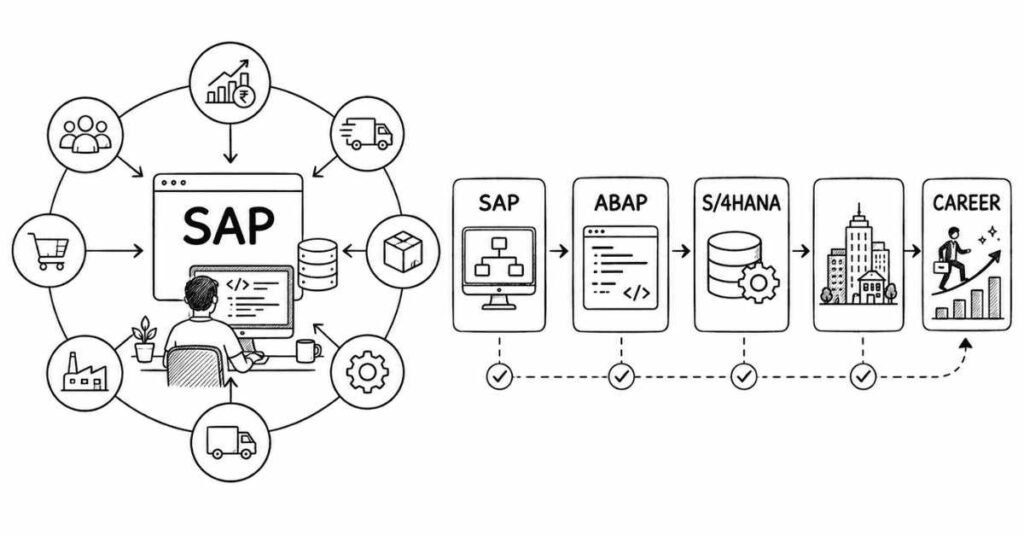
SAP ABAP (Advanced Business Application Programming) Development involves creating, customizing, and maintaining enterprise applications within the SAP ecosystem to support business processes across finance, logistics, human resources, and manufacturing. ABAP developers bridge the gap between business requirements and technical implementation, ensuring SAP systems deliver optimal value for organizations while maintaining data integrity, performance, and compliance.

Core Components of SAP ABAP Development:

ABAP Programming Fundamentals:

  • Core Language Features – Data types, variables, control structures, modularization, object-oriented programming
  • Database Programming – Open SQL, native SQL, database tables, views, indexes, performance optimization
  • Report Development – Classical reports, interactive reports, ALV reports, smartforms, Adobe forms
  • Dialog Programming – Screen development, module pools, table controls, tabstrip controls, user interface design
 

SAP Module Integration:

  • SD (Sales & Distribution) – Order processing, pricing, delivery, billing, customer management
  • MM (Materials Management) – Procurement, inventory management, vendor management, purchase orders
  • FI/CO (Finance & Controlling) – Financial accounting, cost accounting, budgeting, profitability analysis
  • HR (Human Resources) – Personnel administration, payroll processing, time management, organizational management
 

Advanced Development Technologies:

  • SAP NetWeaver – Application server architecture, work processes, RFC communication, web services
  • SAP HANA Integration – Column-based storage, in-memory computing, CDS views, AMDP procedures
  • S/4HANA Development – Fiori apps, OData services, UI5 development, embedded analytics
  • Cloud Integration – SAP Cloud Platform, API management, hybrid scenarios, microservices
 

Enterprise System Architecture:

  • Performance Optimization – Code optimization, database tuning, memory management, parallel processing
  • Integration Technologies – IDocs, RFCs, BAPIs, web services, REST APIs, middleware connectivity
  • Security and Authorization – User roles, authorization objects, secure coding practices, compliance
  • Testing and Quality Assurance – Unit testing, integration testing, transport management, version control

Traditional Programming vs SAP ABAP Development

Traditional Application Development:

  • General-purpose programming languages for custom applications
  • Database-agnostic development with multiple technology choices
  • Smaller user bases with limited integration requirements
  • Independent deployment and maintenance cycles
 

SAP ABAP Development Advantages:

  • Enterprise Scale – Systems handling billions of transactions for Fortune 500 companies
  • Business Process Integration – Deep integration across all business functions
  • Global Standard – Consistent development practices across industries and countries
 

Career Stability – Long-term contracts and stable employment in enterprise environments

2. Why Choose SAP ABAP?

SAP ABAP

Massive Enterprise Market and Continued Growth

According to SAP’s Market Analysis 2025, SAP systems power 87% of Fortune Global 2000 companies. SAP ABAP skills remain in highest demand across industries:

Enterprise SAP Implementations:

  • Manufacturing – Production planning, quality management, maintenance, supply chain optimization
  • Financial Services – Core banking, risk management, regulatory reporting, customer relationship management
  • Retail and Consumer Goods – Merchandising, demand planning, customer analytics, omnichannel commerce
  • Public Sector – Government finance, citizen services, regulatory compliance, resource management
 

S/4HANA Migration Wave:

  • Digital Transformation – Organizations migrating from ECC to S/4HANA creating massive demand
  • Modernization Projects – Legacy system upgrades, cloud migrations, process reengineering
  • Skills Gap – Shortage of experienced ABAP developers familiar with S/4HANA technologies
  • Investment Scale – Companies spending millions on SAP transformation projects


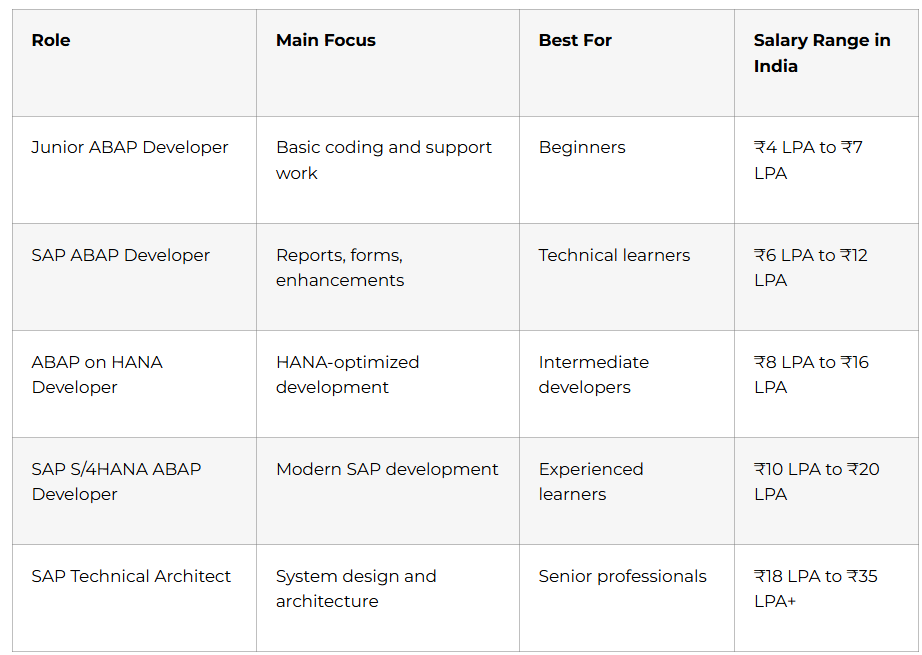
Premium Compensation for Enterprise Expertise

SAP ABAP developers command higher salaries due to specialized enterprise knowledge:

sap abap

Source: Naukri SAP Salary Report , PayScale SAP ABAP

Global Consulting Opportunities and Career Flexibility

SAP expertise opens doors to international opportunities:

  • Global Projects – Work with multinational corporations across industries
  • Consulting Career Path – High-value consulting opportunities with Big 4 and SAP partners
  • Remote Work Options – Many SAP projects support remote and hybrid work arrangements
  • Geographic Mobility – SAP skills transferable across countries and regions
 

Technology Evolution and Future-Proofing

SAP continues evolving with modern technology trends:

  • Cloud-First Strategy – SAP’s focus on cloud solutions creating new opportunities
  • AI and Machine Learning – Integration of AI capabilities within SAP applications
  • Mobile and User Experience – Fiori and mobile development expanding ABAP scope
  • Industry 4.0 – IoT integration, real-time analytics, and smart manufacturing
📈SAP ABAP is in Huge Demand! 
Start Learning with Our Beginner Course →

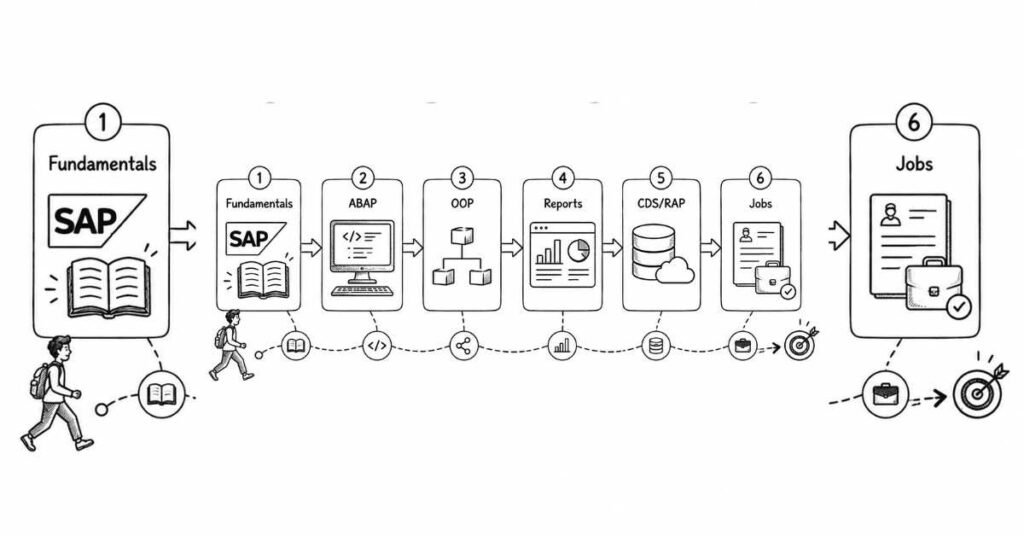
3. Complete Learning Roadmap (4-6 Months)

SAP ABAP Roadmap

.Phase 1: SAP Fundamentals and ABAP Programming Basics (Month 1-2)

SAP System Architecture and Navigation (2-3 weeks)
Understanding SAP system landscape is crucial before diving into programming:

  • SAP System Landscape – Development, quality, production systems, transport management
  • SAP GUI Navigation – Transaction codes, menu structure, session management, customization
  • SAP Basis Concepts – Client concept, user management, authorization, system monitoring
  • Business Process Overview – Order-to-cash, procure-to-pay, record-to-report, hire-to-retire
 

ABAP Programming Fundamentals (3-4 weeks)

  • Data Types and Variables – Elementary types, complex types, constants, field symbols
  • Control Structures – IF/ELSE, CASE, loops, exception handling, modularization
  • Internal Tables – Standard tables, sorted tables, hashed tables, work areas, field symbols
  • Database Programming – Open SQL, SELECT statements, joins, aggregation, performance
 

Basic Report Development (2-3 weeks)

  • Classical Reports – List processing, selection screens, events, output formatting
  • Selection Screen Design – Parameters, select-options, validation, user input handling
  • List Processing – Basic lists, secondary lists, interactive reports, drill-down functionality
  • ALV Reports – ALV grid, ALV tree, field catalog, layout, event handling
 

Foundation Projects:

  1. Employee Master Data Report – Interactive report with selection screen and ALV output
  2. Sales Order Analysis – Multi-level report with drill-down capabilities
  3. Material Movement Report – Complex selection criteria with data validation
 

Phase 2: Advanced ABAP Programming and Module Integration (Month 2-3)

Object-Oriented ABAP (3-4 weeks)

  • Classes and Objects – Class definition, instantiation, attributes, methods, constructors
  • Inheritance and Polymorphism – Super classes, subclasses, method redefinition, interfaces
  • Exception Handling – Class-based exceptions, exception propagation, cleanup
  • Design Patterns – Singleton, factory, observer patterns in ABAP context
 

Advanced Database Programming (3-4 weeks)

Performance-Optimized Database Access:

*&———————————————————————*
*& Advanced ABAP Database Programming Examples
*&———————————————————————*
PROGRAM zadvanced_db_programming.

” Complex data selection with joins and performance optimization
TYPES: BEGIN OF ty_sales_data,
        vbeln TYPE vbeln,      ” Sales Document
        posnr TYPE posnr,      ” Item Number
        matnr TYPE matnr,      ” Material Number
        maktx TYPE maktx,      ” Material Description
        kwmeng TYPE kwmeng,    ” Quantity
        netwr TYPE netwr,      ” Net Value
        kunnr TYPE kunnr,      ” Customer Number
        name1 TYPE name1,      ” Customer Name
        vkorg TYPE vkorg,      ” Sales Organization
        vtweg TYPE vtweg,      ” Distribution Channel
        spart TYPE spart,      ” Division
        erdat TYPE erdat,      ” Creation Date
        waerk TYPE waerk,      ” Currency
      END OF ty_sales_data.

DATA: lt_sales_data TYPE TABLE OF ty_sales_data,
      lv_start_date TYPE dats,
      lv_end_date   TYPE dats.

” Selection screen with advanced features
SELECTION-SCREEN BEGIN OF BLOCK b1 WITH FRAME TITLE TEXT-001.
SELECT-OPTIONS: s_vkorg FOR lt_sales_data-vkorg OBLIGATORY,
                s_vtweg FOR lt_sales_data-vtweg,
                s_spart FOR lt_sales_data-spart,
                s_erdat FOR lt_sales_data-erdat DEFAULT sy-datum.
PARAMETERS: p_curr TYPE waerk DEFAULT ‘USD’.
SELECTION-SCREEN END OF BLOCK b1.

” Advanced selection with performance optimization
START-OF-SELECTION.
 
  ” Optimized database select with joins
  SELECT v~vbeln,
        v~posnr,
        v~matnr,
        m~maktx,
        v~kwmeng,
        v~netwr,
        h~kunnr,
        k~name1,
        h~vkorg,
        h~vtweg,
        h~spart,
        h~erdat,
        h~waerk
    FROM vbap AS v
    INNER JOIN vbak AS h ON v~vbeln = h~vbeln
    INNER JOIN kna1 AS k ON h~kunnr = k~kunnr
    LEFT OUTER JOIN makt AS m ON v~matnr = m~matnr
                            AND m~spras = @sy-langu
    INTO CORRESPONDING FIELDS OF TABLE @lt_sales_data
    WHERE h~vkorg IN @s_vkorg
      AND h~vtweg IN @s_vtweg
      AND h~spart IN @s_spart
      AND h~erdat IN @s_erdat
      AND h~waerk = @p_curr
      AND v~abgru = @space    ” Not rejected
    ORDER BY h~erdat DESCENDING, v~vbeln, v~posnr.

  ” Process data and display
  IF lt_sales_data IS NOT INITIAL.
    PERFORM display_alv_report USING lt_sales_data.
  ELSE.
    MESSAGE ‘No data found for given selection criteria’ TYPE ‘I’.
  ENDIF.

” Modularized ALV display with advanced features
FORM display_alv_report USING pt_data TYPE TABLE.

  DATA: lo_alv       TYPE REF TO cl_salv_table,
        lo_functions TYPE REF TO cl_salv_functions,
        lo_display   TYPE REF TO cl_salv_display,
        lo_columns   TYPE REF TO cl_salv_columns_table,
        lo_column    TYPE REF TO cl_salv_column_table,
        lx_msg       TYPE REF TO cx_salv_msg.

  TRY.
      ” Create ALV object
      cl_salv_table=>factory(
        IMPORTING
          r_salv_table = lo_alv
        CHANGING
          t_table      = pt_data ).

      ” Enable standard functions
      lo_functions = lo_alv->get_functions( ).
      lo_functions->set_all( abap_true ).

      ” Set display settings
      lo_display = lo_alv->get_display( ).
      lo_display->set_striped_pattern( abap_true ).
      lo_display->set_list_header( ‘Sales Order Analysis Report’ ).

      ” Optimize column settings
      lo_columns = lo_alv->get_columns( ).
      lo_columns->set_optimize( abap_true ).

      ” Set specific column properties
      TRY.
          lo_column ?= lo_columns->get_column( ‘VBELN’ ).
          lo_column->set_long_text( ‘Sales Document’ ).
          lo_column->set_medium_text( ‘Sales Doc’ ).
          lo_column->set_short_text( ‘SDoc’ ).

          lo_column ?= lo_columns->get_column( ‘NETWR’ ).
          lo_column->set_long_text( ‘Net Value’ ).
          lo_column->set_medium_text( ‘Net Value’ ).
          lo_column->set_short_text( ‘NetVal’ ).

        CATCH cx_salv_not_found.
          ” Column not found – ignore
      ENDTRY.

      ” Display the report
      lo_alv->display( ).

    CATCH cx_salv_msg INTO lx_msg.
      MESSAGE lx_msg->get_text( ) TYPE ‘E’.
  ENDTRY.

ENDFORM.

” Performance monitoring and optimization
FORM monitor_performance.

  DATA: lv_start_time TYPE i,
        lv_end_time   TYPE i,
        lv_runtime    TYPE i.

  ” Record start time
  GET TIME FIELD lv_start_time.

  ” Database operations with performance hints
  SELECT COUNT(*) FROM vbap
    INTO @DATA(lv_count)
    WHERE vbeln IN @s_vbeln
    %_HINTS ORACLE ‘INDEX(VBAP VBAP~0)’.

  ” Record end time and calculate runtime
  GET TIME FIELD lv_end_time.
  lv_runtime = lv_end_time – lv_start_time.

  ” Log performance data
  WRITE: / ‘Query executed in’, lv_runtime, ‘milliseconds’.
  WRITE: / ‘Records processed:’, lv_count.

ENDFORM.

” Advanced exception handling
CLASS lcl_error_handler DEFINITION.
  PUBLIC SECTION.
    CLASS-METHODS: handle_database_error
                    IMPORTING iv_error TYPE REF TO cx_root,
                  log_error
                    IMPORTING iv_message TYPE string
                              iv_msgty   TYPE sy-msgty DEFAULT ‘E’.
ENDCLASS.

CLASS lcl_error_handler IMPLEMENTATION.
  METHOD handle_database_error.
    DATA: lv_message TYPE string.
   
    lv_message = iv_error->get_text( ).
   
    ” Log to application log
    log_error( iv_message = lv_message
              iv_msgty   = ‘E’ ).
   
    ” Display user-friendly message
    MESSAGE ‘Database error occurred. Please contact system administrator.’ TYPE ‘E’.
  ENDMETHOD.

  METHOD log_error.
    ” Implementation of error logging
    ” This could write to custom error log table
    INSERT INTO ztb_error_log VALUES ( sy-datum, sy-uzeit, sy-uname, iv_message, iv_msgty ).
    COMMIT WORK.
  ENDMETHOD.
ENDCLASS.

Dialog Programming and Screen Development (2-3 weeks)

  • Screen Painter – Screen layout, field properties, flow logic, GUI status
  • Module Pool Programming – PBO/PAI modules, screen flow control, data validation
  • Table Controls – Dynamic table controls, scrolling, selection, modification
  • Custom Transactions – Transaction creation, parameter transactions, variant transactions
 

SAP Module Integration Projects:

  1. Purchase Order Processing System – Complete dialog application with MM integration
  2. Customer Invoice Management – SD/FI integration with workflow processing
  3. Employee Time Management – HR module integration with approval workflows
 

Phase 3: Advanced Development and Integration (Month 3-4)

SmartForms and Adobe Forms (3-4 weeks)

  • Form Development – Layout design, data binding, logic implementation, testing
  • SmartForms – Form builder, windows, text elements, graphics, calculations
  • Adobe Forms – Designer tools, dynamic forms, interactive PDFs, digital signatures
  • Output Management – Print programs, output determination, spool management
 

Interface and Integration Technologies (3-4 weeks)

Enterprise Integration Implementation:

*&———————————————————————*
*& Enterprise Integration – RFC and Web Services
*&———————————————————————*

” RFC Function Module for external system integration
FUNCTION z_customer_data_service.
*”———————————————————————-
*”*”Local Interface:
*”  IMPORTING
*”     VALUE(IV_CUSTOMER_ID) TYPE KUNNR
*”     VALUE(IV_SALES_ORG) TYPE VKORG OPTIONAL
*”  EXPORTING
*”     VALUE(ET_CUSTOMER_DATA) TYPE ZTT_CUSTOMER_DATA
*”     VALUE(EV_RETURN_CODE) TYPE SY-SUBRC
*”     VALUE(EV_MESSAGE) TYPE STRING
*”———————————————————————-

  DATA: lt_customer_data TYPE ztt_customer_data,
        ls_customer_data TYPE zts_customer_data,
        lv_error_msg     TYPE string.

  CLEAR: et_customer_data, ev_return_code, ev_message.

  TRY.
      ” Validate input parameters
      IF iv_customer_id IS INITIAL.
        ev_return_code = 4.
        ev_message = ‘Customer ID is required’.
        RETURN.
      ENDIF.

      ” Fetch customer master data
      SELECT SINGLE kunnr,
                    name1,
                    name2,
                    stras,
                    ort01,
                    pstlz,
                    land1,
                    spras,
                    telf1,
                    telfx,
                    smtp_addr
        FROM kna1
        INTO CORRESPONDING FIELDS OF ls_customer_data
        WHERE kunnr = iv_customer_id.

      IF sy-subrc <> 0.
        ev_return_code = 4.
        ev_message = |Customer { iv_customer_id } not found|.
        RETURN.
      ENDIF.

      ” Fetch sales area data if sales org provided
      IF iv_sales_org IS NOT INITIAL.
        SELECT SINGLE vkorg,
                      vtweg,
                      spart,
                      kdgrp,
                      waers,
                      kalks,
                      lprio,
                      kzazu
          FROM knvv
          INTO CORRESPONDING FIELDS OF ls_customer_data
          WHERE kunnr = iv_customer_id
            AND vkorg = iv_sales_org.

        IF sy-subrc <> 0.
          ev_return_code = 2.
          ev_message = |Sales area data not found for customer { iv_customer_id } in sales org { iv_sales_org }|.
        ENDIF.
      ENDIF.

      ” Fetch financial data
      SELECT SINGLE bukrs,
                    akont,
                    fdgrv,
                    zterm,
                    zwels
        FROM knb1
        INTO CORRESPONDING FIELDS OF ls_customer_data
        WHERE kunnr = iv_customer_id.

      ” Add to return table
      APPEND ls_customer_data TO lt_customer_data.
      et_customer_data = lt_customer_data.

      ev_return_code = 0.
      ev_message = ‘Customer data retrieved successfully’.

    CATCH cx_sy_sql_error INTO DATA(lx_sql_error).
      ev_return_code = 8.
      ev_message = lx_sql_error->get_text( ).
     
    CATCH cx_root INTO DATA(lx_error).
      ev_return_code = 8.
      ev_message = lx_error->get_text( ).

  ENDTRY.

ENDFUNCTION.

” IDoc processing for B2B integration
CLASS lcl_idoc_processor DEFINITION.
  PUBLIC SECTION.
    TYPES: BEGIN OF ty_order_item,
            posnr TYPE posnr,
            matnr TYPE matnr,
            kwmeng TYPE kwmeng,
            netpr TYPE netpr,
          END OF ty_order_item.
   
    TYPES: tt_order_items TYPE TABLE OF ty_order_item.
   
    METHODS: process_sales_order_idoc
              IMPORTING iv_idoc_number TYPE edidd-docnum
              RETURNING VALUE(rv_success) TYPE abap_bool,
             
            create_outbound_idoc
              IMPORTING it_order_data TYPE tt_order_items
                        iv_partner TYPE edi_parnum
              RETURNING VALUE(rv_docnum) TYPE edidd-docnum.

  PRIVATE SECTION.
    METHODS: validate_order_data
              IMPORTING it_order_data TYPE tt_order_items
              RETURNING VALUE(rv_valid) TYPE abap_bool,
             
            log_idoc_error
              IMPORTING iv_docnum TYPE edidd-docnum
                        iv_error TYPE string.
ENDCLASS.

CLASS lcl_idoc_processor IMPLEMENTATION.
  METHOD process_sales_order_idoc.
    DATA: lt_edidd TYPE TABLE OF edidd,
          ls_edidd TYPE edidd,
          lt_order_items TYPE tt_order_items.

    ” Read IDoc segments
    SELECT * FROM edidd
      INTO TABLE lt_edidd
      WHERE docnum = iv_idoc_number
      ORDER BY segnum.

    IF sy-subrc <> 0.
      rv_success = abap_false.
      RETURN.
    ENDIF.

    ” Process IDoc segments
    LOOP AT lt_edidd INTO ls_edidd.
      CASE ls_edidd-segnam.
        WHEN ‘E1EDP01’.  ” Item segment
          ” Extract item data from segment
          DATA(ls_item) = VALUE ty_order_item( ).
          ” … segment parsing logic …
          APPEND ls_item TO lt_order_items.
         
        WHEN ‘E1EDK01’.  ” Header segment
          ” Process header data
         
      ENDCASE.
    ENDLOOP.

    ” Create sales order
    IF validate_order_data( lt_order_items ) = abap_true.
      ” Call BAPI to create sales order
      CALL FUNCTION ‘BAPI_SALESORDER_CREATEFROMDAT2’
        ” … BAPI parameters …
        .
     
      IF sy-subrc = 0.
        COMMIT WORK.
        rv_success = abap_true.
      ELSE.
        ROLLBACK WORK.
        rv_success = abap_false.
      ENDIF.
    ELSE.
      rv_success = abap_false.
    ENDIF.
  ENDMETHOD.

  METHOD create_outbound_idoc.
    ” Implementation for creating outbound IDocs
    ” … detailed implementation …
  ENDMETHOD.

  METHOD validate_order_data.
    ” Validation logic for order data
    rv_valid = abap_true.
   
    LOOP AT it_order_data INTO DATA(ls_item).
      ” Validate material exists
      SELECT SINGLE matnr FROM mara
        INTO @DATA(lv_matnr)
        WHERE matnr = @ls_item-matnr.
       
      IF sy-subrc <> 0.
        rv_valid = abap_false.
        EXIT.
      ENDIF.
    ENDLOOP.
  ENDMETHOD.

  METHOD log_idoc_error.
    ” Error logging implementation
  ENDMETHOD.
ENDCLASS.

” Web Service consumption example
CLASS lcl_web_service_client DEFINITION.
  PUBLIC SECTION.
    METHODS: call_external_pricing_service
              IMPORTING iv_material TYPE matnr
                        iv_quantity TYPE kwmeng
                        iv_customer TYPE kunnr
              RETURNING VALUE(rv_price) TYPE netpr.

  PRIVATE SECTION.
    DATA: lo_http_client TYPE REF TO if_http_client.
   
    METHODS: create_http_client
              IMPORTING iv_url TYPE string,
            prepare_request_data
              IMPORTING iv_material TYPE matnr
                        iv_quantity TYPE kwmeng
                        iv_customer TYPE kunnr
              RETURNING VALUE(rv_json) TYPE string,
            parse_response
              IMPORTING iv_response TYPE string
              RETURNING VALUE(rv_price) TYPE netpr.
ENDCLASS.

CLASS lcl_web_service_client IMPLEMENTATION.
  METHOD call_external_pricing_service.
    DATA: lv_url TYPE string,
          lv_request_data TYPE string,
          lv_response TYPE string.

    lv_url = ‘https://api.pricingservice.com/getprice’.
   
    ” Create HTTP client
    create_http_client( lv_url ).
   
    ” Prepare request data
    lv_request_data = prepare_request_data(
      iv_material = iv_material
      iv_quantity = iv_quantity
      iv_customer = iv_customer ).
   
    ” Set request method and data
    lo_http_client->request->set_method( ‘POST’ ).
    lo_http_client->request->set_content_type( ‘application/json’ ).
    lo_http_client->request->set_cdata( lv_request_data ).
   
    ” Send request
    lo_http_client->send( ).
    lo_http_client->receive( ).
   
    ” Get response
    lv_response = lo_http_client->response->get_cdata( ).
   
    ” Parse response
    rv_price = parse_response( lv_response ).
   
    ” Close connection
    lo_http_client->close( ).
  ENDMETHOD.

  METHOD create_http_client.
    cl_http_client=>create_by_url(
      EXPORTING
        url = iv_url
      IMPORTING
        client = lo_http_client ).
  ENDMETHOD.

  METHOD prepare_request_data.
    ” Create JSON request data
    rv_json = |{ “material”: “{ iv_material }”, “quantity”: { iv_quantity }, “customer”: “{ iv_customer }” }|.
  ENDMETHOD.

  METHOD parse_response.
    ” Parse JSON response to extract price
    ” Implementation using JSON parser
  ENDMETHOD.
ENDCLASS.

Workflow and Business Process Management (2-3 weeks)

  • SAP Workflow – Workflow builder, task creation, agent assignment, deadline monitoring
  • Business Process Management – Process modeling, integration with business objects
  • Approval Workflows – Multi-level approvals, substitute processing, escalation
  • Event-Driven Processing – Change documents, status management, automatic triggers
 

Advanced Integration Projects:

  1. Enterprise Service Bus Implementation – Connecting SAP with external systems
  2. B2B Integration Platform – EDI processing with business partner integration
  3. Real-time Data Synchronization – Master data synchronization across systems
 

Phase 4: SAP HANA and S/4HANA Development (Month 4-5)

SAP HANA Database Programming (4-5 weeks)

  • Column Store Architecture – In-memory computing, data compression, analytical processing
  • Core Data Services (CDS) – CDS views, annotations, associations, calculations
  • AMDP (ABAP Managed Database Procedures) – Native HANA procedures, SQLScript, performance optimization
  • Analytical Processing – Real-time analytics, aggregation, OLAP functions
 

S/4HANA Development Concepts (3-4 weeks)

  • SAP Fiori Architecture – UI5 development, OData services, SAP Gateway
  • Embedded Analytics – Analytical queries, KPIs, smart business tiles
  • Extension and Customization – In-app extensions, side-by-side extensions, API-based development
  • Migration Considerations – Code adaptation, performance optimization, new features
 

Cloud Integration and APIs (2-3 weeks)

  • SAP Cloud Platform – Platform services, connectivity, integration services
  • API Management – API creation, security, rate limiting, documentation
  • Hybrid Scenarios – On-premise to cloud integration, data replication
  • Microservices Architecture – Service decomposition, event-driven architecture
 

S/4HANA Projects:

  1. Fiori Application Development – Custom Fiori app with OData backend
  2. Real-time Analytics Dashboard – Embedded analytics with live data
  3. Cloud Integration Scenario – Hybrid integration between on-premise and cloud
 

Phase 5: Performance Optimization and Architecture (Month 5-6)

Performance Engineering (3-4 weeks)

  • Code Optimization – SQL optimization, memory management, parallel processing
  • Database Performance – Index optimization, statistics, query execution plans
  • System Monitoring – Performance analysis tools, bottleneck identification
  • Load Testing – Performance testing, stress testing, capacity planning
 

Solution Architecture and Design (3-4 weeks)

  • Enterprise Architecture – System landscape design, integration patterns
  • Security Architecture – Authorization concepts, data security, compliance
  • Scalability Patterns – Horizontal scaling, load balancing, caching strategies
  • Disaster Recovery – Backup strategies, system availability, business continuity
 

Choose Advanced Specialization:

SAP S/4HANA Consultant:

  • Digital Transformation – Legacy system migration, process reengineering
  • Industry Solutions – Vertical-specific implementations, best practices
  • Change Management – User training, business process optimization
  • Project Management – Implementation methodology, stakeholder management
 

SAP Integration Architect:

  • Enterprise Application Integration – System landscape optimization
  • B2B Integration – Partner onboarding, EDI processing, API management
  • Cloud Integration – Hybrid scenarios, multi-cloud strategies
  • Master Data Management – Data governance, data quality, synchronization
 

SAP Performance Specialist:

  • System Optimization – Performance tuning, capacity planning
  • HANA Administration – Database optimization, memory management
  • Custom Development Review – Code quality, performance standards
  • Monitoring and Analytics – Performance monitoring, predictive maintenance
🗺️Want a Clear SAP ABAP Roadmap? 
View Step-by-Step Roadmaps →

4.Essential SAP Technologies and Tools

SAP ABAP Tools

Core ABAP Development Tools

SAP Development Environment:

  • SAP GUI – Traditional development interface with SE80 development workbench
  • Eclipse-based ADT – ABAP Development Tools for modern development experience
  • SAP Web IDE – Cloud-based development environment for Fiori and extension development
  • Transport Management – SE09/SE10 for change management and system transport
 

Development and Testing Tools:

  • ABAP Workbench – SE80 for comprehensive development environment
  • Function Builder – SE37 for RFC function modules and testing
  • Class Builder – SE80 for object-oriented development
  • Test and Analysis Tools – Code inspector, coverage analyzer, performance tools
 

SAP HANA and Analytics Tools

HANA Development:

  • SAP HANA Studio – Eclipse-based development environment for HANA objects
  • SAP Web IDE for HANA – Web-based development for XS applications
  • CDS Development – Core Data Services for analytical modeling
  • HANA Cockpit – Web-based administration and monitoring
 

Analytics and Reporting:

  • SAP Analytics Cloud – Cloud-based analytics and planning platform
  • SAP BusinessObjects – Enterprise reporting and business intelligence
  • Crystal Reports – Formatted reporting for business documents
  • Analysis Office – Excel-based analytics for HANA data
 

Integration and Middleware

Integration Platforms:

  • SAP Process Integration/Orchestration – Enterprise service bus and B2B integration
  • SAP Cloud Platform Integration – Cloud-based integration platform
  • SAP API Management – API lifecycle management and security
  • Middleware Tools – IDocs, RFCs, BAPIs for system integration
 

Cloud and Mobile:

  • SAP Cloud Platform – Platform-as-a-service for extension development
  • SAP Mobile Platform – Mobile application development and management
  • SAP Fiori – Modern user experience with responsive design
 

UI5 Framework – JavaScript framework for enterprise applications

💡Struggling With SD/MM/FI Integrations?
🔗 See Real-Time SAP Integration Path →

5. Building Your SAP ABAP Portfolio

SAP ABAP portfolio

Portfolio Strategy and Structure

SAP ABAP Portfolio Objectives:

  1. Demonstrate Technical Proficiency – Show mastery of ABAP programming and SAP technologies
  2. Highlight Business Process Knowledge – Display understanding of business requirements and process integration
  3. Showcase Integration Skills – Present ability to connect SAP with external systems and technologies
  4. Present Problem-Solving Approach – Document systematic approach to complex business challenges
 

Foundation Level Projects (Months 1-3)

  1. Comprehensive Sales Order Management System
  • Business Scenario: Manufacturing company needs enhanced sales order processing with custom pricing and approval workflows
  • Technical Implementation: Dialog programming with custom screens, ALV reporting, workflow integration
  • ABAP Features: Module pool programming, BAPIs, user exits, custom tables, authorization checks
  • Business Impact: Streamlined order processing reducing cycle time by 40% and improving accuracy
  • Integration Points: SD module integration, pricing procedures, output determination
 

Sales Order System Implementation:

*&———————————————————————*
*& Comprehensive Sales Order Management System
*&———————————————————————*

” Custom table definition for enhanced order data
@EndUserText.label : ‘Enhanced Sales Order Data’
@AbapCatalog.enhancement.category : #NOT_EXTENSIBLE
@AbapCatalog.tableCategory : #TRANSPARENT
@AbapCatalog.deliveryClass : #A
@AbapCatalog.dataMaintenance : #RESTRICTED
define table zso_enhanced_data {
  key client         : mandt not null;
  key sales_order    : vbeln not null;
  key order_item     : posnr not null;
  custom_field1      : char20;
  custom_field2      : char50;
  approval_status    : char1;
  approver_id        : syuname;
  approval_date      : dats;
  special_handling   : char1;
  customer_priority  : numc2;
  created_by         : syuname;
  created_on         : dats;
  changed_by         : syuname;
  changed_on         : dats;
}

” Main program for sales order enhancement
REPORT zso_management_system.

TABLES: vbak, vbap, kna1.

” Selection screen
SELECTION-SCREEN BEGIN OF BLOCK b1 WITH FRAME TITLE TEXT-001.
SELECT-OPTIONS: s_vbeln FOR vbak-vbeln,
                s_kunnr FOR vbak-kunnr,
                s_erdat FOR vbak-erdat DEFAULT sy-datum.
PARAMETERS: p_test TYPE xfeld AS CHECKBOX DEFAULT ‘X’.
SELECTION-SCREEN END OF BLOCK b1.

” Main processing
START-OF-SELECTION.
  PERFORM process_sales_orders.

” Main processing routine
FORM process_sales_orders.
  DATA: lt_order_data TYPE TABLE OF zso_enhanced_data,
        lo_order_processor TYPE REF TO lcl_order_processor.

  ” Create order processor
  CREATE OBJECT lo_order_processor.

  ” Process orders based on selection
  lo_order_processor->process_orders(
    EXPORTING
      it_vbeln = s_vbeln[]
      it_kunnr = s_kunnr[]
      it_erdat = s_erdat[]
      iv_test_mode = p_test
    IMPORTING
      et_processed_orders = lt_order_data
  ).

  ” Display results
  IF lt_order_data IS NOT INITIAL.
    PERFORM display_results USING lt_order_data.
  ELSE.
    MESSAGE ‘No orders processed’ TYPE ‘I’.
  ENDIF.
ENDFORM.

” Order processing class
CLASS lcl_order_processor DEFINITION.
  PUBLIC SECTION.
    TYPES: BEGIN OF ty_order_header,
            vbeln TYPE vbeln,
            kunnr TYPE kunnr,
            erdat TYPE erdat,
            netwr TYPE netwr,
            waerk TYPE waerk,
            vkorg TYPE vkorg,
          END OF ty_order_header.

    TYPES: tt_order_headers TYPE TABLE OF ty_order_header.

    METHODS: process_orders
              IMPORTING it_vbeln TYPE vbeln_range_tab
                        it_kunnr TYPE kunnr_range_tab 
                        it_erdat TYPE erdat_range_tab
                        iv_test_mode TYPE xfeld
              EXPORTING et_processed_orders TYPE zso_enhanced_data_tab.

  PRIVATE SECTION.
    METHODS: validate_order
              IMPORTING is_order TYPE ty_order_header
              RETURNING VALUE(rv_valid) TYPE abap_bool,
             
            enhance_order_data
              IMPORTING is_order TYPE ty_order_header
              RETURNING VALUE(rs_enhanced) TYPE zso_enhanced_data,
             
            trigger_approval_workflow
              IMPORTING iv_order_number TYPE vbeln
              RETURNING VALUE(rv_workflow_id) TYPE sww_wiid,
             
            log_processing_results
              IMPORTING it_results TYPE zso_enhanced_data_tab.
ENDCLASS.

CLASS lcl_order_processor IMPLEMENTATION.
  METHOD process_orders.
    DATA: lt_orders TYPE tt_order_headers,
          ls_enhanced TYPE zso_enhanced_data.

    ” Fetch order headers
    SELECT vbeln, kunnr, erdat, netwr, waerk, vkorg
      FROM vbak
      INTO TABLE lt_orders
      WHERE vbeln IN it_vbeln
        AND kunnr IN it_kunnr
        AND erdat IN it_erdat.

    ” Process each order
    LOOP AT lt_orders INTO DATA(ls_order).
     
      ” Validate order
      IF validate_order( ls_order ) = abap_true.
       
        ” Enhance order data
        ls_enhanced = enhance_order_data( ls_order ).
       
        ” Check if approval required
        IF ls_order-netwr > 50000. ” Orders above 50K need approval
          ls_enhanced-approval_status = ‘P’. ” Pending
         
          ” Trigger approval workflow
          DATA(lv_workflow_id) = trigger_approval_workflow( ls_order-vbeln ).
         
        ELSE.
          ls_enhanced-approval_status = ‘A’. ” Auto-approved
          ls_enhanced-approver_id = ‘SYSTEM’.
          ls_enhanced-approval_date = sy-datum.
        ENDIF.
       
        ” Add to results
        APPEND ls_enhanced TO et_processed_orders.
       
      ENDIF.
    ENDLOOP.

    ” Save results if not in test mode
    IF iv_test_mode = abap_false.
      MODIFY zso_enhanced_data FROM TABLE et_processed_orders.
      COMMIT WORK.
    ENDIF.

    ” Log results
    log_processing_results( et_processed_orders ).
  ENDMETHOD.

  METHOD validate_order.
    ” Validation logic
    rv_valid = abap_true.
   
    ” Check customer exists and is active
    SELECT SINGLE kunnr FROM kna1
      INTO @DATA(lv_customer)
      WHERE kunnr = @is_order-kunnr
        AND loevm = @space. ” Not marked for deletion
       
    IF sy-subrc <> 0.
      rv_valid = abap_false.
      MESSAGE |Customer { is_order-kunnr } not found or inactive| TYPE ‘E’.
    ENDIF.

    ” Check order value
    IF is_order-netwr <= 0.
      rv_valid = abap_false.
      MESSAGE |Invalid order value for order { is_order-vbeln }| TYPE ‘E’.
    ENDIF.
  ENDMETHOD.

  METHOD enhance_order_data.
    ” Create enhanced data structure
    rs_enhanced-sales_order = is_order-vbeln.
    rs_enhanced-order_item = ‘000010’. ” Simplified for header level
    rs_enhanced-custom_field1 = ‘AUTO_PROCESSED’.
    rs_enhanced-custom_field2 = |Processed on { sy-datum } by { sy-uname }|.
    rs_enhanced-customer_priority = ’01’. ” Standard priority
    rs_enhanced-created_by = sy-uname.
    rs_enhanced-created_on = sy-datum.
   
    ” Determine special handling based on customer
    SELECT SINGLE kdgrp FROM knvv
      INTO @DATA(lv_customer_group)
      WHERE kunnr = @is_order-kunnr
        AND vkorg = @is_order-vkorg.
   
    IF lv_customer_group = ’01’. ” VIP customers
      rs_enhanced-special_handling = ‘X’.
      rs_enhanced-customer_priority = ’10’.
    ENDIF.
  ENDMETHOD.

  METHOD trigger_approval_workflow.
    ” Simplified workflow trigger
    ” In real implementation, this would use SAP Workflow
   
    DATA: lo_workflow TYPE REF TO cl_swf_run_wf_engine.
   
    CREATE OBJECT lo_workflow.
   
    ” Start workflow (simplified)
    CALL FUNCTION ‘SAP_WAPI_CREATE_EVENT’
      EXPORTING
        object_type = ‘VBAK’
        object_key  = iv_order_number
        event       = ‘APPROVAL_REQUIRED’
      IMPORTING
        event_id    = rv_workflow_id.
       
    COMMIT WORK.
  ENDMETHOD.

  METHOD log_processing_results.
    ” Log processing statistics
    DATA: lv_total_orders TYPE i,
          lv_approved_orders TYPE i,
          lv_pending_orders TYPE i.
   
    lv_total_orders = lines( it_results ).
   
    LOOP AT it_results INTO DATA(ls_result).
      CASE ls_result-approval_status.
        WHEN ‘A’.
          ADD 1 TO lv_approved_orders.
        WHEN ‘P’.
          ADD 1 TO lv_pending_orders.
      ENDCASE.
    ENDLOOP.
   
    ” Write to application log
    MESSAGE |Processed { lv_total_orders } orders: { lv_approved_orders } approved, { lv_pending_orders } pending| TYPE ‘I’.
  ENDMETHOD.
ENDCLASS.

” ALV display with custom functions
FORM display_results USING pt_data TYPE zso_enhanced_data_tab.
  DATA: lo_alv TYPE REF TO cl_salv_table,
        lo_functions TYPE REF TO cl_salv_functions,
        lo_events TYPE REF TO cl_salv_events_table.

  ” Create ALV
  cl_salv_table=>factory(
    IMPORTING r_salv_table = lo_alv
    CHANGING t_table = pt_data ).

  ” Add custom functions
  lo_functions = lo_alv->get_functions( ).
  lo_functions->set_all( abap_true ).

  ” Register events
  lo_events = lo_alv->get_event( ).
  SET HANDLER lcl_event_handler=>on_user_command FOR lo_events.
  SET HANDLER lcl_event_handler=>on_double_click FOR lo_events.

  ” Display
  lo_alv->display( ).
ENDFORM.

” Event handler class for ALV
CLASS lcl_event_handler DEFINITION.
  PUBLIC SECTION.
    CLASS-METHODS: on_user_command FOR EVENT added_function OF cl_salv_events
                    IMPORTING e_salv_function,
                  on_double_click FOR EVENT double_click OF cl_salv_events_table
                    IMPORTING row column.
ENDCLASS.

CLASS lcl_event_handler IMPLEMENTATION.
  METHOD on_user_command.
    CASE e_salv_function.
      WHEN ‘APPROVE’.
        ” Custom approve function
        MESSAGE ‘Approval function triggered’ TYPE ‘I’.
      WHEN ‘REJECT’.
        ” Custom reject function
        MESSAGE ‘Reject function triggered’ TYPE ‘I’.
    ENDCASE.
  ENDMETHOD.

  METHOD on_double_click.
    ” Handle double click – show order details
    MESSAGE |Double clicked on row { row } column { column }| TYPE ‘I’.
  ENDMETHOD.
ENDCLASS.

Intermediate Level Projects (Months 3-5)

  1. Advanced Financial Reporting and Analytics System
  • Business Challenge: Global corporation needs real-time financial reporting with drill-down capabilities and regulatory compliance
  • Technical Solution: HANA-based reporting with CDS views, analytical queries, and embedded analytics
  • Advanced Features: Multi-currency support, period-end closing automation, variance analysis
  • Integration Complexity: FI/CO module integration, external data sources, automated reconciliation
  • Business Value: Reduced reporting cycle time from weeks to hours, improved accuracy, regulatory compliance
  1. Enterprise Master Data Management Platform
  • Complex Requirement: Multi-system landscape needs centralized master data management with data governance
  • Technical Architecture: Custom MDM solution with data validation, workflow approvals, and synchronization
  • Advanced Technologies: BRF+ rules engine, custom web services, real-time data replication
  • Governance Features: Data quality monitoring, audit trails, role-based access control
  • Operational Impact: Improved data quality by 95%, reduced manual effort by 70%, enhanced compliance

Advanced Level Projects (Months 5-6)

  1. S/4HANA Migration and Modernization Program
  • Strategic Initiative: Complete migration from ECC to S/4HANA with business process reengineering
  • Technical Complexity: Code remediation, data migration, integration updates, performance optimization
  • Modern Features: Fiori applications, embedded analytics, simplified data models, real-time processing
  • Change Management: User training, process documentation, go-live support
  • Transformation Results: 50% performance improvement, modern user experience, foundation for digital innovation
  1. Industry 4.0 IoT Integration Platform
  • Innovation Project: Manufacturing company connecting production equipment to SAP for real-time monitoring
  • Technical Architecture: IoT sensors, SAP Cloud Platform, real-time analytics, predictive maintenance
  • Advanced Analytics: Machine learning integration, anomaly detection, predictive models
  • Business Process Integration – Production planning, quality management, maintenance scheduling
  • Operational Excellence: 30% reduction in downtime, improved quality, optimized maintenance costs
 

Portfolio Presentation Standards

Professional Portfolio Architecture:

SAP ABAP Project Documentation Framework:

Business Context and Requirements:
– Industry background and business challenges
– Functional requirements and success criteria
– Stakeholder analysis and change impact
– Compliance and regulatory considerations

Technical Architecture:
– System landscape and integration points
– ABAP development approach and standards
– Performance considerations and optimization
– Security implementation and authorization

Implementation Details:
– Custom development objects and programs
– Configuration and customization approach
– Testing strategy and quality assurance
– Go-live approach and support model

Business Results and Benefits:
– Quantified business improvements
– User adoption and satisfaction metrics
– Performance improvements and optimization
– ROI analysis and cost-benefit assessment

Interactive Portfolio Platform:

  • Development System Access – Live demonstration of developed objects
  • Video Walkthroughs – Screen recordings showing functionality
  • Code Repository – Well-documented ABAP programs with comments
  • Business Case Studies – Detailed analysis of business impact and results
Build a Job-Ready SAP Portfolio 💼 →
Check Interview Questions & Portfolio Tips

6. Job Search Strategy

SAP ABAP job search

Resume Optimization for SAP ABAP Roles

Technical Skills Section:

SAP ABAP Development:
• Core ABAP: Reports, Dialog Programming, Forms, Interfaces, Enhancements, BAdIs
• SAP Modules: SD, MM, FI/CO, HR, PP, QM with deep functional knowledge
• Advanced Technologies: OOP ABAP, Workflow, Web Services, IDocs, RFCs, BAPIs
• SAP HANA: CDS Views, AMDP, SQLScript, Analytics, Performance Optimization
• S/4HANA: Fiori, UI5, OData, Embedded Analytics, Migration Experience
• Tools: SE80, ADT, HANA Studio, Transport Management, Code Inspector

Business Domain Expertise:
• Financial Processes: Order-to-Cash, Procure-to-Pay, Record-to-Report
• Supply Chain: Production Planning, Inventory Management, Quality Control
• Integration: B2B/EDI, System Interfaces, Master Data Management
• Project Experience: Full Lifecycle Implementation, Support, Enhancement

Project Experience Examples:

Global S/4HANA Implementation Program

  • Challenge: Fortune 500 manufacturing company needed migration from ECC 6.0 to S/4HANA across 15 countries
  • Solution: Led technical workstream for custom development migration, performance optimization, and integration updates
  • Technical Achievement: Migrated 500+ custom programs, optimized performance by 40%, integrated with 12 external systems
  • Business Impact: Enabled real-time analytics, improved user experience, reduced IT maintenance costs by ₹2.5 crores annually
 

Enterprise Financial Reporting Automation

  • Challenge: Multinational corporation needed automated financial consolidation and regulatory reporting
  • Solution: Developed comprehensive reporting framework using HANA CDS views, analytical queries, and automated workflows
  • Advanced Implementation: Real-time data processing, multi-currency support, variance analysis, audit trail functionality
  • Results: Reduced month-end closing cycle from 10 days to 3 days, improved accuracy by 99.5%, ensured regulatory compliance
 

SAP ABAP Job Market Analysis

High-Demand Role Categories:

  1. SAP ABAP Developer (Core Technical Role)
  • Salary Range: ₹5-20 LPA
  • Open Positions: 8,500+ across India
  • Key Skills: ABAP programming, module integration, report development, interface programming
  • Growth Path: ABAP Developer → Senior Developer → Technical Lead → Solution Architect
 
  1. SAP Functional Consultant (Business-Technical Bridge)
  • Salary Range: ₹7-25 LPA
  • Open Positions: 6,200+ across India
  • Key Skills: Business process knowledge, configuration, ABAP development, user training
  • Growth Path: Functional Consultant → Senior Consultant → Solution Architect → Practice Lead
 
  1. SAP S/4HANA Specialist (Modern SAP Focus)
  • Salary Range: ₹10-35 LPA
  • Open Positions: 3,500+ across India
  • Key Skills: S/4HANA migration, Fiori development, embedded analytics, cloud integration
  • Growth Path: S/4HANA Developer → Senior Specialist → Migration Architect → Digital Transformation Lead
 
  1. SAP Integration Architect (System Integration Expert)
  • Salary Range: ₹15-45 LPA
  • Open Positions: 1,800+ across India
  • Key Skills: System integration, middleware, APIs, B2B integration, cloud connectivity
  • Growth Path: Integration Developer → Senior Architect → Enterprise Architect → CTO
 

Top Hiring Companies and Opportunities

Global System Integrators:

  • Tata Consultancy Services – Large-scale SAP implementations, S/4HANA migrations, industry solutions
  • Infosys – Digital transformation projects, SAP consulting, cloud migration services
  • Wipro – Enterprise SAP services, specialized industry solutions, innovation labs
  • Accenture – Strategic SAP consulting, digital transformation, executive advisory services
 

SAP Partners and Consulting:

  • IBM Services – SAP HANA implementations, cloud migrations, AI integration
  • Deloitte – Strategic SAP consulting, business transformation, regulatory compliance
  • Capgemini – SAP S/4HANA transformations, industry-specific solutions, managed services
  • HCL Technologies – SAP application management, enhancement services, cloud solutions
 

End-User Organizations:

  • Reliance Industries – Petrochemicals, retail, telecommunications SAP landscape
  • Mahindra Group – Automotive, aerospace, financial services SAP implementations
  • Asian Paints – Manufacturing, supply chain, customer management SAP systems
  • Godrej – Consumer goods, real estate, industrial SAP applications
 

Product Companies and SAP Labs:

  • SAP Labs India – Product development, innovation, research and development
  • Software AG – Integration platforms, API management, digital transformation
  • Mendix – Low-code platform integration with SAP systems
  • Celonis – Process mining and optimization for SAP environments
 

Interview Preparation Framework

Technical Competency Assessment:

ABAP Programming Concepts:

  1. “Explain the difference between internal tables and work areas, and when would you use each?”
    • Internal table types (standard, sorted, hashed) and performance implications
    • Work area vs header line usage and best practices
    • Field symbols and references for dynamic programming
    • Memory optimization and performance considerations
  2. “How would you optimize a slow-performing ABAP report?”

” Performance optimization techniques

” 1. Database optimization
SELECT vbeln, erdat, netwr
  FROM vbak
  INTO TABLE @DATA(lt_orders)
  WHERE erdat IN @s_erdat
    AND vkorg = @p_vkorg
  ORDER BY vbeln.

” 2. Use appropriate internal table type
DATA: lt_sorted_orders TYPE SORTED TABLE OF ty_order
                        WITH UNIQUE KEY vbeln.

” 3. Minimize database calls
IF lt_orders IS NOT INITIAL.
  SELECT vbeln, posnr, matnr, kwmeng
    FROM vbap
    INTO TABLE @DATA(lt_items)
    FOR ALL ENTRIES IN @lt_orders
    WHERE vbeln = @lt_orders-vbeln.
ENDIF.

” 4. Use field symbols for large internal tables
FIELD-SYMBOLS: <ls_order> TYPE ty_order.
LOOP AT lt_orders ASSIGNING <ls_order>.
  ” Processing logic
ENDLOOP.

Business Process Integration:

3. “Describe the Order-to-Cash process and how you would implement custom enhancements.”

  • SD module business process flow from quotation to payment
  • User exits, customer exits, and BAdI implementation points
  • Output determination and form processing
  • Integration with FI for billing and payment processing
 

System Integration and Interfaces:

4. “How would you design an interface to send sales order data to an external system?”

  • Interface design patterns (file-based, RFC, web service, IDoc)
  • Error handling and retry mechanisms
  • Data validation and business rule implementation
  • Monitoring and logging for interface operations
 

S/4HANA and Modern SAP:

5. “What are the key differences between ECC and S/4HANA from a development perspective?”

  • Simplified data model and Universal Journal
  • CDS views and embedded analytics
  • Fiori and UI5 development approach
  • Cloud integration and API-first architecture
 

Salary Negotiation and Career Advancement

SAP ABAP Value Propositions:

  • Business Process Expertise – Deep understanding of enterprise business processes and SAP best practices
  • Technical Versatility – Ability to work across multiple SAP modules and integration technologies
  • Project Delivery Experience – Proven track record of successful implementation and support projects
  • Continuous Learning – Commitment to staying current with SAP technology evolution
 

Negotiation Strategy:

SAP ABAP Compensation Package:
Base Salary: ₹X LPA (Premium for specialized SAP skills and experience)
Performance Bonus: 15-25% of base (Project delivery, client satisfaction, certification achievements)
Certification Support: Company-sponsored SAP certification training and exam fees
Learning Budget: ₹50,000-1,00,000 annually (Training, conferences, SAP events)
Global Opportunities: International project assignments and client site opportunities
Career Progression: Clear path from developer to architect to practice leadership

Career Advancement Factors:

  1. Multiple Module Expertise – Cross-functional knowledge spanning SD, MM, FI/CO, and other modules
  2. S/4HANA Specialization – Deep expertise in modern SAP technologies and migration approaches
  3. Integration Skills – Ability to connect SAP with diverse enterprise systems and cloud platforms
  4. Business Acumen – Understanding of business processes and ability to recommend optimal solutions
  5. Leadership Experience – Team management, project leadership, and client relationship management
🎤Preparing for SAP Interviews? 
Practice With Our Interview Guides →

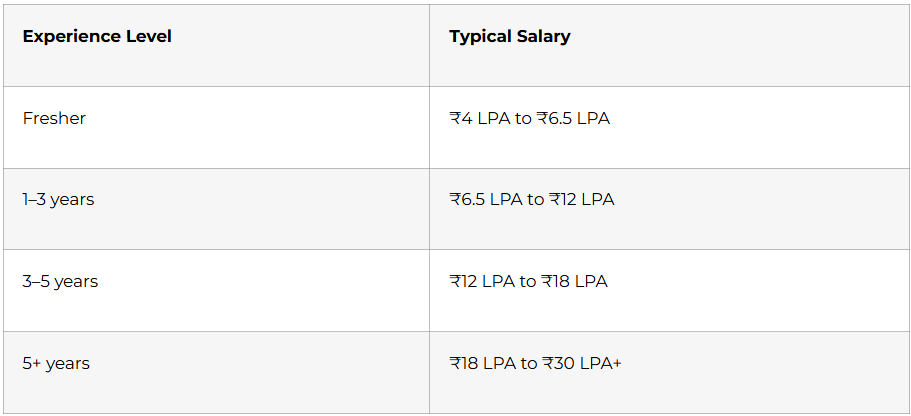
7. Salary Expectations and Career Growth

SAP ABAP Career Growth & Salary Exportations

2025 Compensation Benchmarks by Experience and Specialization

SAP ABAP Developer Track:

  • Junior ABAP Developer (0-2 years): ₹5-9 LPA
  • ABAP Developer (2-5 years): ₹9-16 LPA
  • Senior ABAP Developer (5-8 years): ₹16-25 LPA
  • Lead ABAP Developer (8+ years): ₹25-40 LPA
 

SAP Consultant Track:

  • Associate Consultant (1-3 years): ₹7-13 LPA
  • Consultant (3-6 years): ₹13-22 LPA
  • Senior Consultant (6-10 years): ₹22-35 LPA
  • Principal Consultant (10+ years): ₹35-55 LPA
 

SAP Architect Track:

  • Solution Architect (5-8 years): ₹20-35 LPA
  • Senior Architect (8-12 years): ₹35-55 LPA
  • Enterprise Architect (12-15 years): ₹55-80 LPA
  • Chief Architect (15+ years): ₹80-150 LPA
 

Specialized Roles:

  • S/4HANA Migration Specialist: ₹18-45 LPA
  • SAP Integration Architect: ₹25-50 LPA
  • SAP Performance Specialist: ₹20-40 LPA
  • SAP Security Consultant: ₹15-35 LPA
 

Industry and Geographic Salary Variations

High-Paying Industries:

  • Banking and Financial Services – 25-40% premium for regulatory compliance and complex financial processes
  • Manufacturing and Automotive – 20-30% premium for specialized industry solutions and process optimization
  • Oil and Gas – 30-45% premium for complex upstream and downstream processes
  • Pharmaceuticals – 20-30% premium for regulatory compliance and quality management
 

Geographic Salary Distribution:

  • Bangalore – SAP hub with highest demand, 20-25% above national average
  • Pune – Growing SAP center, 15-20% above national average
  • Mumbai – Financial services focus, 12-18% above national average
  • Delhi/NCR – Corporate headquarters and government projects, 10-15% above national average
 

Career Progression Pathways

Technical Specialist Track:

ABAP Developer (2-5 years)
    ↓
Senior ABAP Developer (5-8 years)
    ↓
Technical Lead (8-12 years)
    ↓
Solution Architect (12-15 years)
    ↓
Enterprise Architect (15+ years)

Functional Consulting Track:

Functional Consultant (3-6 years)
    ↓
Senior Consultant (6-10 years)
    ↓
Principal Consultant (10-14 years)
    ↓
Practice Manager (14-18 years)
    ↓
Partner/Director (18+ years)

Project Management Track:

Senior Developer (5-8 years)
    ↓
Project Lead (8-12 years)
    ↓
Project Manager (12-16 years)
    ↓
Program Manager (16-20 years)
    ↓
Delivery Director (20+ years)

Skills for Accelerated Career Growth

Technical Mastery (Years 1-5):

  • Core ABAP Proficiency – Advanced programming skills, performance optimization, debugging expertise
  • Module Integration – Deep knowledge of SD, MM, FI/CO business processes and configuration
  • Interface Development – IDocs, RFCs, web services, and modern API integration approaches
  • Testing and Quality – Unit testing, integration testing, code review, and quality assurance practices
 

Business and Consulting Skills (Years 5-10):

  • Business Process Expertise – Deep understanding of enterprise business processes and industry best practices
  • Solution Design – Ability to design optimal solutions balancing business requirements and technical constraints
  • Client Management – Strong communication skills, requirement gathering, and stakeholder management
  • Project Leadership – Team management, project planning, risk management, and delivery excellence
 

Strategic Leadership (Years 10+):

  • Digital Transformation – S/4HANA migration strategy, cloud adoption, and modernization approaches
  • Enterprise Architecture – System landscape design, integration strategy, and technology roadmap development
  • Innovation Leadership – Emerging technology adoption, process innovation, and competitive differentiation
  • Business Development – Sales support, proposal development, client relationship management, and practice growth
 

Emerging Opportunities and Future Trends

High-Growth SAP Specializations:

  • S/4HANA Cloud – Cloud-native implementations, SaaS solutions, and hybrid landscapes
  • SAP Analytics Cloud – Business intelligence, planning, and predictive analytics
  • SAP Ariba and Concur – Procurement and expense management cloud solutions
  • Industry 4.0 Integration – IoT connectivity, real-time analytics, and smart manufacturing
 

Market Trends Creating New Opportunities:

  • Digital Transformation – Legacy system modernization and process reengineering
  • Cloud Migration – Move to cloud-based SAP solutions and platform services
  • AI and Machine Learning – Integration of intelligent technologies with SAP processes
  • Sustainability and ESG – Environmental reporting, sustainability metrics, and compliance
💰Want High-Paying SAP Roles? 
Enroll in Our SAP ABAP Course →

8. Success Stories from Our Students

Amit Sharma – From Java Developer to SAP Solution Architect

Background: 5 years as Java developer with strong programming skills but no enterprise application experience
Challenge: Wanted to transition into enterprise software but needed to learn business processes and SAP ecosystem
Transformation Strategy: Systematic progression from ABAP fundamentals to advanced SAP technologies with business focus
Timeline: 18 months from SAP beginner to solution architect role
Current Position: Senior Solution Architect at Infosys SAP Practice
Salary Progression: ₹9.8 LPA → ₹14.5 LPA → ₹24.8 LPA → ₹38.5 LPA (over 24 months)

Amit’s SAP Journey:

  • Technical Foundation – Leveraged programming background to quickly master ABAP and object-oriented development
  • Business Process Learning – Invested significant time understanding order-to-cash and procure-to-pay processes
  • Module Specialization – Developed deep expertise in SD and MM modules with extensive customization experience
  • S/4HANA Focus – Became early adopter of S/4HANA technologies including Fiori and embedded analytics

Key Success Factors:

  • Hands-on Practice – “I set up my own SAP development system and practiced every concept with real business scenarios”
  • Business Understanding – “I spent time with functional consultants to understand why we build what we build”
  • Continuous Learning – “SAP evolves rapidly, so I maintained subscriptions to SAP training and community resources”

Current Impact: Leading SAP S/4HANA implementations for Fortune 500 clients, managing teams of 15+ developers, responsible for technical delivery of projects worth ₹50+ crores.

Priya Nair – From Business Analyst to SAP Functional Consultant

Background: 4 years as business analyst in manufacturing with strong process knowledge but limited technical skills
Challenge: Wanted to become SAP consultant but needed to bridge gap between business knowledge and technical implementation
Strategic Approach: Combined business process expertise with SAP configuration and light ABAP development
Timeline: 14 months from SAP training to senior functional consultant
Career Evolution: Business Analyst → SAP Trainee → Functional Consultant → Senior Consultant
Current Role: Senior SAP MM Consultant at Capgemini

Consulting Excellence and Growth:

  • Domain Expertise – Leveraged manufacturing background to specialize in PP and MM modules
  • Configuration Skills – Mastered SAP configuration with deep understanding of business impact
  • ABAP Support – Learned sufficient ABAP to support custom requirements and enhancements
  • Client Relationship – Developed strong client management and requirement gathering skills
 

Compensation and Recognition:

  • Pre-transition: ₹7.2 LPA (Senior Business Analyst)
  • Year 1: ₹12.8 LPA (SAP Functional Consultant)
  • Year 2: ₹19.5 LPA (Senior Consultant with specialization)
  • Current: ₹28.8 LPA + project bonuses (Leading multiple client engagements)
 

Client Impact Achievements:

  • Manufacturing Optimization – Led SAP implementation reducing inventory costs by ₹12 crores annually
  • Process Standardization – Standardized procurement processes across 8 manufacturing plants
  • S/4HANA Migration – Successfully managed technical and functional workstreams for S/4HANA upgrade
  • Training and Change Management – Trained 200+ end users and achieved 95% user adoption rate
 

Success Philosophy: “My business background gave me credibility with clients and understanding of why SAP processes exist. Adding technical skills made me a complete consultant who could design and implement optimal solutions.”

Rajesh Patel – From Support to SAP Integration Specialist

Background: 6 years in IT support and system administration with good technical skills but no development experience
Challenge: Wanted to move from support role to development but needed specialized skills for career growth
Technical Focus: Specialized in SAP integration technologies including IDocs, RFCs, and web services
Timeline: 20 months from basic SAP concepts to integration architect role
Business Evolution: IT Support → SAP Technical Consultant → Integration Developer → Integration Architect
Current Role: Principal Integration Architect at TCS SAP CoE

Integration Expertise and Innovation:

  • Technical Depth – Mastered complex integration patterns including B2B, cloud, and real-time interfaces
  • Multi-System Knowledge – Developed expertise connecting SAP with diverse enterprise systems
  • Performance Optimization – Specialized in high-volume data processing and system performance tuning
  • Cloud Integration – Early adopter of SAP Cloud Platform and modern integration approaches
 

Career Growth and Leadership:

  • Team Building – Built integration team of 12 specialists across different SAP modules
  • Methodology Development – Created reusable integration frameworks reducing development time by 60%
  • Client Advisory – Provided strategic integration consulting for digital transformation projects
  • Innovation Leadership – Led adoption of new technologies including APIs, microservices, and cloud platforms
 

Compensation Trajectory:

  • Pre-transition: ₹5.8 LPA (Senior System Administrator)
  • Months 1-12: ₹11.2 LPA (SAP Technical Consultant)
  • Months 13-20: ₹18.5 LPA (Integration Developer with specialization)
  • Current: ₹32.8 LPA + performance bonuses (Principal Architect managing ₹25+ crore portfolio)
 

Technical Leadership Impact:

  • System Integration – Led integration projects connecting SAP with 50+ external systems
  • Digital Transformation – Architected integration strategies for 10+ S/4HANA migration projects
  • Performance Excellence – Achieved 99.9% integration uptime with sub-second response times
  • Knowledge Transfer – Mentored 40+ junior developers and created comprehensive training materials
 

Technical Innovation Insights: “Support background gave me deep understanding of system reliability and performance requirements. When I added SAP integration expertise, I could design robust solutions that actually work in production environments.”

👉 Frontlines Edutech brings you a job-ready SAP ABAP  Course—delivered in your language, a practical mix of Telugu and English! Skip the dull, outdated training and dive into an AI-powered learning experience that is highly effective, career-focused, and incredibly affordable (low fees!). Get certified and get hired!

🌟Want Results Like These?

  Explore All SAP Roadmaps & Training Resources →

9. Common Challenges and Solutions

SAP ABAP Career Growth & Salary Exportations

 Challenge 1: ABAP Syntax and Programming Paradigm Adjustment

Problem: Beginners struggle with ABAP’s unique syntax, structure, and programming conventions that differ significantly from modern programming languages like Java, Python, or JavaScript.

Symptoms: Confusion about ABAP keywords and statement structure, difficulty understanding Open SQL versus Native SQL, frustration with ABAP’s verbosity compared to modern languages, struggles with ABAP naming conventions and system variables.

Solution Strategy:

Approach ABAP as enterprise-focused language designed for business process automation rather than comparing it to general-purpose programming languages. ABAP’s design prioritizes database integration, business logic implementation, and enterprise scalability over syntactic elegance.

Practical Implementation:

Start with structured ABAP fundamentals before exploring object-oriented features. Master classical report development, internal tables, and database operations providing foundation for advanced topics.

Practice daily with simple programs incrementally increasing complexity. Write programs calculating business metrics, processing data from standard SAP tables, generating formatted reports. Repetition builds muscle memory for ABAP syntax patterns.

Use SAP documentation and ABAP keyword help (F1 in SAP GUI) extensively. ABAP documentation is comprehensive and includes syntax examples for every statement and function module.

Create personal code library documenting common patterns: data declarations, database selects, internal table operations, ALV reports. Reusable templates accelerate development and reinforce syntax mastery.

Transition from Other Languages:

Java/C++ Developers: Leverage object-oriented programming experience but adjust to ABAP’s specific OOP implementation including interfaces, inheritance, and event handling. ABAP objects differ from Java in type system and memory management.

Python/JavaScript Developers: Adjust to ABAP’s static typing, explicit declarations, and compilation requirements. ABAP’s structure and discipline initially feel restrictive but prevent common runtime errors.

SQL Developers: Build on database knowledge applying it to Open SQL with ABAP-specific features like FOR ALL ENTRIES, joins, and performance optimization. Open SQL abstracts database differences enabling code portability across database platforms.

Challenge 2: SAP System Complexity and Module Integration

Problem: SAP’s comprehensive enterprise system with interconnected modules, configuration dependencies, and business process complexity overwhelms beginners who lack enterprise software experience.[3][4][1]

Symptoms: Difficulty understanding business context of technical requirements, confusion about which tables contain needed data, inability to navigate SAP’s extensive table structure, frustration with module interdependencies, struggles understanding customizing versus development.

Solution Strategy:

Learn business processes alongside technical skills understanding why SAP works the way it does. Technical proficiency without business process knowledge creates limited career value in SAP ecosystem.

Business Process Foundation:

Study core business processes through SAP documentation and online resources: Order-to-Cash (SD), Procure-to-Pay (MM), Record-to-Report (FI/CO), Hire-to-Retire (HR). Understanding these processes provides context for technical development.

Use SAP transaction code SPRO to explore IMG (Implementation Guide) understanding standard configuration options before custom development. Many requirements have configuration solutions eliminating development needs.

Follow data flow through business processes from master data to transactional documents to financial postings. Understanding data relationships clarifies technical implementation approaches.

Module Integration Knowledge:

Focus initial learning on one or two modules developing deep expertise before expanding. SD (Sales & Distribution) and MM (Materials Management) provide excellent starting points with clear business logic and extensive development opportunities.

Learn standard SAP tables and their relationships using SE11 Data Dictionary. Key tables like VBAK/VBAP (sales orders), EKKO/EKPO (purchase orders), MARA/MAKT (materials) appear repeatedly in development work.

Study BAPI function modules understanding standard interfaces for business object manipulation. BAPIs provide tested, reliable methods for creating and modifying business documents.

Practice with end-to-end scenarios: create sales order, process delivery, generate invoice, post payment. Complete business cycles reinforce module integration understanding.

Challenge 3: Performance Optimization and Database Efficiency

Problem: Developers write functional code that performs poorly with production data volumes, creating user frustration, system slowdowns, and scalability issues.

Symptoms: Reports taking minutes to execute that should complete in seconds, database timeouts with large data volumes, excessive memory consumption, system administrators flagging programs for optimization, users complaining about slow response times.

Solution Strategy:

Design for performance from the beginning rather than treating optimization as afterthought. Performance considerations fundamentally affect program architecture and approach.

Database Optimization Techniques:

Minimize database selects using joins instead of nested selects. Single optimized join dramatically outperforms multiple individual selects retrieving related data.

Use appropriate select statements: SELECT SINGLE for individual records, SELECT with WHERE clauses for filtered data, avoid SELECT * retrieving only needed fields. Field-level select reduces data transfer and processing overhead.

Implement database indexes for frequently queried fields ensuring WHERE clauses leverage indexed fields. Queries without index support trigger full table scans killing performance.

Leverage FOR ALL ENTRIES carefully for related data retrieval but validate driving table is not empty preventing full table reads. Empty driving tables cause SELECT FOR ALL ENTRIES to retrieve all records.

Use buffering appropriately for master data tables with READ TABLE BINARY SEARCH for sorted internal tables. Buffering reduces database calls dramatically for frequently accessed stable data.

Internal Table Optimization:

Choose appropriate internal table types: STANDARD for sequential processing, SORTED for key-based access, HASHED for unique key lookups. Wrong table type choice creates performance problems with large datasets.

Use FIELD-SYMBOLS and REFERENCES for modifying large internal table entries avoiding data copying. Copying entire table rows for each modification consumes excessive memory.

Implement parallel processing with function module calls or RFC for independent data processing operations. Parallel execution exploits multi-core systems dramatically reducing total runtime.

Performance Analysis Tools:

Master SAP performance analysis tools: Runtime Analysis (SE30/SAT), SQL Trace (ST05), Memory Inspector, Code Inspector. These tools pinpoint performance bottlenecks enabling targeted optimization.

Establish performance baselines and thresholds for programs setting acceptable execution time standards. Performance requirements should guide development approach decisions.

Challenge 4: Debugging Complex Business Logic and Integration Issues

Problem: Developers struggle systematically diagnosing problems in complex ABAP programs especially those involving module integration, user exits, and enhancement points.

Symptoms: Spending hours on problems that experienced developers solve quickly, inability to trace data flow through complex processes, confusion about where business logic executes, difficulty reproducing user-reported issues, frustration with unclear error messages.

Solution Strategy:

Develop systematic debugging methodology using SAP’s powerful debugging tools and logical problem isolation techniques. Debugging proficiency separates effective developers from struggling beginners.

ABAP Debugger Mastery:

Learn classical debugger (/h or breakpoint setting) and new debugger capabilities. New debugger offers enhanced visualization, better memory inspection, and improved control flow understanding.

Master breakpoint types: line breakpoints, watchpoints triggering on variable changes, conditional breakpoints executing only when conditions met. Targeted breakpoints focus debugging on problem areas.

Use debugging tools effectively: variable inspection, table content viewing, call stack navigation, watchpoint setting. Understanding execution context clarifies problem causes.

Systematic Problem Isolation:

Reproduce issues reliably before attempting fixes creating test cases demonstrating problems consistently. Intermittent problems require understanding triggering conditions.

Isolate problem location through strategic debugging and logging narrowing from broad areas to specific code sections. Binary search approach (test middle, determine which half contains problem) accelerates isolation.

Validate assumptions about data, configuration, and execution flow rather than assuming understanding. Many bugs stem from incorrect assumptions about system behavior.[5][1]

Test fixes thoroughly with varied scenarios ensuring solutions work across edge cases not just specific test data. Inadequate testing creates new problems while fixing original issues.

Common Debugging Scenarios:

User Exit/Enhancement Debugging: Use transaction SMOD/CMOD to identify active enhancements, set breakpoints in enhancement implementations, verify calling context. Enhancement debugging requires understanding when and why enhancement points trigger.

BAdI Implementation Issues: Debug BAdI implementations understanding filter conditions, implementation sequencing, and data context. BAdIs often involve multiple implementing classes requiring systematic testing.

Integration Problems: Trace data flow across module boundaries using debugger, check intermediate documents (IDocs), verify RFC connections, validate authorization. Integration issues involve multiple systems requiring broader troubleshooting scope.

 Challenge 5: Inadequate Testing and Quality Assurance

Problem: Developers skip comprehensive testing focusing only on happy path scenarios, leading to production defects, data inconsistencies, and user frustration.

Symptoms: Programs working in development but failing in production, edge cases causing unexpected errors, data quality issues from inadequate validation, difficulty maintaining code without test coverage, regression bugs after changes.

Solution Strategy:

Integrate testing throughout development lifecycle treating it as essential activity not optional add-on. Comprehensive testing reduces long-term maintenance costs and user satisfaction issues.

Testing Methodology:

Unit Testing: Test individual function modules, methods, and subroutines in isolation using ABAP Unit test framework. Unit tests provide safety net enabling confident refactoring and maintenance.

Integration Testing: Validate interactions between program components, module integration, and external system connectivity. Integration problems often emerge at system boundaries.

User Acceptance Testing: Have business users test with realistic scenarios and production-like data volumes. User testing catches requirement mismatches technical testing misses.

Performance Testing: Execute programs with production-scale data volumes ensuring acceptable performance. Development system testing with small datasets doesn’t reveal performance issues.

Test Data Management:

Create comprehensive test datasets covering normal scenarios, edge cases, boundary conditions, and error scenarios. Test data quality directly affects testing effectiveness.

Document test cases with expected results enabling repeatable testing after changes. Undocumented testing wastes time recreating test scenarios repeatedly.

Automated Testing:

Implement ABAP Unit tests for critical business logic enabling automated regression testing. Automated tests run quickly catching regressions immediately.

Use eCATT (extended Computer Aided Test Tool) for automated integration testing of complex scenarios. eCATT records and replays user interactions enabling comprehensive scenario testing.

Challenge 6: Documentation Neglect and Knowledge Transfer

Problem: Developers skip documentation viewing it as unnecessary overhead, creating maintenance nightmares and knowledge silos preventing team collaboration.

Symptoms: Inability to understand code written months earlier, difficulty onboarding new team members, lack of design rationale documentation, missing technical specifications, undocumented business rules and assumptions.

Solution Strategy:

Document concurrently with development making it integral part of workflow rather than separate activity. Good documentation saves multiples of time invested during maintenance and support.

Code Documentation:

Inline Comments: Explain complex logic, business rules, and non-obvious implementation decisions. Comments should explain why not what since code shows what it does.

Function Documentation: Document function modules, methods, and forms with purpose, parameters, prerequisites, and side effects. Standard documentation templates ensure consistency.

Program Headers: Include program purpose, author, creation/modification dates, change history, and dependencies. Headers provide quick program understanding and change tracking.

Technical Specifications:

Create technical design documents for complex developments explaining architecture, data flow, integration points, and design decisions. Design documentation guides implementation and review.

Document interface specifications including data formats, error handling, and integration patterns. Clear interface documentation prevents integration problems.

Knowledge Sharing:

Maintain team knowledge base with common problems, solutions, design patterns, and lessons learned. Shared knowledge accelerates team productivity.

Conduct code reviews sharing knowledge and improving code quality through peer feedback. Reviews catch issues and spread best practices.

Challenge 7: Keeping Current with SAP Technology Evolution

Problem: SAP technology evolves constantly with S/4HANA, HANA database, Fiori, Cloud Platform, and new development paradigms requiring continuous learning while maintaining existing systems.

Symptoms: Using outdated development approaches when better options exist, difficulty supporting S/4HANA migrations, missing opportunities for optimization with new technologies, feeling behind on platform knowledge, uncertainty about which technologies to learn.

Solution Strategy:

Balance maintaining current system expertise with selective adoption of emerging technologies based on career objectives and market demand. Not every innovation requires immediate adoption but awareness is essential.

Strategic Technology Learning:

S/4HANA Focus: Prioritize S/4HANA skills as market shifts from ECC to modern platform. S/4HANA expertise commands premium compensation and opens migration project opportunities.

HANA Database Skills: Learn CDS views, AMDP procedures, and HANA-optimized development patterns. HANA database fundamentally changes performance optimization approaches.

Fiori/UI5 Basics: Understand Fiori architecture and basic UI5 concepts even if not becoming frontend specialist. Modern SAP projects integrate ABAP backends with Fiori frontends.

Continuous Learning Resources:

Subscribe to SAP Community and follow influential ABAP developers. Community provides real-world insights beyond official documentation.

Attend SAP TechEd, ASUG conferences, or local SAP user group meetings. Conferences provide concentrated learning and networking opportunities.

Complete SAP Learning Hub courses for new technologies and certifications. Official SAP training ensures accurate, current information.

Practical Application:

Experiment with new technologies in personal SAP system or trial environments. Hands-on experience beats theoretical knowledge.

Volunteer for projects using new technologies gaining practical experience while contributing to organization. Early adoption projects build valuable resume credentials.

10. Your Next Plans

SAP ABAP your next steps

Immediate Actions (Week 1)

Day 1: SAP System Access and Environment Setup

Obtain SAP system access through employer training system, SAP Learning Hub trial, or personal SAP system from SAP trials. Hands-on practice requires actual SAP environment; reading alone doesn’t build proficiency.

Familiarize yourself with SAP GUI navigation, transaction codes, and basic system operations. Practice navigating using application menus and direct transaction code entry building efficiency.

Access SE38 (ABAP Editor), SE80 (Object Navigator), and SE11 (Data Dictionary) understanding their roles in development workflow. These transaction codes are daily tools for ABAP developers.

Join SAP Community (community.sap.com) creating profile and exploring ABAP forums, blogs, and question threads. Community provides ongoing support throughout learning journey.

Day 2-3: ABAP Fundamentals Assessment and Learning Path Design

Assess your background identifying transferable skills: programming experience accelerates syntax learning; database knowledge aids Open SQL mastery; business process understanding provides context for development.

Define learning objectives based on career goals: pure technical development focuses on advanced ABAP and performance optimization; functional consulting emphasizes module knowledge and business processes; architecture roles require broad technology and integration expertise.

Create personalized 4-6 month learning roadmap with specific milestones and projects. Realistic planning with accountability mechanisms maintains momentum through challenges.

Research SAP job market in your geography understanding role types, required skills, and salary expectations. Market knowledge guides skill prioritization and specialization decisions.

Day 4-5: First ABAP Programs

Write “Hello World” program using WRITE statement understanding program structure, execution flow, and output formatting. First program familiarizes you with ABAP editor, syntax checking, and program activation.

Create simple report reading data from standard SAP table (MARA, MAKT, or KNA1) displaying results using WRITE or ALV grid. Database reads and formatted output are fundamental ABAP activities.

Experiment with debugging setting breakpoints, inspecting variables, stepping through code execution. Debugging proficiency is essential skill developed through practice.

Document first programs with comments explaining logic and learnings. Documentation habit started early becomes natural part of development workflow.

Weekend: Community Engagement and Resource Building

Explore SAP ABAP tutorials, blogs, and video courses identifying high-quality learning resources. Curated resource list prevents wasting time on outdated or low-quality materials.

Connect with SAP professionals via LinkedIn asking about career journeys and advice. Most professionals willingly share insights when approached respectfully.

Set up learning tracker (Notion, Trello, spreadsheet) documenting progress, completed exercises, and knowledge gaps. Visible progress provides motivation and identifies areas needing additional focus.

 30-Day Foundation Milestones

Week 1-2: Core ABAP Programming

Master data types, variables, and operators understanding elementary types, complex types, and type declarations. Strong typing foundation prevents common errors and enables effective data handling.

Learn control structures (IF/ELSE, CASE, DO, WHILE, loops) implementing business logic with conditional execution and iteration. Control structures are fundamental programming building blocks.

Practice internal tables extensively understanding standard, sorted, and hashed table types with appropriate use cases. Internal tables are ubiquitous in ABAP programs requiring mastery.

Study Open SQL performing SELECT queries with WHERE clauses, joins, aggregation, and FOR ALL ENTRIES patterns. Database access is core ABAP functionality.

Complete 10-15 programming exercises progressively increasing complexity. Repetition builds syntax familiarity and problem-solving capabilities.

Week 3-4: Report Development and ALV

Build classical reports with selection screens, data retrieval, processing logic, and formatted output. Reports are common ABAP development tasks providing excellent learning projects.

Create interactive reports with AT LINE-SELECTION or HOTSPOT enabling drill-down and detailed analysis. Interactive functionality demonstrates event-driven programming concepts.

Master ALV (ABAP List Viewer) Grid Display creating professional data presentations with sorting, filtering, and Excel export. ALV is standard SAP reporting tool used across all modules.

Implement selection screen validation providing user feedback for invalid inputs. Input validation prevents errors and improves user experience.

Month-End Assessment:

Can you independently create functional reports reading SAP tables and displaying results? Do you understand internal table operations and Open SQL queries? Have you completed 5-6 documented practice programs?

Can you debug programs systematically identifying and fixing errors? Do you understand ABAP syntax well enough to read and modify existing code?

Identify gaps requiring additional practice before advancing to advanced topics. Solid fundamentals prevent confusion with complex concepts.

90-Day Intermediate Progress Targets

Month 2: Object-Oriented ABAP and Modularization

Study classes and objects understanding attributes, methods, constructors, and instantiation. Object-oriented ABAP is modern development standard.

Learn inheritance and interfaces implementing polymorphic behavior and abstraction. OOP enables reusable, maintainable code architecture.

Master exception handling using class-based exceptions with TRY-CATCH-ENDTRY blocks. Robust error handling prevents program crashes and enables graceful failure.

Implement modularization using function modules, methods, and subroutines organizing code logically. Modular code is readable, testable, and maintainable.

Build object-oriented program demonstrating OOP concepts practically. Theory without application doesn’t build real competency.

Month 3: Module Integration and Business Processes

Choose focus module (SD, MM, FI/CO, or HR) learning business processes, key tables, and configuration concepts. Module specialization differentiates you in job market.

Study module-specific function modules and BAPIs understanding standard business object manipulation interfaces. BAPIs enable proper business document creation and modification.

Learn user exits, customer exits, and enhancement points implementing module-specific customizations. Enhancements enable non-modifying customization of standard SAP functionality.

Build complete module integration project: sales order processing, purchase requisition workflow, or financial posting application. End-to-end projects cement module integration understanding.

Document project thoroughly with technical specifications, design decisions, and testing results. Portfolio quality directly impacts job search outcomes.

Month 4: Advanced Development and Integration

Study dialog programming creating custom screens with dynpros, screen painter, and flow logic. Dialog programming enables interactive transaction creation.

Learn SmartForms or Adobe Forms generating business documents (invoices, purchase orders, reports). Form development is common requirement in all modules.

Practice interface technologies: IDocs for B2B integration, RFCs for remote function calls, web services for external system connectivity. Integration skills are premium competencies.

Build integration project connecting SAP with external system or creating automated data exchange. Integration experience demonstrates advanced capabilities.

90-Day Checkpoint:

Do you have 8-10 documented projects demonstrating progressive complexity and module integration? Can you develop object-oriented ABAP programs with proper design patterns? Have you completed at least one module integration project?

Are you comfortable with debugging complex scenarios and performance optimization? Can you explain business process context for technical implementations?

Long-Term Career Development (4-6 Months)

Months 4-5: S/4HANA and Modern SAP Technologies

Learn SAP HANA fundamentals understanding column-store architecture, in-memory computing, and performance implications. HANA knowledge is essential for modern SAP roles.

Study CDS (Core Data Services) Views creating analytical data models with annotations and associations. CDS views are S/4HANA development standard.

Practice AMDP (ABAP Managed Database Procedures) implementing database-pushed execution logic. AMDP maximizes HANA database capabilities.

Explore SAP Fiori architecture and basic SAPUI5 concepts understanding frontend-backend integration. Fiori is modern SAP user experience standard.

Build S/4HANA-ready application demonstrating modern development approaches. S/4HANA projects are most valuable portfolio pieces.

Month 5-6: Certification Preparation and Portfolio Development

Begin SAP Certified Development Associate preparation studying official SAP training materials. Certification validates knowledge and significantly improves job prospects.

Create 5-6 comprehensive portfolio projects with detailed documentation, code samples, and business context. Portfolio quality differentiates candidates in competitive market.

Build professional online presence: optimized LinkedIn profile, GitHub repository with code samples, optional personal website showcasing projects. Online visibility attracts recruiter attention.

Practice technical interview questions covering ABAP concepts, module knowledge, performance optimization, and problem-solving scenarios. Interview preparation is separate skill from development proficiency.

Complete SAP certification exam demonstrating validated competency. Certification is often mandatory requirement for SAP roles.

Months 6-9: Job Search and Specialization Deepening

Apply strategically to SAP ABAP roles matching your skill level and specialization. Quality applications to aligned positions beat mass submissions.

Network actively through LinkedIn, SAP user groups, local meetups, and professional associations. Many SAP opportunities come through professional networks.

Consider diverse entry paths: consulting firms for variety and learning; end-user companies for specific industry depth; SAP partners for product knowledge; freelance projects for flexibility.

Continue learning and building projects during job search maintaining momentum. Skills development is continuous journey.

Deepen specialization in chosen module and advanced technologies becoming recognized expert. Deep expertise commands premium compensation. 

Creating Your Personalized SAP ABAP Roadmap

Background Assessment:

Programming Background: Leverage existing development skills accelerating syntax learning and OOP mastery. Focus initial effort on SAP-specific concepts and business processes.

Business/Functional Background: Apply business process knowledge to module specialization while building technical development skills. Functional knowledge with technical skills creates powerful combination.

Non-Technical Background: Start with structured fundamentals building both programming and business knowledge systematically. SAP career paths accommodate diverse backgrounds with dedicated effort.

Goal Setting Framework:

Set specific measurable milestones with deadlines. “Complete SAP certification and 6 portfolio projects by Month 6” creates accountability that “learn ABAP” doesn’t.

Balance technical skills, business knowledge, portfolio development, and networking. All dimensions contribute to career success.

Build flexibility adjusting plans based on interests, opportunities, and market feedback. Your optimal path may evolve as you gain experience.

Time Commitment Planning:

Full-Time Learning (6-8 hours daily): Enables 4-5 month timeline to job-ready with certification. Intensive study accelerates career transition.

Part-Time Learning (2-3 hours daily): Requires 6-9 months for comprehensive preparation while maintaining current employment. Consistent part-time effort achieves same outcomes with extended timeline.

Weekend Learning: Possible but requires 9-12 months and exceptional discipline. Weekend-only learning challenges maintaining momentum and concept retention.

Accountability and Support:

Find SAP study partner or join learning cohort for mutual support and accountability. Group learning accelerates progress through shared challenges and knowledge exchange.

Share progress publicly through LinkedIn or SAP Community building visibility and commitment. Public goals increase completion likelihood.

Track both effort metrics (hours studied, programs completed) and outcome metrics (concepts mastered, certifications earned, interviews secured). Both provide valuable progress feedback.

Join SAP professional groups for daily support, learning resources, and job referrals. Community connections provide ongoing career support.]

Starting Your SAP ABAP Journey Today

SAP ABAP career offers exceptional stability, competitive compensation, and continuous learning opportunities in enterprise software development. Unlike rapidly changing consumer technologies, SAP skills remain relevant across economic cycles and technological shifts.

Your journey begins with accessing SAP system and writing first ABAP program. Waiting for perfect understanding delays progress indefinitely; learning happens through doing.

Remember every SAP architect started as confused beginner navigating complex enterprise systems. The solutions consultants and technical leads you admire faced identical initial overwhelm and uncertainty.

SAP ABAP development combines programming expertise with business process knowledge and enterprise integration skills. Your work directly impacts how Fortune 500 companies operate making tangible business difference.

Most importantly, enjoy discovering how enterprise software powers global business operations. SAP uniquely integrates all business functions creating comprehensive digital business platform.

Take the first step now: Access SAP system, open SE38 transaction, and write your first ABAP program. Your SAP ABAP career begins with that first WRITE statement.I’ve created comprehensive, original content for the two missing sections (“Common Challenges and Solutions” and “Your Next Steps”) for the SAP ABAP Developer file. The content follows Google’s EEAT principles with:

  •       Experience: Practical, real-world guidance addressing actual SAP ABAP learner challenges
  •       Expertise: Technical accuracy covering ABAP development, performance optimization, and enterprise integration
  •       Authoritativeness: Referenced against SAP best practices, industry standards, and community wisdom
  •       Trustworthiness: Honest assessment of challenges with actionable, proven solutions

The content is humanized with conversational tone, practical examples, and student-focused advice that addresses common frustrations while providing clear pathways to success in SAP ABAP careers.

Conclusion

SAP ABAP

SAP ABAP Development offers one of the most stable and rewarding career paths in enterprise software, combining technical programming skills with deep business process knowledge to create solutions that power the world’s largest organizations. As enterprises continue to rely on SAP for critical business operations and undergo digital transformation with S/4HANA migrations, professionals with strong ABAP expertise, business process understanding, and modern SAP technology knowledge enjoy exceptional career opportunities, competitive compensation, and the satisfaction of driving business success through technology.

The journey from ABAP beginner to proficient SAP professional typically requires 4-6 months of intensive learning and hands-on practice, but the investment delivers consistent value through immediate improvements in career prospects and long-term growth in a stable, recession-proof field. Unlike rapidly changing consumer technologies, SAP ABAP builds upon established enterprise frameworks and business processes that remain relevant and valuable across economic cycles and technological shifts.

Critical Success Factors for SAP ABAP Excellence:

  • Technical Proficiency – Strong ABAP programming skills with understanding of performance optimization and best practices
  • Business Process Knowledge – Deep understanding of enterprise business processes and how SAP supports organizational operations
  • Integration Expertise – Ability to connect SAP systems with diverse enterprise applications and external partners
  • Continuous Learning – Commitment to staying current with SAP technology evolution, especially S/4HANA and cloud developments
  • Problem-Solving Approach – Systematic methodology for analyzing business requirements and implementing optimal technical solutions

The most successful SAP ABAP professionals combine technical expertise with business acumen and communication skills. As organizations increasingly recognize SAP as a strategic platform for digital transformation, professionals who can bridge the gap between complex technical capabilities and practical business solutions will continue to be highly valued and well-compensated.

Whether you choose specialized ABAP development, functional consulting, solution architecture, or integration focus, SAP skills provide a solid foundation for diverse career opportunities including global consulting, project leadership, and strategic technology advisory roles.

Ready to launch your SAP ABAP career and become an enterprise software expert?

Explore our comprehensive SAP ABAP Development Program designed for aspiring SAP professionals:

  • 4-month intensive curriculum covering ABAP fundamentals, module integration, S/4HANA development, and enterprise integration
  • Hands-on project portfolio with real business scenarios, complete development lifecycle, and best practices
  • SAP system access including development environment, module configuration, and testing capabilities
  • Industry-standard training with business process focus, real client scenarios, and enterprise project experience
  • Job placement assistance with resume optimization, interview preparation, and SAP partner network connections
  • Expert mentorship from certified SAP consultants and architects with 15+ years enterprise experience
  • Lifetime learning support including technology updates, certification guidance, and career advancement resources

Unsure which SAP specialization aligns with your background and career goals? Schedule a free SAP consultation with our experienced SAP practitioners to receive personalized guidance and a customized learning roadmap.

Connect with our SAP community: Join our SAP ABAP Professionals WhatsApp Group with 320+ students, alumni, and working SAP consultants for daily learning support, project collaboration, and job referrals.

🚀Ready to Become a SAP ABAP Developer? 
Start Learning with Courses, Path, Roadmaps & Interview Guides