
How to Become a .NET Developer in 2026: Complete Career Guide
Table of Contents
.NET developers build secure, scalable, and high-performance applications for companies in banking, healthcare, retail, education, and enterprise software. If you can learn C#, ASP.NET, SQL, APIs, Azure, and modern backend development practices, you can build a strong and stable career in India. This guide shows you the exact roadmap to become job-ready in 2026, whether you are a fresher, a programmer, or someone switching into backend development.
What a .NET Developer Does
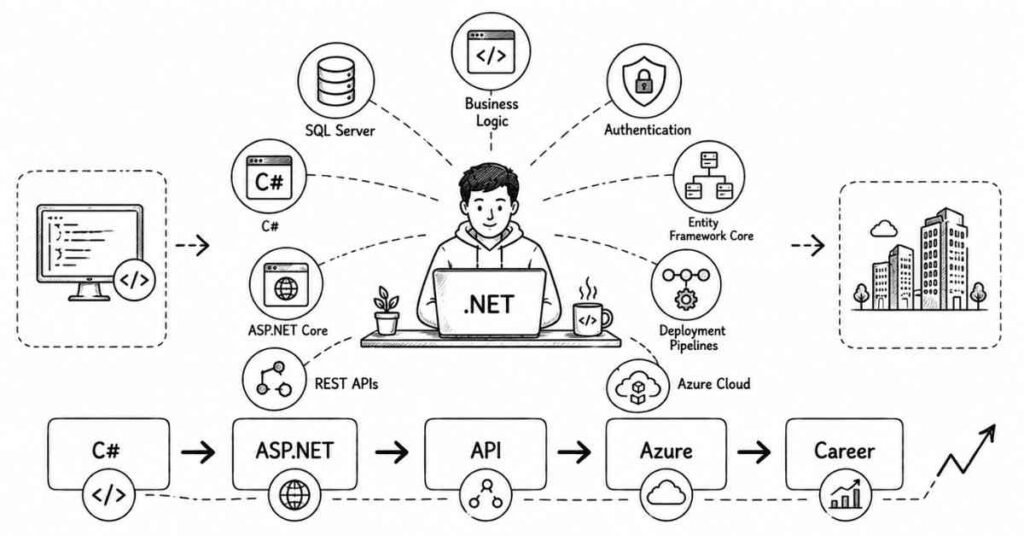
A .NET developer designs, builds, and maintains applications using Microsoft’s .NET ecosystem. The role is centered on backend development, APIs, business logic, data access, security, and deployment.
In simple terms, a .NET developer helps create the software systems that businesses use every day, from internal tools to customer-facing applications.
Main responsibilities
- Build web applications and APIs.
- Write business logic in C#.
- Work with SQL databases.
- Create and maintain ASP.NET applications.
- Handle authentication and authorization.
- Debug, test, and optimize applications.
- Deploy software to cloud or server environments.
- Collaborate with frontend, QA, and product teams.
🎓 Ready to Become a Job-Ready .NET Developer?
Why .NET Is a Smart Career
.NET is a smart career choice because it is deeply used in enterprise software and remains relevant across many industries. Microsoft’s ecosystem continues to evolve, and companies that rely on it need developers who understand modern .NET practices.
The career path is also practical for freshers because you can start with C#, move into ASP.NET, and grow into backend, cloud, or full stack roles over time.
Why students choose it
- Strong enterprise demand.
- Good salary growth over time.
- Beginner-friendly if you know basic programming.
- Useful for backend and full stack paths.
- Strong overlap with cloud and API development.
.NET Roles Compared
There are several career paths inside the .NET ecosystem, and each one focuses on a different part of application development.
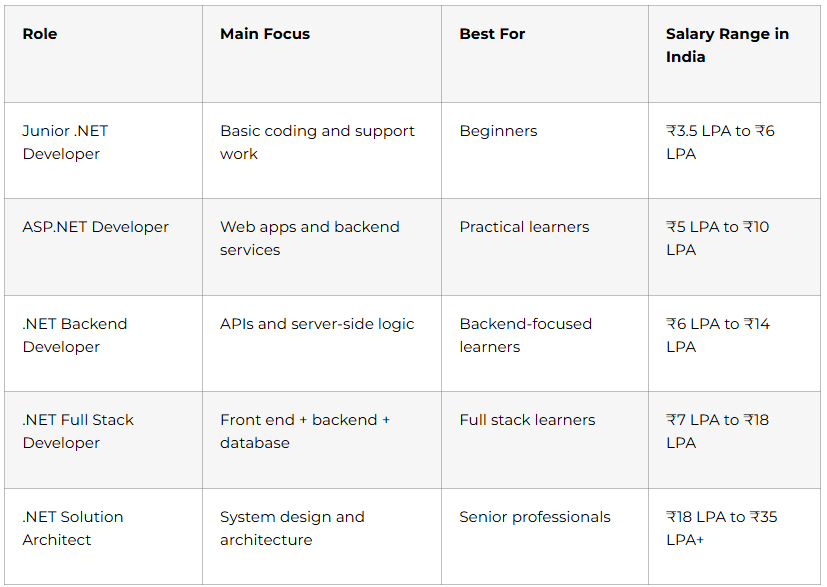
If you are starting out, the ASP.NET and backend path is the best entry point because it gives you strong technical depth and many job options.
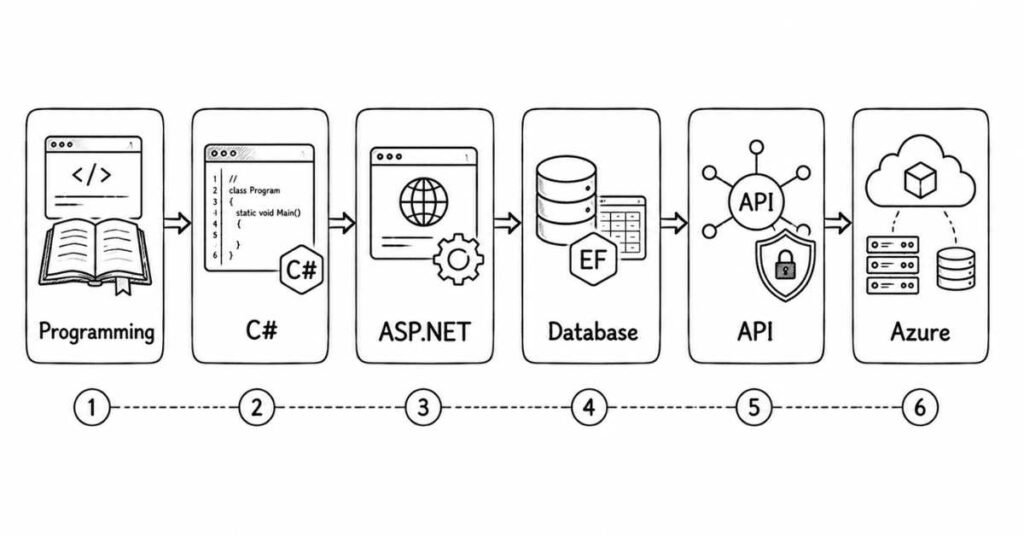
Complete Learning Roadmap
Phase 1: Programming Foundations
Before learning the .NET framework, you need a solid programming base. This makes it easier to understand object-oriented design and backend logic.
Focus on:
- Programming logic.
- Variables and data types.
- Conditionals and loops.
- Functions and methods.
- Object-oriented programming.
- Classes, objects, inheritance, and interfaces.
- Exception handling.
- Basic debugging.
Phase 2: C# Fundamentals
C# is the primary language used in .NET development. A strong C# base is essential before moving to web frameworks.
Learn:
- Syntax and program structure.
- Data types and operators.
- Collections.
- Arrays and lists.
- LINQ basics.
- Delegates and events.
- Async and await.
- File handling.
Phase 3: ASP.NET Core
ASP.NET Core is the main web framework for modern .NET applications. It is faster, more flexible, and widely used in new projects.
Learn:
- ASP.NET Core project structure.
- Controllers and routes.
- Dependency injection.
- Middleware.
- Razor basics.
- MVC architecture.
- REST API creation.
- Configuration and environment settings.
Phase 4: Databases and Data Access
Most real-world .NET applications depend on databases. You need to know how to store, read, and update data efficiently.
Learn:
- SQL basics.
- Database design.
- Tables, keys, and relationships.
- CRUD operations.
- Entity Framework Core.
- LINQ to Entities.
- Query optimization.
- Transactions and migrations.
Phase 5: APIs and Security
Modern .NET developers spend a lot of time building APIs and protecting applications. These skills are essential in interviews and projects.
Learn:
- REST API design.
- HTTP methods and status codes.
- JSON request and response handling.
- Authentication and authorization.
- JWT tokens.
- Role-based access.
- API versioning.
- Swagger and documentation.
Phase 6: Cloud and Deployment
A modern .NET developer should know how to deploy and monitor applications in live environments. Azure is especially important in the Microsoft ecosystem.
Learn:
- Git and source control.
- Azure basics.
- App Service.
- Azure SQL.
- Storage and identity basics.
- Logging and monitoring.
- Deployment pipelines.
- Environment configuration.
🗺️ .NET Developer Roadmap for 2026
C#, ASP.NET, and Azure
These are the three most important pillars of the modern .NET path.
C# skills to master
- OOP concepts.
- Collections and LINQ.
- Async programming.
- Exception handling.
- File and data handling.
- Clean code practices.
ASP.NET skills to master
- Controllers and routing.
- Middleware.
- MVC and Web API.
- Dependency injection.
- Validation.
- Authentication flows.
Azure skills to master
- App hosting.
- Database hosting.
- Cloud deployment.
- Monitoring.
- Security basics.
- Storage and resource management.
Salary Expectations in India
Salary depends on your project experience, C# depth, API knowledge, and cloud skills. Developers who know ASP.NET Core plus Azure usually grow faster than those who know only basic .NET.
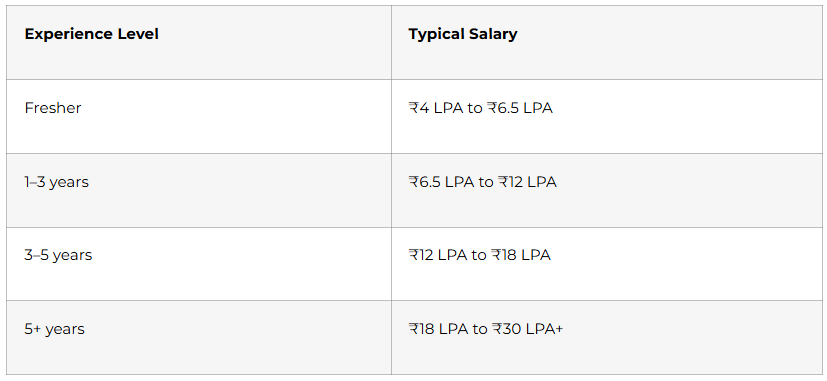
Professionals who move into cloud-enabled backend work or enterprise architecture can reach even higher salary bands.
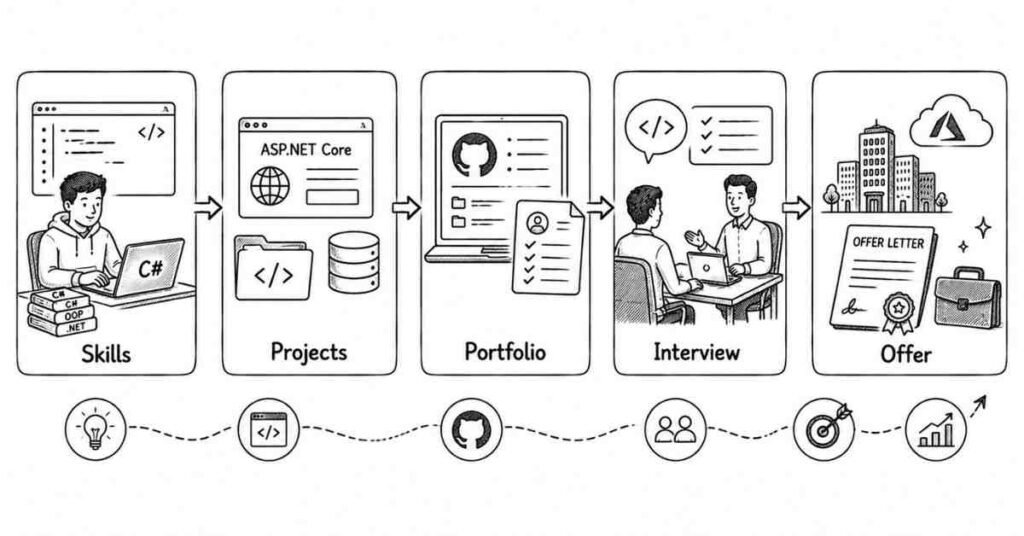
Portfolio That Gets Interviews
A strong portfolio is one of the best ways to prove that you can build real applications. Recruiters want to see practical work, not just certificates.
What to include
- CRUD web application.
- REST API project.
- Authentication and role-based access project.
- Database-driven business app.
- Azure deployment demo.
- GitHub repository with documentation.
- Screenshots or recorded walkthroughs.
Portfolio checklist
- Use C# and ASP.NET Core clearly.
- Show database integration.
- Include validation and security.
- Document your API routes.
- Make the project easy to run.
- Explain the business value of the app.
🎯 Preparing for .NET Developer Interviews?
Job Search Strategy
A .NET resume should highlight backend skills, framework knowledge, database work, and project experience. Hiring teams want developers who can build secure and maintainable applications.
Resume keywords
- C#
- .NET
- ASP.NET Core
- Web API
- Entity Framework Core
- SQL Server
- REST API
- Azure
- JWT authentication
- LINQ
- OOP
- Git
Where to apply
- LinkedIn Jobs
- Naukri
- Indeed
- company career pages
- IT services firms
- enterprise product companies
Interview preparation
Be ready to answer questions like:
- What is the difference between .NET and ASP.NET?
- How does dependency injection work in ASP.NET Core?
- What is the difference between MVC and Web API?
- How do you handle authentication in .NET?
- How does Entity Framework Core work?
- How do you deploy a .NET app to Azure?
30-Day Starter Plan
If you want to begin now, follow this simple plan.
Week 1
- Learn C# basics.
- Practice OOP concepts.
- Set up your IDE and GitHub.
- Write small console programs.
Week 2
- Learn ASP.NET Core basics.
- Build a simple web app.
- Practice controllers and routing.
- Add validation and error handling.
Week 3
- Connect your app to a database.
- Learn Entity Framework Core.
- Build CRUD operations.
- Document your API endpoints.
Week 4
- Learn authentication basics.
- Explore Azure deployment.
- Create one full project.
- Update your resume and LinkedIn profile.
🚀 Discover the Complete .NET Developer Career Path
Why Learn .NET Development at Frontlines Edutech
Frontlines Edutech is a practical choice for students and working professionals who want structured learning, regional support, and career-focused training. The best programs combine C#, ASP.NET Core, database work, Azure, and project-based learning in a way that makes job readiness realistic.
What to look for in training
- Strong C# fundamentals.
- ASP.NET Core and API practice.
- Database and Entity Framework training.
- Azure deployment exposure.
- Resume and interview support.
- Regional-language explanation if needed.
Frequently Asked Questions
How long does it take to become a .NET developer?
It usually takes 4 to 8 months of consistent learning to become job-ready, depending on your background and how much practical project work you complete.
Is .NET a good career in India?
Yes, it is a strong career because many enterprise and product companies still rely on Microsoft-based technology stacks for secure and scalable applications.
Which skill should I learn first?
Start with C# and object-oriented programming. After that, move into ASP.NET Core, SQL Server, APIs, and Azure.
Do I need coding experience to become a .NET developer?
You need basic programming logic, but you do not need to be an advanced coder at the beginning. Consistent practice and project building matter most.
What is the best specialization for beginners?
ASP.NET Core backend development is the best starting point because it teaches you modern web application structure and API development.
Can I get a job without experience?
Yes, if you have practical projects, a clear GitHub profile, and a solid understanding of C# and ASP.NET Core. Internships and demo projects can help a lot.
Which tools should I learn first?
Start with Visual Studio, C#, SQL Server, Git, Postman, and ASP.NET Core. Then move to Entity Framework Core and Azure.
Is .NET development remote-friendly?
Yes, many .NET roles are remote-friendly because the work can be done with standard development tools and online collaboration.
What kind of projects should I show in interviews?
Show CRUD apps, REST APIs, login systems, database-backed business apps, and Azure deployment demos. Employers want to see that you can build complete working solutions.