
90-Day .NET Course Roadmap: From Beginner to Job-Ready Developer
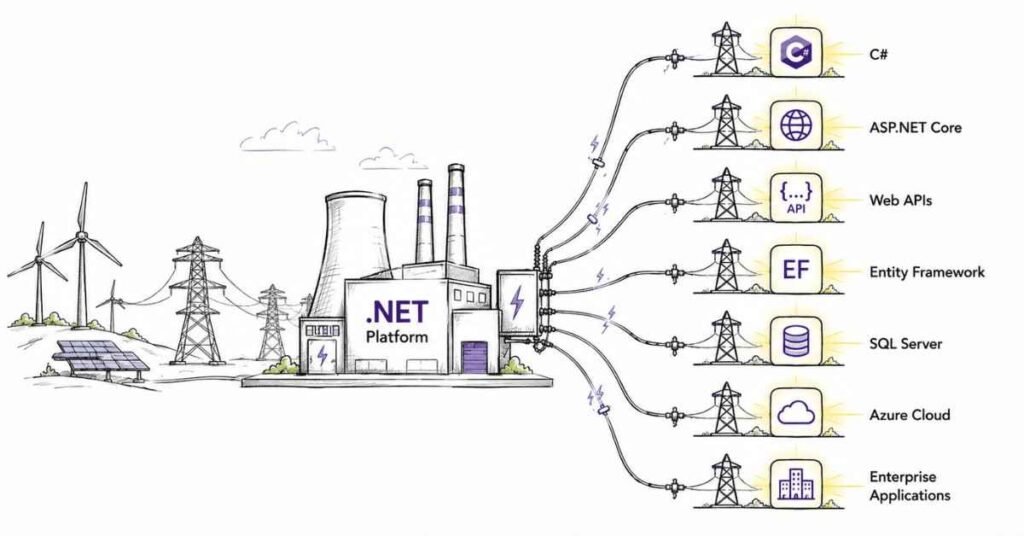
Table of Contents
This 90-day .NET roadmap is designed to take you from complete beginner to job-ready developer with a practical, step-by-step plan. You will start with C#, object-oriented programming, and programming fundamentals, then move into ASP.NET Core, APIs, Entity Framework, SQL, authentication, deployment, and projects before finishing with interview preparation. The goal is simple: help students in Hyderabad, Telangana, Andhra Pradesh, and across India learn the .NET skills that employers actually ask for. .NET developer roles are in demand because companies need secure, scalable, and maintainable business applications. By the end of 90 days, you should be ready for entry-level .NET jobs with confidence and a solid project portfolio.
🚀 Explore All .NET Developer Resources →
Why .NET Is a Smart Career Choice
.NET is one of the most reliable career paths in software development because businesses use it to build web apps, APIs, desktop apps, enterprise systems, and internal tools. Companies need developers who can write clean code, connect databases, build secure services, and deploy applications properly. That is why .NET skills are useful across IT services, fintech, healthcare, e-commerce, and consulting.
This is also a field where practical knowledge matters more than memorizing theory. If you can build applications, handle data, design APIs, and solve real coding problems, you already have what many employers want. That is why this roadmap focuses on hands-on learning from the beginning.
- .NET powers modern business applications.
- It is used across IT services, product companies, and enterprise teams.
- Entry-level candidates can grow quickly with strong project work.
- The skill set is useful for both freshers and working professionals.
- .NET knowledge often leads to strong long-term career growth.
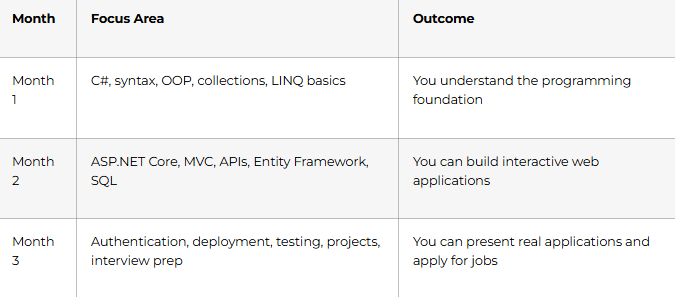
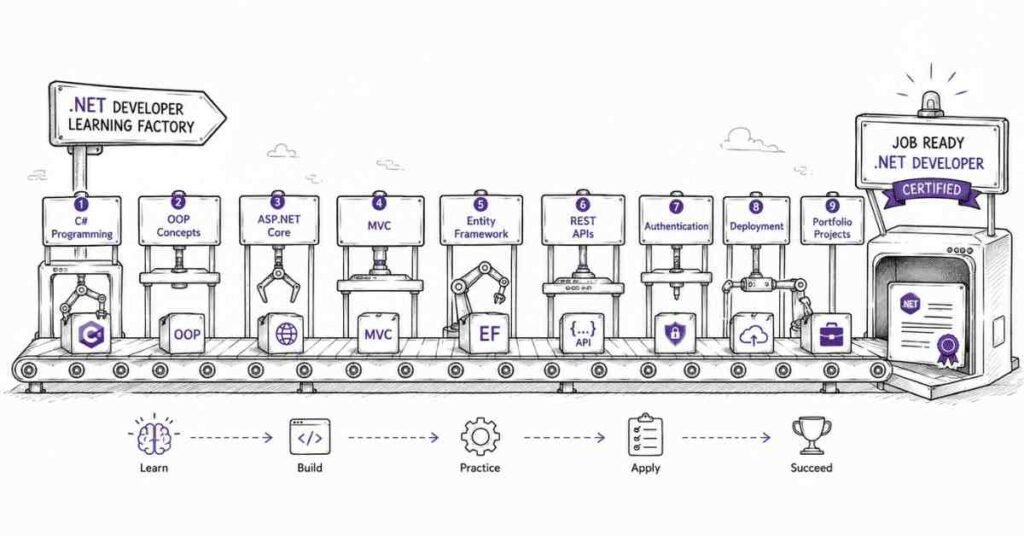
90-Day Learning Plan
Explore the .NET Career Guide →
Month 1: Programming Foundations
Month 1 is all about building the base. If you skip the basics, the advanced topics will feel confusing later. C# and object-oriented programming are the everyday language of .NET development, so this month gives you the confidence to work on real applications.
Week 1: C# Basics
C# is the primary language used in .NET development. Learn variables, data types, operators, conditionals, loops, functions, and basic console input/output. You should also understand how programs flow from one step to another. These fundamentals matter because every later topic depends on them.
- Learn the basic syntax of C#.
- Understand variables and data types.
- Practice conditionals and loops.
- Write simple functions and methods.
- Build a basic console application.
Week 2: Object-Oriented Programming
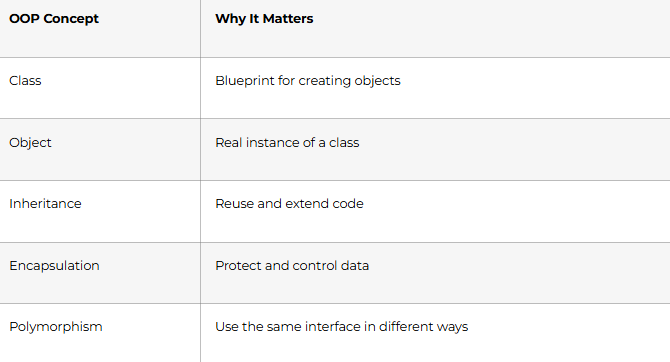
Object-oriented programming helps you write structured and reusable code. Learn classes, objects, inheritance, encapsulation, polymorphism, and abstraction. These are core concepts in .NET interviews and real project development. Once you understand OOP, code becomes easier to organize and maintain.
Week 3: Collections and LINQ
Applications often need to work with groups of data. Learn arrays, lists, dictionaries, and basic collection handling in C#. Then move into LINQ, which helps you filter, sort, and query data in a readable way. This week is important because data handling is a huge part of .NET development.
- Learn arrays and lists.
- Understand dictionaries and key-value pairs.
- Practice loops with collection data.
- Study LINQ filtering and sorting.
- Handle simple data processing tasks.
Week 4: Month 1 Review and Mini Project
By the end of Month 1, you should be able to write clean C# code, use OOP concepts, and handle simple data structures. Use this week to revise key concepts and build a small project such as a student management console app or employee record application. This gives you practical confidence before moving to web development.
Month 2: Web Development with ASP.NET Core
Month 2 is where you begin to build real web applications. You move from basic programming to frontend-backend interaction, databases, and APIs. This is the stage where .NET starts feeling like a practical job skill instead of a theory subject.
Week 5: ASP.NET Core Basics
ASP.NET Core is the framework used to build modern .NET web apps and services. Learn project structure, routing, controllers, views, and action methods. Understand how requests move through the application so you can build usable web pages and services.
- Learn ASP.NET Core project setup.
- Understand routing and controllers.
- Practice action methods.
- Study request-response flow.
- Build a simple web application.
Week 6: MVC and Views
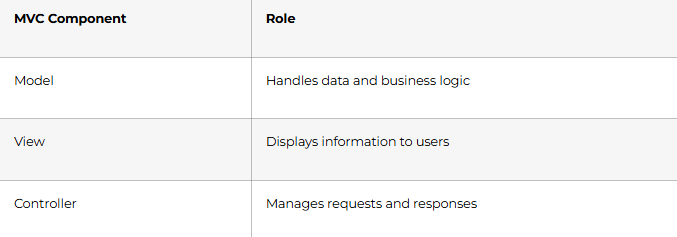
MVC stands for Model-View-Controller. It helps you separate application logic from the user interface and data handling. Learn how models, views, and controllers work together. This week is important because MVC remains a major pattern in .NET web development.
Week 7: Entity Framework and SQL
Entity Framework makes it easier to work with databases in .NET. Learn DbContext, entities, migrations, and CRUD operations. Also practice SQL basics so you understand how data is stored and retrieved. A strong .NET developer should be comfortable with both ORM tools and actual database concepts.
- Learn Entity Framework Core basics.
- Understand migrations and database updates.
- Practice create, read, update, delete operations.
- Study SQL table structure and joins.
- Connect the app to a database.
Week 8: APIs and Backend Logic
Modern web applications often need APIs to connect frontend and backend systems. Learn REST API concepts, GET and POST requests, JSON formatting, and HTTP status codes. Also understand how to return data properly from controllers. By the end of Month 2, you should be able to build a simple full-stack web application.
Month 3: Security, Deployment, and Career Readiness
Month 3 focuses on making you job-ready. You will combine the tools you learned, practice deployment workflows, and prepare projects that you can show employers. A good .NET portfolio proves that you can build, connect, and deploy applications, not just memorize terms.
Week 9: Authentication and Authorization
Security is a major part of real-world .NET development. Learn authentication, authorization, login systems, roles, claims, and password handling. Understand why secure access matters in enterprise applications and how developers protect user data.
- Learn login and registration flows.
- Understand roles and permissions.
- Practice authorization logic.
- Study password hashing basics.
- Review secure session handling.
Week 10: Testing and Debugging
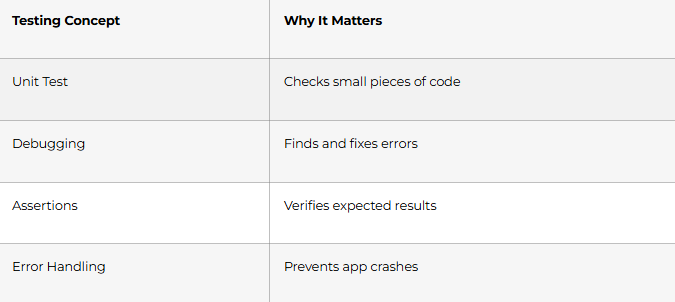
Testing helps you catch bugs before users do. Learn unit testing basics, debugging tools, and how to read error messages properly. This week also helps you improve code confidence and application reliability.
Week 11: Deployment Basics
Deployment means putting your application on a live server so users can access it. Learn environment settings, build publishing, hosting basics, and production-readiness concepts. You should also understand how version control with Git supports deployment and teamwork.
- Learn the basics of publishing a .NET app.
- Understand development vs. production environments.
- Practice Git and GitHub workflows.
- Study hosting and server deployment basics.
- Review build and publish steps.
Crack .NET Interviews →
Week 12: Project Building and Interview Prep
Use this week to create portfolio projects that prove your skills. Build a student management system, an employee leave tracker, or a product catalog app with CRUD, authentication, and database integration. Make sure each project includes clear documentation and a short explanation of the business problem it solves.
.NET Career Paths and Salary Guide
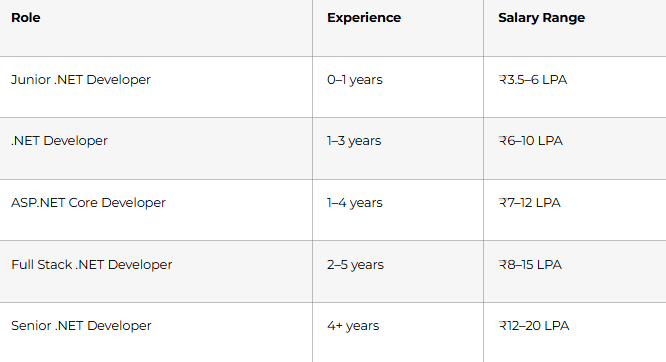
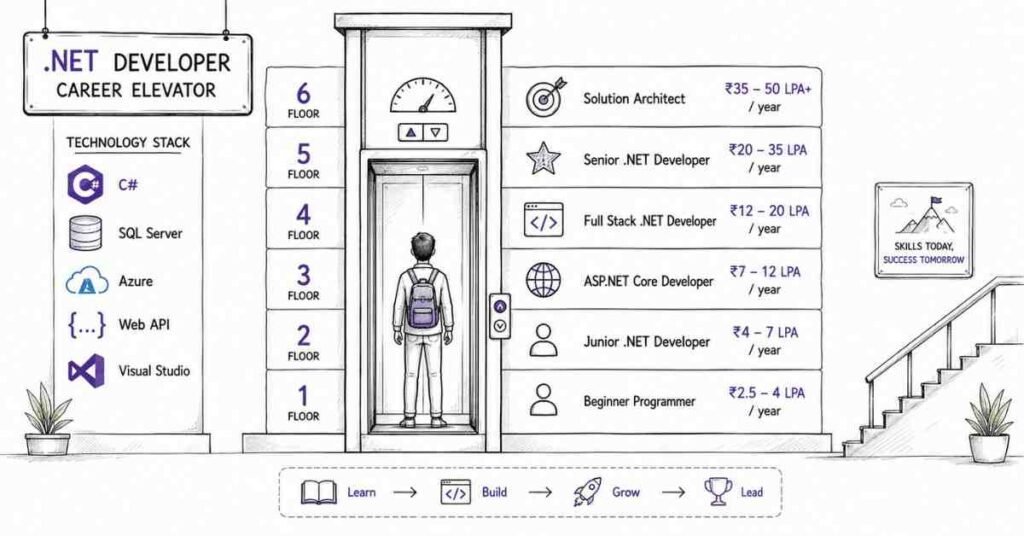
.NET salaries vary by company, city, and project complexity, but the field remains one of the strongest entry points into software development. Hyderabad, Bangalore, Pune, Chennai, and Gurgaon are active hiring locations. Candidates who know C#, ASP.NET Core, Entity Framework, SQL, APIs, and deployment basics usually stand out quickly.
Why Choose Frontlines Edutech
Frontlines Edutech helps students learn practical, job-focused skills in a way that feels clear and achievable. The training is designed for beginners who want real development understanding, not just theory. Students also benefit from guided learning, interview support, and a roadmap that matches current industry needs.
- Hands-on learning with real projects.
- Beginner-friendly explanations for complex topics.
- Job-focused curriculum with practical outcomes.
- Support for resumes, interviews, and career preparation.
- Training aligned with Indian hiring expectations.
Choose Your .NET Career →
Frequently Asked Questions (FAQs)
Q1. Do I need coding experience to learn .NET?
A.No, you do not need advanced coding experience to start. Basic computer knowledge is enough for the first month, and C# is introduced gradually.
Q2.What is the salary for a .NET fresher in India?
A .NET fresher in India can typically expect around ₹3.5 to ₹6 LPA, depending on the role, company, and skill level. Candidates with strong projects and database experience can earn more.
Q3.Is .NET a good career for beginners?
A.Yes, .NET is a strong career option for beginners because many companies still use it for enterprise and business applications. It offers good demand, structured roles, and clear growth paths.
Q4.What will I learn in this 90-day roadmap?
A.You will learn C#, OOP, collections, ASP.NET Core, MVC, Entity Framework, SQL, APIs, authentication, deployment, and interview preparation. You will also work on practical projects and portfolio building.
Q4.Can I get a job after learning .NET in 90 days?
A.Yes, you can become job-ready in 90 days if you practice regularly and build projects. A strong portfolio and interview preparation are important for getting shortlisted.
Q5.Does .NET use SQL heavily?
A.Yes, SQL is an important part of .NET development. Most business applications work with databases, so understanding tables, joins, and CRUD operations is essential.
Q6.What kind of jobs can I apply for after this course?
A.You can apply for junior .NET developer, ASP.NET Core developer, backend developer, and full-stack .NET roles. With more experience, you can grow into senior and lead developer positions.
Q7.Is .NET used in real companies?
A.Yes, .NET is widely used by IT services firms, banks, product companies, and enterprise teams to build secure business applications. That is what makes it such a practical career path.
Published by Frontlines Edutech | blog.frontlinesedutech.com
support@frontlinesedutech.com