
90-Day Traditional Data Scientist Roadmap: Python, ML & Statistics From Beginner to Job-Ready
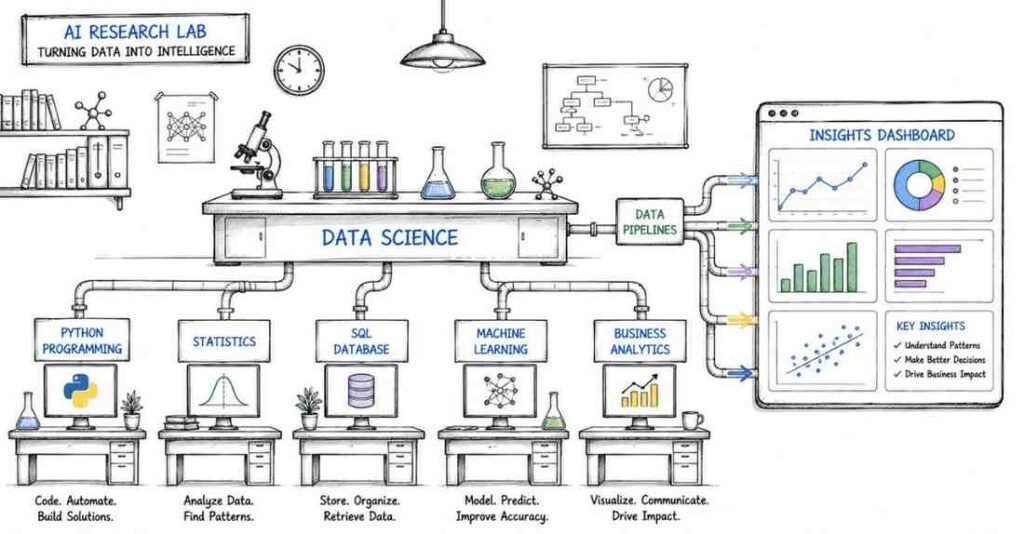
Table of Contents
This 90-day traditional data scientist roadmap is designed to take you from complete beginner to job-ready data scientist with a practical, step-by-step plan. You will start with Python programming and statistics, then move into SQL, exploratory data analysis, machine learning, model evaluation, and project building before finishing with interview preparation. The goal is simple: help students in Hyderabad, Telangana, Andhra Pradesh, and across India learn the core data science skills that employers actually ask for. Data scientist roles are in demand because businesses need professionals who can analyze data, build models, and turn insights into decisions. By the end of 90 days, you should be ready for entry-level data science jobs with confidence and a strong project portfolio.
Start Your Data Scientist Journey →
Why Traditional Data Science Is a Smart Career Choice
Data science is one of the most valued careers in tech because every large organization runs on data. Companies need professionals who can clean data, analyze patterns, build machine learning models, and communicate findings clearly. That is why data science skills are useful across IT services, banking, healthcare, e-commerce, telecom, and consulting.
This is also a field where practical knowledge matters more than memorizing theory. If you can load data, explore it, train a model, and explain the result, you already have what many employers want. That is why this roadmap focuses on hands-on learning from the beginning.
- Data science helps businesses make better decisions.
- It is used across IT services, product companies, and enterprise teams.
- Entry-level candidates can grow quickly with strong project work.
- The skill set is useful for both freshers and working professionals.
- Data science knowledge often leads to strong long-term career growth.
90-Day Learning Plan
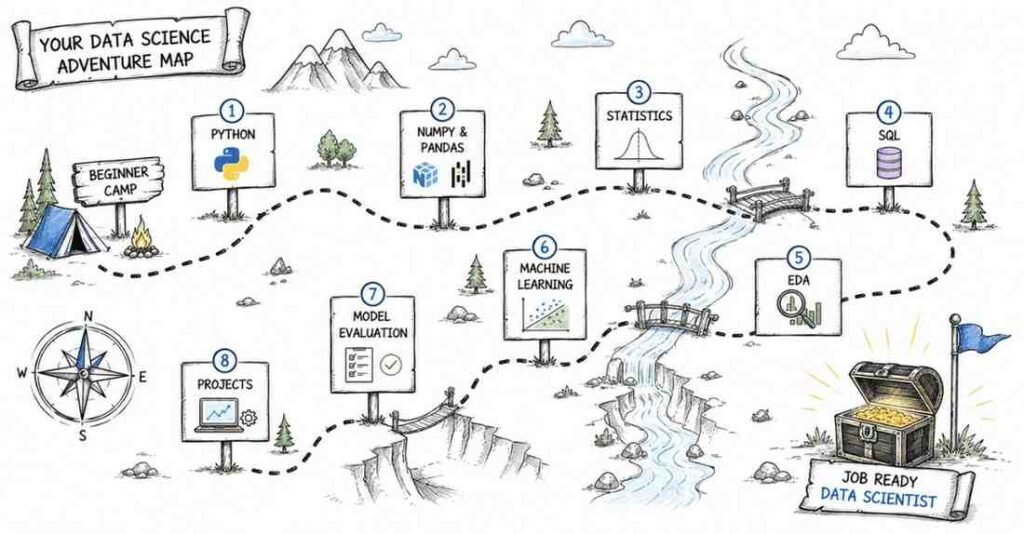
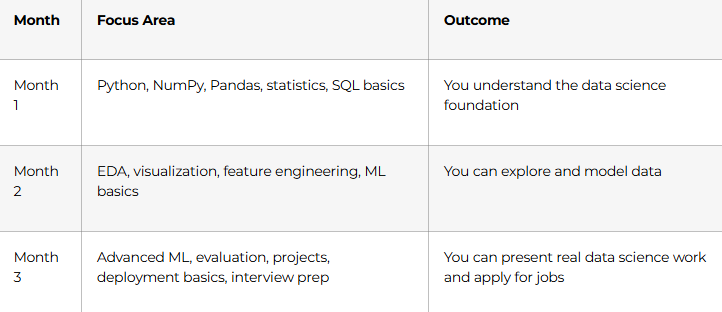
Month 1: Programming and Data Foundations
Month 1 is all about building the base. If you skip the basics, the machine learning and statistics will feel confusing later. Python, data handling, and SQL are the everyday language of data science, so this month gives you the confidence to work on real datasets.
Week 1: Python Basics
Python is the most widely used programming language in data science. Learn variables, data types, operators, conditionals, loops, functions, and lists. You should also understand how to read and print data in Python. These fundamentals matter because every later topic depends on writing clean Python code.
- Learn Python syntax and basic data types.
- Understand variables, operators, and conditions.
- Practice loops and simple functions.
- Work with lists and dictionaries.
- Build simple data-handling scripts.
Week 2: NumPy and Pandas
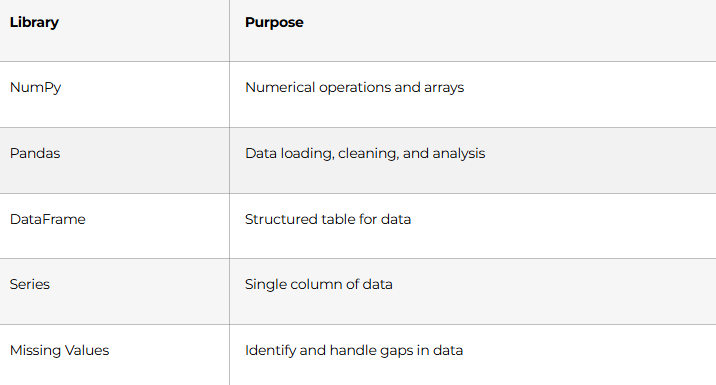
NumPy and Pandas are the two most important libraries for working with data in Python. Learn how to create arrays, perform calculations, load datasets, inspect data frames, handle missing values, and filter rows. These tools are used in nearly every data science project.
Week 3: Statistics Basics
Statistics is the backbone of data science. Learn descriptive statistics, measures of central tendency, spread, probability basics, normal distribution, and correlation. You should understand what data is telling you before you apply any model to it.
- Learn mean, median, and mode.
- Understand standard deviation and variance.
- Study probability fundamentals.
- Explore correlation and causation.
- Review normal distribution basics.
Week 4: SQL for Data Science
SQL helps data scientists pull and verify data from databases. Learn SELECT, WHERE, GROUP BY, JOIN, aggregate functions, and basic subqueries. Many data science roles expect you to be comfortable with SQL because real data lives in databases before it ever reaches Python.
Month 2: Data Exploration and Machine Learning
Month 2 is where you begin working like a real data scientist. You move from raw data to analysis, visualization, and machine learning. This is the stage where data science starts feeling like a practical job skill instead of a theory subject.
Week 5: Exploratory Data Analysis
Exploratory data analysis is the process of understanding your data before building any model. Learn how to check distributions, find outliers, analyze correlations, and visualize patterns. Good EDA is what separates strong data scientists from students who jump straight to models.
- Learn how to explore a dataset.
- Check distributions and outliers.
- Analyze correlations between features.
- Summarize key patterns.
- Prepare questions your model should answer.
Week 6: Data Visualization
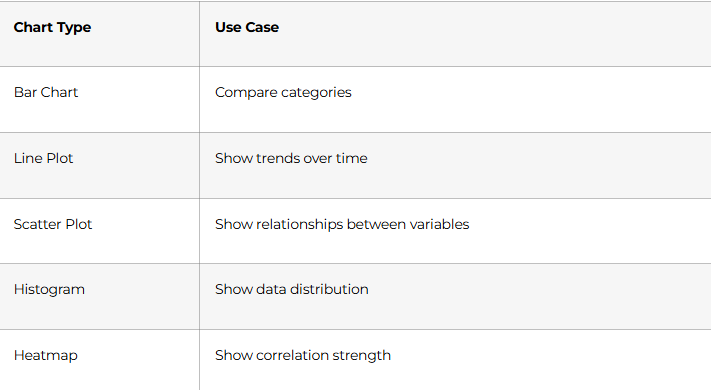
Visualization helps you and others understand data quickly. Learn Matplotlib and Seaborn for creating bar charts, line plots, scatter plots, histograms, and heatmaps. Good visualization is also important in interviews because it shows you can communicate data stories clearly.
Week 7: Feature Engineering
Feature engineering is the process of creating or transforming variables so machine learning models can learn from them better. Learn encoding categorical variables, scaling numerical data, handling missing values, and creating useful derived features. Good features improve model performance significantly.
- Learn label encoding and one-hot encoding.
- Understand scaling and normalization.
- Handle missing values properly.
- Create new features from existing data.
- Review feature selection basics.
Week 8: Machine Learning Basics
Machine learning helps systems learn patterns from data. Learn supervised and unsupervised learning, and practice common algorithms like linear regression, logistic regression, decision trees, and k-means clustering. At this stage, understanding when and why to use an algorithm matters more than memorizing code.
Month 3: Advanced ML, Projects, and Career Readiness
Month 3 focuses on making you job-ready. You will combine the tools you learned, build complete project workflows, and prepare presentations for employers. A good data science portfolio proves that you can explore, model, evaluate, and explain, not just run code.
Week 9: Model Evaluation
Building a model is not enough; you need to know how well it performs. Learn accuracy, precision, recall, F1 score, confusion matrix, and cross-validation. Understanding evaluation helps you pick the right model and justify your choices in interviews.
- Learn classification metrics.
- Understand precision and recall.
- Practice confusion matrix interpretation.
- Study regression evaluation metrics.
- Review cross-validation basics.
Week 10: Advanced ML Techniques
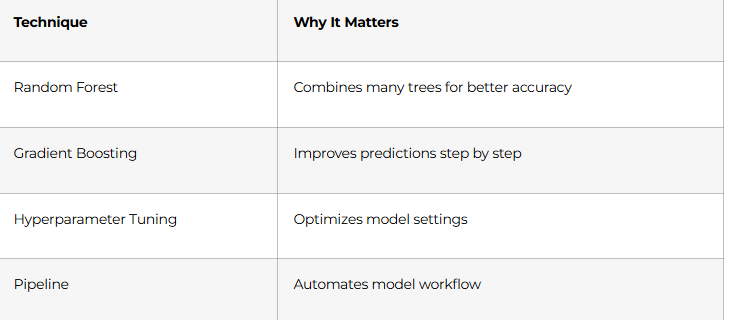
Now that you know the basics, explore ensemble methods, hyperparameter tuning, and pipelines. Learn random forest, gradient boosting basics, and how to improve model performance. This week prepares you for more complex interview questions and real project challenges.
Week 11: Project Building
Use this week to create portfolio projects that prove your skills. Build a customer churn prediction, a house price predictor, a sales forecasting model, or a student performance analysis. Make sure each project includes data loading, EDA, model building, evaluation, and a short business explanation.
Week 12: Deployment Basics and Interview Prep
The final week should be used for resume building, LinkedIn optimization, portfolio updates, and interview practice. Also learn the basics of model deployment so you can explain how your models could be used in production. Employers want students who can build, evaluate, and communicate data science results confidently.
Explore Career Data Scientist Guides →
Data Scientist Career Paths and Salary Guide
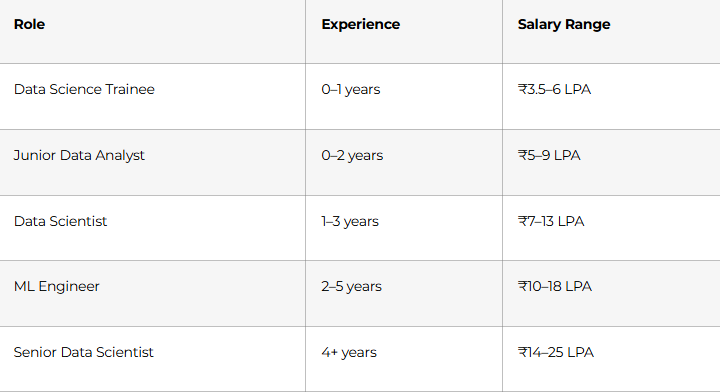
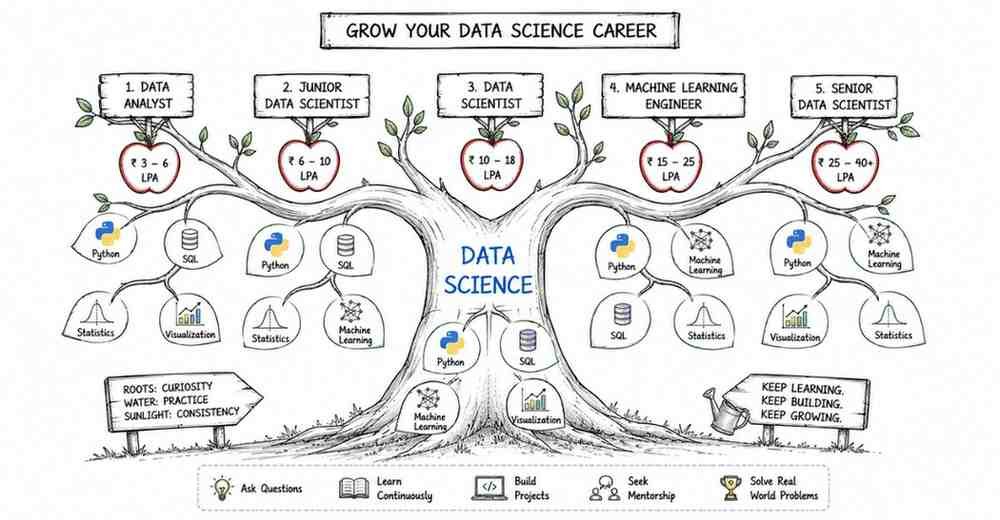
Data science salaries vary by company, city, and specialization, but the field remains one of the strongest career choices in analytics and AI. Hyderabad, Bangalore, Pune, Chennai, and Gurgaon are active hiring locations. Candidates who know Python, statistics, SQL, EDA, machine learning, and model evaluation usually stand out quickly.
Why Choose Frontlines Edutech
Frontlines Edutech helps students learn practical, job-focused skills in a way that feels clear and achievable. The training is designed for beginners who want real data science understanding, not just theory. Students also benefit from guided learning, interview support, and a roadmap that matches current industry needs.
- Hands-on learning with real projects.
- Beginner-friendly explanations for complex topics.
- Job-focused curriculum with practical outcomes.
- Support for resumes, interviews, and career preparation.
- Training aligned with Indian hiring expectations.
Master Your Data Scientist Interviews →
Frequently Asked Questions (FAQs)
Q1.Do I need coding experience to learn data science?
A.No, you do not need advanced coding experience to start. Basic computer knowledge is enough for the first month, and Python is introduced gradually.
Q2.What is the salary for a data science fresher in India?
A.A data science fresher in India can typically expect around ₹3.5 to ₹6 LPA, depending on the role, company, and skill level. Candidates with strong projects and machine learning knowledge can earn more.
Q3.Is traditional data science still relevant in India?
A.Yes, traditional data science is still in high demand because most companies start with structured data, regression models, and statistical analysis before moving to advanced AI. These core skills remain important.
Q4.What will I learn in this 90-day roadmap?
A.You will learn Python, NumPy, Pandas, statistics, SQL, EDA, visualization, feature engineering, machine learning, model evaluation, and interview preparation. You will also work on practical projects and portfolio building.
Q5.Can I get a job after learning data science in 90 days?
A.Yes, you can become job-ready in 90 days if you practice regularly and build projects. A strong portfolio and interview preparation are important for getting shortlisted.
Q6.Does data science use SQL heavily?
A.Yes, SQL is an important part of data science work. Most real datasets come from databases, so being comfortable with queries is a major advantage.
Q7.What kind of jobs can I apply for after this course?
A.You can apply for data analyst, junior data scientist, and ML support roles. With more experience, you can grow into senior data scientist and machine learning engineer positions.
Q8.Is data science used in real companies?
A.Yes, data science is used by banks, e-commerce platforms, healthcare companies, telecom firms, and tech organizations to analyze performance and predict outcomes. That is what makes it such a practical career path.
Published by Frontlines Edutech | blog.frontlinesedutech.com
support@frontlinesedutech.com