How to Become a ServiceNow Platform Developer: Complete Career Guide 2025 [₹10L Average Salary]

Master enterprise service management and workflow automation

ServiceNow platform developers are among the most sought-after professionals in enterprise IT, with average salaries ranging from ₹5-20 LPA in India and senior ServiceNow architects earning ₹35+ LPA. As organizations increasingly adopt ServiceNow for IT service management, HR service delivery, and business process automation, the ability to configure, customize, and develop applications on the ServiceNow platform has become one of the most valuable and specialized skills in enterprise technology.

Whether you’re an IT professional looking to specialize in ITSM platforms, a developer seeking enterprise application expertise, or a business analyst wanting to understand workflow automation, this comprehensive guide provides the proven roadmap to building a successful ServiceNow career. Having trained over 180 ServiceNow professionals at Frontlines EduTech with a 92% job placement rate, I’ll share the strategies that consistently deliver results in the rapidly growing ServiceNow ecosystem.

What you’ll master in this guide:

  • Complete ServiceNow learning pathway from fundamentals to advanced development
  • Essential platform components including ITSM, ITOM, and custom application development
  • Portfolio projects demonstrating real enterprise workflow solutions
  • Certification strategies and interview preparation frameworks
  • Career advancement opportunities in enterprise automation and digital transformation
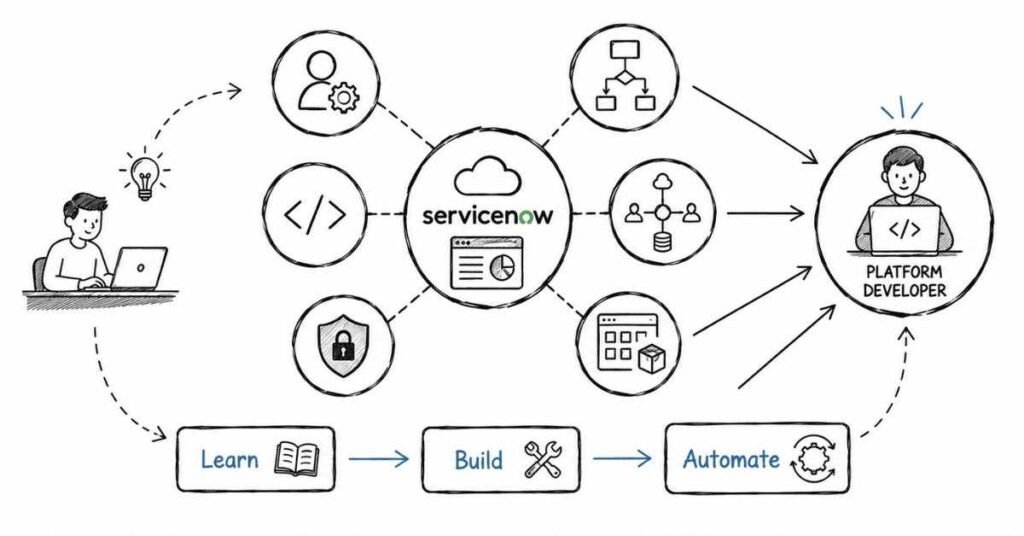
How to Become a Service Now

1. What is ServiceNow Platform Development?

ServiceNow platform development involves designing, building, and implementing enterprise service management solutions using the ServiceNow cloud platform. ServiceNow developers create automated workflows, custom applications, and integrations that streamline business processes across IT service management, human resources, customer service, and various business functions within large organizations.

Core Components of ServiceNow Development:

IT Service Management (ITSM):

  • Incident Management – Automated ticket routing, escalation workflows, SLA monitoring
  • Change Management – Change advisory boards, approval workflows, rollback procedures
  • Problem Management – Root cause analysis, knowledge management, continuous improvement
  • Service Catalog – Self-service portals, request fulfillment, approval processes
 

Platform Configuration and Customization:

  • Workflow Development – Visual workflow designer, business rules, script includes
  • Form and UI Customization – User interface design, client scripts, UI policies
  • Data Management – Table creation, relationships, import sets, data transformation
  • Integration Development – REST/SOAP APIs, MID Server configuration, third-party connections
 

Custom Application Development:

  • Scoped Applications – Application isolation, namespacing, version control
  • Business Logic Implementation – Server-side scripts, business rules, scheduled jobs
  • User Experience Design – Service Portal development, mobile applications, widgets
  • Performance Optimization – Query optimization, caching strategies, system performance
 

Automation and Orchestration:

  • Flow Designer – Visual workflow automation with drag-and-drop interface
  • IntegrationHub – Pre-built integrations with enterprise applications
  • Orchestration – Multi-system workflow automation, runbook automation
  • Machine Learning – Predictive intelligence, clustering, anomaly detection
 

ServiceNow vs Traditional Enterprise Applications

Traditional Enterprise Software Limitations:

  • Siloed applications with limited integration capabilities
  • Manual processes requiring human intervention and approval chains
  • Rigid customization requiring extensive development resources
  • Limited self-service capabilities for end users
 

ServiceNow Platform Advantages:

  • Unified platform connecting multiple business functions and departments
  • Automated workflows reducing manual intervention and processing time
  • Low-code/no-code configuration enabling rapid application development
  • Comprehensive self-service capabilities improving user experience and reducing support burden

2. Why Choose ServiceNow in 2025?

why choose Service Now

Explosive Enterprise Adoption and Market Leadership

According to Gartner’s IT Service Management Tools Magic Quadrant 2025, ServiceNow continues to lead the ITSM market with expanding capabilities into HR, customer service, and business applications. In India specifically, ServiceNow adoption has accelerated dramatically:

Enterprise ServiceNow Implementations:

  • Banking and Financial Services – HDFC Bank, ICICI Bank, Axis Bank implementing comprehensive service management
  • Technology Companies – TCS, Infosys, Wipro using ServiceNow for internal operations and client delivery
  • Manufacturing – Tata Motors, Mahindra, L&T leveraging ServiceNow for operational excellence
  • Government and Public Sector – Digital India initiatives adopting ServiceNow for citizen services
 

Platform Evolution and Market Expansion:

  • Beyond ITSM – Expansion into HR service delivery, customer service management, security operations
  • AI and Machine Learning – Predictive intelligence, virtual agents, automated decision making
  • Low-Code Development – App Engine enabling citizen developers and business users
  • Digital Transformation – End-to-end business process automation and digital workflows
 

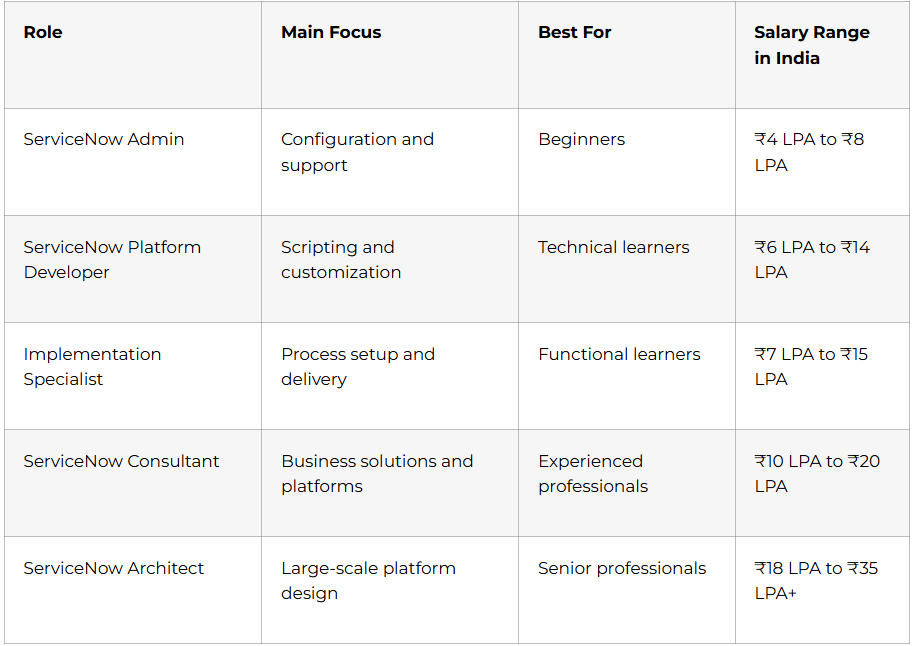
Premium Compensation and Specialized Expertise

ServiceNow professionals command high salaries due to specialized platform knowledge:

service now

Source: PayScale India 2025, Glassdoor ServiceNow Salaries

High Demand with Limited Supply

ServiceNow expertise is in critically short supply:

  • Rapid Platform Growth – ServiceNow customer base growing 25%+ annually
  • Limited Training Programs – Few comprehensive ServiceNow education programs available
  • Complex Platform – Steep learning curve creating barriers to entry
  • Enterprise Focus – Large organizations willing to pay premium for expertise
 

Multiple Career Specialization Paths

ServiceNow offers diverse specialization opportunities:

  • Technical Development – Custom applications, integrations, advanced scripting
  • Functional Configuration – Business process implementation, workflow design
  • Solution Architecture – Enterprise solution design, technical leadership
  • Implementation Consulting – Client-facing implementation and optimization services

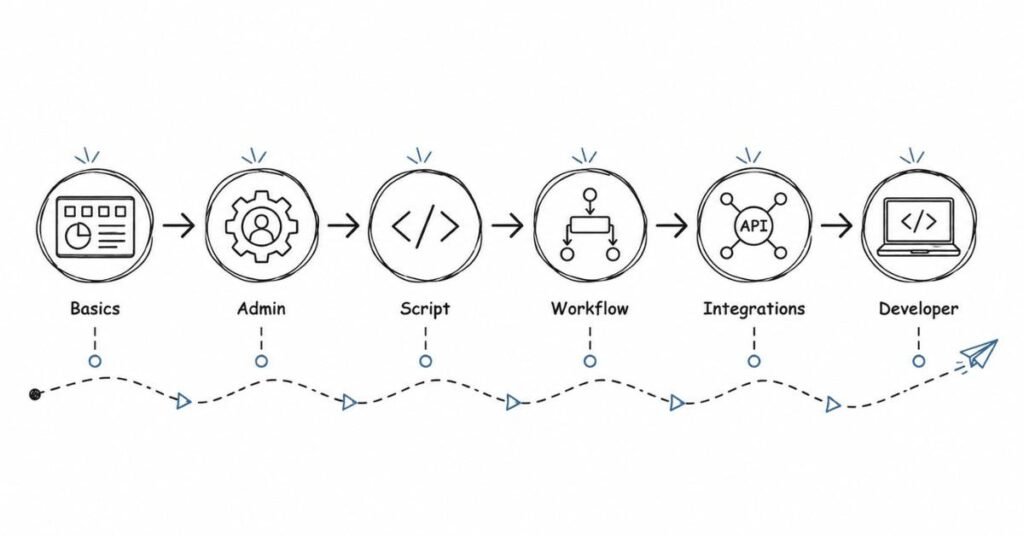
3. Complete Learning Roadmap (4-6 Months)

Service Now Roadmap

Phase 1: ServiceNow Fundamentals and Platform Navigation (Month 1)

ServiceNow Platform Overview (1-2 weeks)

Understanding the ServiceNow ecosystem is crucial before diving into specific modules:

  • Platform Architecture – Multi-tenant cloud architecture, instances, applications, modules
  • User Interface Navigation – Forms, lists, modules, application navigator, filters
  • Basic Configuration – Tables, fields, forms, views, access controls
  • ServiceNow Terminology – Instances, applications, tables, records, workflows, business rules
 

Core Platform Concepts (2-3 weeks)

  • Data Model – Tables, relationships, reference fields, choice lists, data dictionary
  • User Administration – Users, groups, roles, access control lists (ACLs)
  • Basic Scripting – JavaScript fundamentals, GlideRecord API, server-side scripting
  • Import and Integration – Import sets, transform maps, data sources, basic integrations
 

ITSM Foundation (1-2 weeks)

  • Incident Management – Ticket lifecycle, assignment, escalation, resolution
  • Service Catalog – Catalog items, workflows, approvals, request fulfillment
  • Knowledge Management – Knowledge base, article creation, content management
  • Reporting and Dashboards – Basic reporting, performance analytics, KPI monitoring
 

Foundation Projects:

  1. Custom Table Creation – Design and implement custom business application with related tables
  2. Basic Workflow Development – Create approval workflow with multiple stages and notifications
  3. Service Catalog Item – Build complete catalog item with form, workflow, and fulfillment
 

Phase 2: Advanced Configuration and Business Rules (Month 2)

Advanced Configuration Techniques (3-4 weeks)

  • Business Rules – Server-side logic, before/after/async/display business rules
  • Client Scripts – Form validation, field population, user interface enhancement
  • UI Policies and UI Actions – Dynamic form behavior, custom buttons, form controls
  • Script Includes – Reusable server-side functions, object-oriented programming
 

Workflow and Automation (2-3 weeks)

  • Workflow Editor – Visual workflow design, activities, conditions, approvals
  • Flow Designer – Modern workflow automation, subflows, action steps
  • Scheduled Jobs – Automated maintenance, data processing, system cleanup
  • SLA and Escalation – Service level agreements, breach detection, escalation rules
 

Data Management and Integration (1-2 weeks)

  • Advanced Import Sets – Complex data transformation, field mapping, coalescing
  • REST and SOAP APIs – Inbound and outbound web services, authentication
  • MID Server – On-premises integration, discovery, orchestration
  • Email Integration – Inbound email processing, notifications, templates
 

Advanced Configuration Projects:

  1. Change Management Process – Complete change advisory board workflow with approvals and risk analysis
  2. Custom Problem Management – Root cause analysis workflow with knowledge capture
  3. Multi-System Integration – REST API integration with external system for data synchronization
 

Phase 3: Application Development and Scripting (Month 3-4)

Advanced Scripting and Development (4-5 weeks)

  • GlideRecord API – Database operations, queries, updates, error handling
  • GlideSystem and GlideDateTime – System utilities, date/time manipulation
  • Advanced Client Scripts – AJAX, asynchronous processing, performance optimization
  • Script Debugging – Debugging techniques, logging, performance analysis
 

Custom Application Development (3-4 weeks)

  • Scoped Applications – Application isolation, private scope, cross-scope access
  • Application Files – UI pages, UI macros, style sheets, images
  • Mobile Applications – Mobile UI development, responsive design, offline capabilities
  • Service Portal – Widget development, page design, user experience optimization
 

Advanced Integration and APIs (2-3 weeks)

  • REST API Development – Custom REST endpoints, authentication, error handling
  • Scripted REST APIs – Custom web services, JSON processing, response formatting
  • Outbound Integrations – External system integration, data synchronization
  • Web Services – SOAP services, WSDL processing, complex data structures
 

Development Projects:

  1. Custom Scoped Application – Complete business application with multiple tables, workflows, and UI
  2. Service Portal Solution – Customer-facing portal with widgets, catalogs, and knowledge base
  3. Advanced Integration – Bi-directional integration with external enterprise application
 

Phase 4: Advanced Modules and Specialization (Month 4-5)

IT Operations Management (ITOM) (2-3 weeks)

  • Discovery – Network discovery, service mapping, CMDB population
  • Event Management – Event correlation, alert processing, monitoring integration
  • Orchestration – Runbook automation, workflow orchestration, system management
  • Service Mapping – Application dependency mapping, business service modeling

HR Service Delivery (2-3 weeks)

  • Employee Service Center – HR case management, employee portal, knowledge base
  • Employee Onboarding – Automated onboarding workflows, task management, compliance
  • Performance Analytics – HR metrics, dashboard development, reporting
  • Document Management – Document workflows, approvals, retention policies
 

Security Operations (2-3 weeks)

  • Security Incident Response – Security case management, threat intelligence, forensics
  • Vulnerability Response – Vulnerability management, remediation workflows, compliance
  • Risk Management – Risk assessment, compliance monitoring, audit management
  • Threat Intelligence – Security feeds, indicator processing, threat hunting
 

Choose Specialization Focus:

  • Technical Architect – Platform architecture, performance optimization, enterprise design
  • Functional Consultant – Business process design, requirements analysis, change management
  • Integration Specialist – Enterprise integration, API development, system connectivity
  • Industry Solutions – Vertical-specific solutions (healthcare, financial services, government)
 

Phase 5: Certification and Portfolio Development (Month 5-6)

ServiceNow Certification Preparation:

  • Certified System Administrator (CSA) – Platform fundamentals, configuration, basic development
  • Certified Application Developer (CAD) – Advanced development, scripting, application creation
  • Certified Implementation Specialist – Module-specific expertise (ITSM, ITOM, HR, Security)
  • Certified Technical Architect (CTA) – Advanced architecture, design patterns, best practices
 

Portfolio Development and Professional Presentation:

  • Case Study Documentation – Business requirements, technical implementation, results achieved
  • Code Samples – Advanced scripts, custom applications, integration examples
  • Process Documentation – Workflow designs, business process improvements, user guides
  • Performance Metrics – Quantified improvements, efficiency gains, user satisfaction

4. Essential ServiceNow Modules and Technologies

Service Now Tools

Core Platform Components

ServiceNow Studio:

  • Integrated Development Environment – Code editor, version control, testing tools
  • Application Development – Scoped applications, dependency management, publishing
  • Source Control – Git integration, branching, merging, deployment
  • Automated Testing – Unit testing, integration testing, performance testing
 

Flow Designer:

  • Visual Workflow Development – Drag-and-drop interface, pre-built actions
  • Integration Hub – Pre-built integrations with popular enterprise applications
  • Subflows – Reusable workflow components, modular design
  • Error Handling – Exception management, retry logic, notifications
 

IT Service Management Suite

Incident Management:

  • Automated Routing – Assignment rules, escalation policies, workload balancing
  • SLA Management – Service level tracking, breach prevention, performance monitoring
  • Major Incident – Crisis management, communication, post-incident review
  • Integration – Monitoring tools, chat systems, knowledge management
 

Change Management:

  • Change Advisory Board – Automated scheduling, risk assessment, approval workflows
  • Emergency Changes – Expedited processing, post-implementation review
  • Standard Changes – Pre-approved changes, automated fulfillment
  • Change Analytics – Success rates, risk analysis, performance metrics
 

Service Catalog:

  • Request Management – Self-service portal, shopping cart, approval workflows
  • Catalog Builder – Visual catalog design, category management, item configuration
  • Workflow Integration – Fulfillment automation, task assignment, status tracking
  • Cost Management – Price modeling, budget tracking, chargeback allocation
 

Platform Development Tools

Integration Technologies:

  • REST APIs – RESTful web services, JSON processing, authentication methods
  • SOAP Services – Legacy system integration, XML processing, complex data structures
  • MID Server – On-premises connectivity, discovery, orchestration, proxy services
  • Email Integration – Inbound processing, template management, notification systems
 

Automation and Intelligence:

  • Machine Learning – Predictive analytics, clustering, anomaly detection
  • Virtual Agent – Chatbot development, natural language processing, automated responses
  • Performance Analytics – Dashboard creation, KPI monitoring, trend analysis
  • Predictive Intelligence – Automated insights, recommendation engines, proactive support
 

Advanced Platform Capabilities

Service Portal:

  • Widget Development – AngularJS widgets, responsive design, user experience
  • Page Designer – Drag-and-drop page creation, template management, branding
  • Knowledge Management – Search optimization, content management, user feedback
  • Mobile Optimization – Native mobile apps, offline capabilities, push notifications
 

Security and Compliance:

  • Access Control – Role-based security, field-level permissions, data isolation
  • Audit and Compliance – Change tracking, approval documentation, regulatory reporting
  • Data Encryption – Field encryption, transmission security, key management
  • Single Sign-On – SAML integration, LDAP connectivity, multi-factor authentication

5. Building Your ServiceNow Portfolio

Service Now portfolio

Portfolio Strategy and Structure

ServiceNow Portfolio Objectives:

  1. Demonstrate Technical Proficiency – Show mastery of platform configuration, development, and integration
  2. Highlight Business Value – Quantify process improvements, efficiency gains, and user satisfaction
  3. Showcase Problem-Solving – Display analytical thinking and solution architecture skills
  4. Present Implementation Experience – Document end-to-end project delivery and stakeholder management

Foundation Level Projects (Months 1-2)

  1. Complete ITSM Implementation
  • Project Scope: Full IT service management implementation including incident, problem, change, and service catalog
  • Configuration: Custom forms, workflows, business rules, SLA definitions, reporting dashboards
  • User Experience: Service portal design, mobile optimization, knowledge base integration
  • Metrics: Ticket resolution time, user satisfaction scores, process compliance rates
  • Documentation: Business requirements, technical specifications, user training materials
 

ServiceNow Implementation Example:

// Business Rule for Incident Auto-Assignment
(function executeRule(current, previous /*null when async*/) {
    // Get assignment group based on category and subcategory
    var assignmentGroup = getAssignmentGroup(current.category, current.subcategory);
   
    if (assignmentGroup) {
        current.assignment_group = assignmentGroup;
       
        // Set assigned_to based on workload balancing
        var assignedUser = getNextAvailableUser(assignmentGroup);
        if (assignedUser) {
            current.assigned_to = assignedUser;
            current.state = 2; // In Progress
        }
       
        // Log assignment for audit trail
        current.work_notes = “Auto-assigned to ” + assignmentGroup.getDisplayValue() +
                          ” based on category: ” + current.category;
    }
})(current, previous);

// Function to determine assignment group
function getAssignmentGroup(category, subcategory) {
    var gr = new GlideRecord(‘u_assignment_rules’);
    gr.addQuery(‘category’, category);
    gr.addQuery(‘subcategory’, subcategory);
    gr.addQuery(‘active’, true);
    gr.query();
   
    if (gr.next()) {
        return gr.assignment_group;
    }
    return null;
}

  1. Service Catalog and Request Management
  • Business Challenge: Manual request processing causing delays and inconsistent approvals
  • Solution: Comprehensive service catalog with automated workflows and approval processes
  • Technical Implementation: Catalog items, workflow development, approval engines, fulfillment automation
  • Integration: LDAP authentication, email notifications, asset management system connectivity
  • Measurable Outcomes: 60% reduction in request processing time, 95% user satisfaction rating
 

Intermediate Level Projects (Months 3-4)

  1. Custom Application Development
  • Business Need: Department-specific application for managing specialized business processes
  • Scoped Application: Isolated application with custom tables, forms, business logic, and user interface
  • Advanced Features: Complex workflows, integration with external systems, mobile accessibility
  • User Experience: Service portal widgets, responsive design, personalized dashboards
  • Performance Optimization: Query optimization, caching strategies, load testing
 

Custom Application Architecture:

// Server-Side Script Include for Business Logic
var ProjectManagementUtils = Class.create();
ProjectManagementUtils.prototype = {
    initialize: function() {
        this.projectTable = ‘u_project’;
        this.taskTable = ‘u_project_task’;
    },
   
    // Calculate project completion percentage
    calculateCompletion: function(projectId) {
        var totalTasks = this._getTaskCount(projectId);
        var completedTasks = this._getCompletedTaskCount(projectId);
       
        if (totalTasks === 0) return 0;
        return Math.round((completedTasks / totalTasks) * 100);
    },
   
    // Update project status based on task completion
    updateProjectStatus: function(projectId) {
        var completion = this.calculateCompletion(projectId);
        var projectGR = new GlideRecord(this.projectTable);
       
        if (projectGR.get(projectId)) {
            projectGR.completion_percentage = completion;
           
            if (completion === 100) {
                projectGR.status = ‘completed’;
            } else if (completion > 0) {
                projectGR.status = ‘in_progress’;
            }
           
            projectGR.update();
        }
    },
   
    type: ‘ProjectManagementUtils’
};

Advanced Level Projects (Months 4-6)

  1. Enterprise Integration and Orchestration
  • Integration Challenge: Multi-system workflow requiring data synchronization across ERP, CRM, and HRMS
  • Technical Solution: Complex orchestration workflow with error handling, data transformation, and rollback capabilities
  • API Development: Custom REST endpoints, authentication, data validation, error responses
  • Monitoring and Alerting: Integration health monitoring, performance metrics, automated failure notifications
  • Business Impact: Eliminated manual data entry, reduced processing time by 80%, improved data accuracy
  1. Advanced Analytics and Machine Learning Implementation
  • Analytics Challenge: Predictive incident management and proactive problem identification
  • ML Implementation: Clustering algorithms for incident categorization, predictive models for escalation
  • Dashboard Development – Executive analytics, trend analysis, predictive insights, actionable recommendations
  • Performance Analytics: Custom metrics, KPI tracking, benchmark comparison, continuous improvement
  • ROI Demonstration: Prevented 200+ major incidents annually, reduced MTTR by 35%, improved customer satisfaction
 

Portfolio Presentation Standards

Professional Documentation Framework:

ServiceNow Project Documentation Template:

Executive Summary:
– Business challenge and strategic objectives
– Solution overview and technical approach
– Quantified results and business impact
– Key stakeholders and success metrics

Technical Architecture:
– Platform components and modules utilized
– Custom development and configuration details
– Integration architecture and data flows
– Security implementation and access controls

Implementation Methodology:
– Project phases and milestone delivery
– Stakeholder engagement and change management
– Testing strategy and quality assurance
– Go-live planning and support transition

Results and Metrics:
– Performance improvements and efficiency gains
– User adoption rates and satisfaction scores
– Cost savings and ROI calculations
– Lessons learned and future enhancements

Code and Configuration Samples:
– Business rules and script includes
– Workflow definitions and automation logic
– Integration APIs and data transformations
– Custom UI components and portal widgets

Live Demonstration Environment:

  • Personal Developer Instance – Free ServiceNow developer instance with custom applications
  • Demo Scripts – Prepared scenarios showcasing configuration and development skills
  • User Stories – Real business scenarios with complete solution walk-through
  • Performance Metrics – Documented improvements and measurable business value

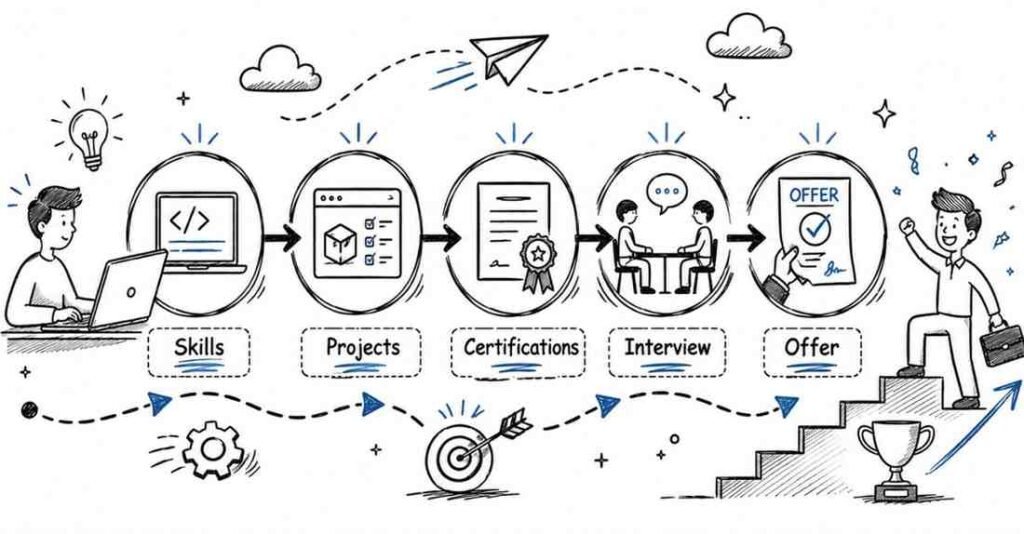
6. Job Search Strategy

Service Now job search

Resume Optimization for ServiceNow Roles

Technical Skills Section:

ServiceNow Platform Expertise:
• Platform Administration: User management, ACLs, Business Rules, Client Scripts, UI Policies
• ITSM Implementation: Incident, Problem, Change, Service Catalog, Knowledge Management
• Application Development: Scoped Applications, Workflow Designer, Flow Designer, Service Portal
• Integration: REST/SOAP APIs, MID Server, Import Sets, Web Services, Third-party Connectors
• Advanced Modules: ITOM, HR Service Delivery, Security Operations, Customer Service Management
• Scripting: JavaScript, GlideRecord, GlideSystem, Advanced Client/Server Scripts
• Analytics: Performance Analytics, Reporting, Dashboard Development, Predictive Intelligence

Certifications:
• ServiceNow Certified System Administrator (CSA)
• ServiceNow Certified Application Developer (CAD)
• ServiceNow Implementation Specialist – ITSM

Project Experience Examples:

Enterprise ITSM Transformation Initiative

  • Challenge: Fortune 500 manufacturing company with fragmented IT service delivery across 15 countries
  • Solution: Comprehensive ServiceNow ITSM implementation with standardized processes and global service catalog
  • Technical Delivery: Multi-instance architecture, complex integrations with 8 enterprise systems, custom workflows
  • Business Impact: Reduced average ticket resolution time by 45%, improved user satisfaction from 3.2 to 4.6/5, consolidated 12 legacy systems
 

Custom HR Service Delivery Platform

  • Challenge: Global consulting firm needing automated employee lifecycle management and self-service capabilities
  • Solution: ServiceNow HR Service Delivery with custom onboarding workflows, document management, and analytics
  • Advanced Features: Machine learning for case routing, predictive analytics for employee satisfaction, mobile application
  • Results: Decreased onboarding time from 2 weeks to 3 days, achieved 92% employee self-service adoption, reduced HR case volume by 60%
 

ServiceNow Job Market Analysis

High-Demand Role Categories:

  1. ServiceNow Developer (All Levels)
  • Salary Range: ₹6-35 LPA
  • Open Positions: 2,800+ across India
  • Key Skills: JavaScript, workflow development, integration, custom applications
  • Growth Path: Developer → Senior Developer → Technical Lead → Solution Architect
 
  1. ServiceNow Administrator (Foundation Role)
  • Salary Range: ₹5-25 LPA
  • Open Positions: 3,200+ across India
  • Key Skills: Platform configuration, user management, process implementation
  • Growth Path: Admin → Senior Admin → Platform Architect → Technical Director
 
  1. ServiceNow Implementation Consultant (Client-Facing)
  • Salary Range: ₹7-38 LPA
  • Open Positions: 1,900+ across India
  • Key Skills: Business analysis, stakeholder management, project delivery
  • Growth Path: Consultant → Senior Consultant → Principal Consultant → Practice Lead
 
  1. ServiceNow Solution Architect (Senior Role)
  • Salary Range: ₹15-45 LPA
  • Open Positions: 800+ across India
  • Key Skills: Enterprise architecture, technical leadership, solution design
  • Growth Path: Architect → Principal Architect → VP Technology → CTO
 

Top Hiring Companies and Opportunities

ServiceNow Partners and System Integrators:

  • Accenture – Global ServiceNow practice with 5,000+ certified professionals
  • Deloitte – ServiceNow implementation and optimization services for Fortune 500 clients
  • IBM – ServiceNow consulting and managed services with industry-specific solutions
  • Cognizant – ServiceNow development and support services with offshore delivery model
 

Enterprise Direct Employment:

  • Tata Consultancy Services – Internal ServiceNow implementation and client delivery
  • Infosys – ServiceNow center of excellence and customer implementations
  • Wipro – ServiceNow practice with focus on digital transformation
  • HCL Technologies – ServiceNow development and managed services offerings
 

End-User Organizations:

  • HDFC Bank – Enterprise ServiceNow implementation for IT and HR service delivery
  • Mahindra Group – Multi-business unit ServiceNow deployment with custom applications
  • Tata Motors – Global ServiceNow implementation for IT operations and employee services
  • Asian Paints – ServiceNow platform for customer service and field service management
 

Product and Technology Companies:

  • ServiceNow India – Direct employment with platform vendor for development and customer success
  • Microsoft India – ServiceNow integration specialists for Office 365 and Azure connectivity
  • Amazon Web Services – ServiceNow partnerships and cloud integration expertise
  • Google Cloud – ServiceNow platform optimization and cloud-native implementations
 

Interview Preparation Framework

Technical Competency Areas:

Platform Configuration and Administration:

  1. “Design an incident management process for a global organization with 24/7 support requirements”
    • Multi-timezone support considerations and assignment rules
    • Escalation policies with follow-the-sun model
    • SLA definitions with business hour calculations
    • Communication templates and stakeholder notifications
  2. “Explain how you would implement role-based access control for a complex organization”
    • Role hierarchy design and inheritance patterns
    • Access control list (ACL) configuration and field-level security
    • Delegated administration and approval workflows
    • Regular access reviews and compliance reporting
 

Development and Scripting:


3. “Write a business rule to automatically calculate SLA breach time and send notifications”

// Server-side business rule example
(function executeRule(current, previous) {
    if (current.state == 6) { // Resolved state
        var slaGR = new GlideRecord(‘task_sla’);
        slaGR.addQuery(‘task’, current.sys_id);
        slaGR.addQuery(‘stage’, ‘in_progress’);
        slaGR.query();
       
        while (slaGR.next()) {
            if (slaGR.has_breached) {
                // Send breach notification
                var notification = new GlideRecord(‘sysevent’);
                notification.event_name = ‘sla.breach.notification’;
                notification.parm1 = current.number;
                notification.parm2 = slaGR.sla.getDisplayValue();
                notification.insert();
            }
        }
    }
})(current, previous);

Integration and API Development:


4. “Design a REST API integration with an external CMDB system”

  • Authentication strategy and security considerations
  • Data mapping and transformation requirements
  • Error handling and retry logic implementation
  • Performance optimization and rate limiting
 

Solution Architecture:


5. “Architect a ServiceNow solution for a merger and acquisition scenario”

  • Multi-instance strategy and data consolidation approach
  • User migration and access management planning
  • Process standardization and change management
  • Timeline and risk mitigation strategies
 

Salary Negotiation and Career Advancement

ServiceNow-Specific Value Propositions:

  • Platform Expertise – Rare and specialized skills with limited market supply
  • Certification Portfolio – Multiple ServiceNow certifications demonstrating commitment and expertise
  • Business Impact – Quantified process improvements and efficiency gains from implementations
  • Industry Knowledge – Vertical-specific expertise in healthcare, financial services, or manufacturing
 

Negotiation Strategy:

ServiceNow Compensation Package Analysis:
Base Salary: ₹X LPA (Premium rates due to specialized skills)
Performance Bonus: 15-25% of base (Project delivery, certification achievement)
Stock Options: Especially valuable at ServiceNow partners and end-user companies
Learning Budget: ₹50,000-1,00,000 annually (ServiceNow training, conferences, certifications)
Certification Bonuses: ₹25,000-75,000 per advanced certification achieved
Flexible Benefits: Conference attendance, ServiceNow community participation, training time

Career Advancement Factors:

  1. Certification Progression – CSA → CAD → CIS → CTA certification pathway completion
  2. Module Specialization – Deep expertise in ITSM, ITOM, HR, Security, or Custom Apps
  3. Industry Focus – Vertical specialization in healthcare, financial services, or government
  4. Leadership Development – Project management, team leadership, client relationship management
  5. Platform Evolution – Stay current with new ServiceNow releases and emerging capabilities

7. Salary Expectations and Career Growth

  • Artificial Intelligence and Machine Learning – Predictive analytics, virtual agents, automated insights
  • Employee Experience Management – Modern workplace solutions, digital employee journeys
  • Customer Service Management – Omnichannel customer support, field service management
  • Security Operations – GRC, vulnerability management, security incident response
  • Industry Solutions – Healthcare, financial services, government, telecommunications verticals
 

Market Trends Creating New Opportunities:

  • Low-Code/No-Code Development – Citizen developer enablement, business user empowerment
  • Cloud-Native Architecture – Multi-cloud deployments, containerization, microservices2025 Compensation Benchmarks by Role and Experience
 

ServiceNow Administrator Track:

  • Junior Administrator (0-2 years): ₹5-9 LPA
  • ServiceNow Administrator (2-5 years): ₹9-16 LPA
  • Senior Administrator (5-8 years): ₹16-25 LPA
  • Platform Architect (8+ years): ₹25-38 LPA
 

ServiceNow Developer Track:

  • Junior Developer (0-2 years): ₹6-12 LPA
  • ServiceNow Developer (2-5 years): ₹12-22 LPA
  • Senior Developer (5-8 years): ₹22-35 LPA
  • Technical Architect (8+ years): ₹35-50 LPA
 

Implementation Consultant Track:

  • Associate Consultant (0-2 years): ₹7-13 LPA
  • Implementation Consultant (2-5 years): ₹13-24 LPA
  • Senior Consultant (5-8 years): ₹24-38 LPA
  • Principal Consultant (8+ years): ₹38-55 LPA
 

Solution Architect Track:

  • Solution Architect (3-6 years): ₹15-28 LPA
  • Senior Solution Architect (6-10 years): ₹28-45 LPA
  • Principal Architect (10-15 years): ₹45-65 LPA
  • VP Technology/CTO (15+ years): ₹60-100 LPA
 

Industry and Geographic Salary Variations

High-Paying Industries:

  • Financial Services and Banking – 25-35% premium for regulatory compliance and security expertise
  • Healthcare and Life Sciences – 20-30% premium for HIPAA compliance and specialized workflows
  • Government and Public Sector – 15-25% premium for security clearance and compliance requirements
  • Technology and Consulting – 20-30% premium for client-facing roles and specialized delivery
 

Geographic Salary Distribution:

  • Bangalore – Highest ServiceNow job concentration, 18-25% above national average
  • Mumbai – Financial services focus, 15-22% above national average
  • Delhi/NCR – Government and enterprise focus, 12-18% above national average
  • Pune – Growing ServiceNow hub, 8-15% above national average
 

Career Progression Pathways

Technical Leadership Track:

ServiceNow Developer (0-3 years)
    ↓
Senior ServiceNow Developer (2-6 years)
    ↓
Technical Lead (5-9 years)
    ↓
Solution Architect (7-12 years)
    ↓
Principal Architect/CTO (12+ years)

Consulting and Delivery Track:

Implementation Consultant (0-3 years)
    ↓
Senior Consultant (2-6 years)
    ↓
Principal Consultant (5-10 years)
    ↓
Practice Lead (8-15 years)
    ↓
Partner/Managing Director (12+ years)

Product and Platform Track:

Platform Developer (1-4 years)
    ↓
Senior Platform Engineer (3-7 years)
    ↓
Staff Engineer (6-10 years)
    ↓
Principal Engineer (9-15 years)
    ↓
Distinguished Engineer (12+ years)

Skills for Accelerated Career Growth

Technical Mastery (Years 1-3):

  • Platform Proficiency – Deep knowledge of ServiceNow modules, configuration, and development
  • Scripting Excellence – Advanced JavaScript, GlideRecord mastery, performance optimization
  • Integration Expertise – REST/SOAP APIs, MID Server, complex system integrations
  • Module Specialization – Expert-level knowledge in 2-3 ServiceNow modules
 

Business and Consulting Skills (Years 3-6):

  • Process Analysis – Business process optimization, requirements gathering, gap analysis
  • Project Management – Implementation methodology, stakeholder management, delivery excellence
  • Industry Knowledge – Deep understanding of specific business verticals and their unique requirements
  • Change Management – Organizational change, user adoption, training program development
 

Leadership and Strategy (Years 6+):

  • Solution Architecture – Enterprise solution design, technical strategy, platform roadmap
  • Team Leadership – Technical team management, mentoring, performance development
  • Business Development – Client relationship management, proposal development, revenue growth
  • Innovation Leadership – Platform evolution, emerging technology adoption, competitive differentiation
 

Emerging Opportunities and Future Trends

High-Growth ServiceNow Specializations: 

  • API Economy – Integration platform as a service, ecosystem connectivity
  • Digital Transformation – End-to-end process automation, digital workplace initiatives

8. Success Stories from Our Students

Service Now success Story

Ramesh Kumar – From Network Administrator to ServiceNow Architect

Background: 6 years as network administrator with CCNA certification but limited software development experience
Challenge: Hardware-focused career with limited growth opportunities in traditional networking
Transformation Strategy: Leveraged ITIL knowledge and network operations experience for ServiceNow ITSM specialization
Timeline: 13 months from course completion to solution architect role
Current Position: Senior ServiceNow Architect at Deloitte
Salary Progression: ₹7.2 LPA → ₹11.8 LPA → ₹18.5 LPA → ₹28.7 LPA (over 26 months)

Ramesh’s ServiceNow Journey:

  • ITIL Foundation – Leveraged existing ITIL knowledge to understand ServiceNow ITSM processes
  • Systematic Learning – CSA certification followed by CAD, then specialized in ITOM modules
  • Practical Experience – Built comprehensive lab environment demonstrating enterprise scenarios
  • Consulting Skills – Developed business analysis and stakeholder management capabilities
 

Key Success Factors:

  • Domain Knowledge Bridge – “My networking background helped me understand service dependencies and infrastructure relationships that many ServiceNow developers miss.”
  • Certification Strategy – “I earned CSA, CAD, and ITOM Implementation Specialist certifications within 18 months, demonstrating commitment to the platform.”
  • Business Focus – “I learned to speak business language, not just technical jargon. Every configuration I made had to solve a real business problem.”

Current Impact: Leading ServiceNow implementations for Fortune 500 clients, managing technical teams of 12+ developers across multiple projects, responsible for ₹15+ crore annual project revenue.

Priya Patel – From Business Analyst to ServiceNow Practice Lead

Background: 5 years as business analyst in manufacturing industry with strong process knowledge but limited technical skills
Challenge: Wanted to expand from requirements gathering to solution implementation and delivery
Strategic Focus: ServiceNow functional consulting with emphasis on business process optimization
Timeline: 16 months from career transition to practice leadership role
Career Trajectory: Business Analyst → ServiceNow Consultant → Senior Consultant → Practice Lead
Current Role: ServiceNow Practice Lead at Cognizant

Compensation and Leadership Growth:

  • Pre-transition: ₹8.5 LPA (Senior Business Analyst)
  • Year 1: ₹13.2 LPA (ServiceNow Implementation Consultant)
  • Year 2: ₹19.8 LPA (Senior ServiceNow Consultant)
  • Current: ₹32.5 LPA + bonuses (Practice Lead managing 25+ consultants)
 

Priya’s Consulting Excellence:

  • Process Expertise – Combined business analysis skills with ServiceNow configuration for optimal solutions
  • Client Management – Developed strong relationships with C-level executives and business stakeholders
  • Team Development – Built and led high-performing teams delivering complex enterprise implementations
  • Business Development – Generated ₹45+ crores new business through client satisfaction and referrals
 

Practice Leadership Achievements:

  • Team Growth – Expanded practice from 8 to 25 consultants with 95% retention rate
  • Revenue Growth – Increased annual practice revenue by 180% through new client acquisition
  • Certification Program – Established internal certification program with 100% CSA pass rate
  • Industry Recognition – ServiceNow Partner Excellence Award for outstanding delivery and innovation
 

Success Philosophy: “Business analysis taught me to understand why processes exist before changing them. ServiceNow gave me the tools to implement better processes. The combination created tremendous value for clients and accelerated my career beyond my expectations.”

Vikash Sharma – From Java Developer to ServiceNow Technical Architect

Background: 4 years as Java developer with strong programming skills but limited enterprise application experience
Challenge: Career plateau in traditional software development, wanted to work on business-critical enterprise platforms
Technical Transition: Applied object-oriented programming knowledge to ServiceNow’s JavaScript-based development model
Timeline: 11 months from ServiceNow basics to technical architect position
Career Evolution: Java Developer → ServiceNow Developer → Senior Developer → Technical Architect
Current Position: Principal Technical Architect at ServiceNow India

Technical Mastery and Innovation:

  • Development Excellence – Became expert in ServiceNow scripting, APIs, and advanced platform capabilities
  • Architecture Leadership – Designed scalable solutions for enterprise clients with complex requirements
  • Innovation Focus – Created reusable frameworks and accelerators adopted across multiple projects
  • Mentoring Program – Developed technical training curriculum for new ServiceNow developers
 

Platform Contributions and Recognition:

  • Technical Innovation – Created custom widgets and applications featured in ServiceNow Store
  • Community Leadership – ServiceNow Developer MVP with active community participation
  • Knowledge Sharing – Regular speaker at ServiceNow conferences and user group meetings
  • Open Source Contributions – Published utilities and tools used by global ServiceNow community
 

Compensation Growth:

  • Pre-transition: ₹9.8 LPA (Senior Java Developer)
  • 6 months: ₹14.5 LPA (ServiceNow Developer at consulting firm)
  • 12 months: ₹21.2 LPA (Senior ServiceNow Developer with specialization bonus)
  • Current: ₹38.5 LPA + equity (Principal Technical Architect at ServiceNow)
 

Technical Leadership Insights: “Java programming skills transferred perfectly to ServiceNow development, but the real value came from understanding enterprise business processes. ServiceNow isn’t just a development platform—it’s a business transformation tool that requires both technical excellence and business acumen.”

👉Frontlines Edutech offers a power-packed, job-ready Service Now Course in your own language—Telugu and English mix! Forget boring lectures; get ready for an AI-powered learning experience that is both effective and super affordable (low fees!).

9. Common Challenges and Solutions

Service Now challenges

 Challenge 1: Platform Complexity and Navigation Overwhelm

Problem: ServiceNow’s comprehensive platform with numerous modules, configuration options, and interconnected components overwhelms beginners who struggle to understand where to start and how different pieces fit together.

Symptoms: Feeling lost navigating the ServiceNow interface, difficulty understanding relationships between tables and applications, confusion about when to use configuration versus customization, inability to locate specific settings or modules, frustration with platform terminology.

Solution Strategy:

Master platform navigation systematically starting with core concepts before exploring specialized modules. ServiceNow’s breadth creates initial overwhelm but becomes logical once fundamental architecture is understood.

Practical Implementation:

Begin with personal developer instance from developer.servicenow.com for risk-free exploration. Break things intentionally to understand system behavior without production consequences.

Focus initial learning on platform fundamentals: understanding tables and records, form and list navigation, application navigator structure, basic data model concepts. Solid foundational knowledge makes advanced topics accessible.

Create personal documentation mapping platform components with screenshots, notes, and examples. This reference guide becomes invaluable as complexity increases.

Structured Learning Progression:

Start with ITSM modules (Incident, Problem, Change Management) before exploring specialized applications. ITSM provides concrete business context making technical concepts practical.

Progress from configuration (out-of-the-box capabilities) to customization (business rules, client scripts) to development (custom applications). Each level builds on previous understanding.

Use ServiceNow Now Learning platform for guided tutorials and structured learning paths. Official training follows logical progression preventing knowledge gaps.

Master one module thoroughly before adding another. Depth in Incident Management beats superficial familiarity with ten modules when starting.


Challenge 2: JavaScript Scripting and GlideRecord API Complexity

Problem: Developers struggle with ServiceNow’s JavaScript implementation, GlideRecord API syntax, server-side versus client-side scripting differences, and debugging custom scripts.

Symptoms: Scripts not executing as expected, difficulty writing efficient database queries with GlideRecord, confusion about when to use business rules versus client scripts, inability to troubleshoot script errors effectively, poor script performance impacting user experience.

Solution Strategy:

Build strong JavaScript foundation before attempting complex ServiceNow scripting. ServiceNow uses standard JavaScript with platform-specific APIs requiring both general programming and platform knowledge.

JavaScript Fundamentals First:

Master core JavaScript concepts: variables, functions, conditionals, loops, objects, arrays. Weak JavaScript knowledge creates ServiceNow scripting frustration.

Learn JavaScript debugging techniques using browser developer tools before ServiceNow-specific debugging. General debugging skills transfer to platform-specific troubleshooting.

Practice JavaScript independently through coding challenges before applying to ServiceNow context. Separating language learning from platform learning prevents double complexity.

GlideRecord API Mastery:

Start with simple GlideRecord queries reading single records before complex queries with multiple conditions. Build complexity gradually mastering each pattern.

Understand GlideRecord is database query tool requiring efficient query design. Poor GlideRecord usage creates performance problems affecting entire instance.

Learn query optimization techniques: using proper field indexing, limiting result sets, avoiding nested queries, using GlideAggregate for counting. Performance consciousness must start early.

Server-Side vs Client-Side Scripting:

Understand fundamental distinction: server-side scripts (business rules, script includes) execute on server with full database access; client-side scripts (client scripts, UI policies) execute in browser with limited access.

Use appropriate script type for requirement: validation should occur client-side for immediate feedback but also server-side for security; database operations must be server-side; UI changes should be client-side.

Practice writing both script types understanding their different capabilities and limitations. This distinction confuses beginners but becomes intuitive with practice.

Debugging and Troubleshooting:

Use JavaScript log statements liberally during development tracking variable values and execution flow. Logging remains effective debugging tool even for experienced developers.

Master ServiceNow Script Debugger for complex issues allowing breakpoint setting, variable inspection, step-through execution. Debugger dramatically reduces troubleshooting time.

Test scripts incrementally verifying each addition before adding complexity. Small iterations prevent debugging nightmares from large untested code blocks.


Challenge 3: Over-Customization and Technical Debt

Problem: Beginners excessively customize ServiceNow platform instead of leveraging out-of-box capabilities, creating maintenance burdens, upgrade complications, and performance issues.

Symptoms: Custom scripts for functionality available out-of-box, difficulty upgrading to new ServiceNow releases, poor platform performance from inefficient customizations, inability to maintain complex custom code, user confusion from non-standard interfaces.

Solution Strategy:

Adopt “configure first, customize second, develop third” approach maximizing platform capabilities before custom development. ServiceNow’s power lies in extensive out-of-box functionality most organizations underutilize.

Configuration Over Customization:

Explore out-of-box capabilities thoroughly before assuming customization is necessary. Many requirements have platform-native solutions new developers don’t discover.

Use Flow Designer for workflow automation instead of custom scripting when possible. Visual workflow tools reduce technical debt while providing powerful automation.

Leverage UI Policies and Client Scripts for form behavior instead of custom UI pages. Standard tools maintain upgrade compatibility custom pages don’t.

Customization Best Practices:

Document every customization explaining business requirement, why out-of-box solution was insufficient, and maintenance considerations. Documentation prevents future confusion and supports decision review.

Follow ServiceNow best practices for customization: avoid modifying baseline tables, use business rules sparingly, implement proper error handling, write reusable code. Best practices prevent common pitfalls.

Code review all customizations before deployment checking for performance issues, security vulnerabilities, maintainability concerns. Peer review catches problems individual developers miss.

Avoiding Technical Debt:

Refactor existing customizations regularly removing unnecessary code and improving efficiency. Technical debt accumulates quickly without active management.

Stay current with ServiceNow releases understanding new features potentially replacing custom code. Platform evolution often adds functionality eliminating custom development needs.

Maintain test instance for evaluating upgrades identifying customization conflicts before production impact. Upgrade testing prevents production surprises.


Challenge 4: Integration Complexity and Legacy System Connectivity

Problem: Integrating ServiceNow with legacy enterprise systems, diverse APIs, and complex data structures challenges developers unfamiliar with integration patterns and middleware concepts.

Symptoms: Integration failures with unclear error messages, data synchronization issues between systems, authentication and security problems, performance degradation from inefficient integrations, difficulty maintaining integrations as systems evolve.

Solution Strategy:

Master integration fundamentals including REST/SOAP APIs, authentication methods, data transformation, and error handling before attempting complex enterprise integrations. Integration expertise separates junior from senior ServiceNow developers.

REST API Fundamentals:

Understand REST principles: resource-oriented design, HTTP methods (GET, POST, PUT, DELETE), status codes, headers, authentication. REST forms foundation for most modern ServiceNow integrations.

Practice with simple public APIs before ServiceNow integration development. External practice builds REST understanding without ServiceNow complexity.

Learn ServiceNow REST API Explorer for testing endpoints and understanding request/response structures. Built-in tools accelerate integration development.

Authentication and Security:

Master OAuth 2.0, Basic Authentication, and API key management for secure integration. Security mistakes in integrations create enterprise vulnerabilities.

Implement credential management using ServiceNow Connection & Credential Aliases avoiding hard-coded credentials. Proper credential management is security and maintainability requirement.

Understand security implications of different authentication methods choosing appropriately for integration requirements. Not all authentication methods suit all scenarios.

Data Transformation and Mapping:

Learn Import Sets and Transform Maps for complex data ingestion from external systems. These tools handle data transformation ServiceNow’s specialized strength.

Practice field mapping, data coalescing, and transformation scripts with sample data. Mastering these capabilities enables handling diverse data formats.

Implement data validation and error handling preventing bad data from corrupting ServiceNow instance. Robust integrations anticipate and handle errors gracefully.

MID Server Configuration:

Understand MID Server role enabling ServiceNow cloud platform to communicate with on-premises systems. MID Server is critical for enterprise integration architecture.

Practice MID Server installation, configuration, and troubleshooting in lab environment. Hands-on MID Server experience is valuable skill for enterprise roles.

Integration Testing and Monitoring:

Implement comprehensive integration testing including success scenarios, error conditions, and performance testing. Integration failures often occur in production without thorough testing.

Set up integration monitoring and alerting detecting failures quickly. Proactive monitoring prevents integration issues from impacting business operations.

Challenge 5: Business Process Understanding and ITIL Knowledge Gaps

Problem: Technical developers lack ITSM and ITIL knowledge creating solutions that don’t align with industry best practices or business requirements.

Symptoms: Implementing workflows that don’t follow ITIL standards, designing solutions that don’t meet business needs, difficulty communicating with business stakeholders, inability to translate requirements into technical solutions, creating technically correct but operationally problematic implementations.

Solution Strategy:

Develop business and process knowledge alongside technical skills treating them as equally important. ServiceNow value comes from improving business processes not just technical implementation.

ITIL Foundation Learning:

Obtain ITIL Foundation certification understanding core ITSM concepts: incident, problem, change, service request management. ITIL knowledge differentiates ServiceNow professionals from generic developers.

Study ITIL process flows understanding handoffs, approvals, escalations, and roles. Process understanding enables designing effective ServiceNow implementations.

Learn ITIL terminology aligning with business stakeholder language. Speaking business language builds credibility and improves requirements gathering.

Business Process Analysis:

Practice requirements gathering through stakeholder interviews and process observation. Technical excellence without business understanding creates irrelevant solutions.

Create process flow diagrams before ServiceNow configuration visualizing current and future states. Visual process documentation clarifies requirements and aligns stakeholders.

Understand process metrics and KPIs measuring business value from ServiceNow implementations. Quantifiable outcomes demonstrate ROI and justify platform investment.

Stakeholder Communication:

Learn to translate between technical and business languages. Effective communication enables gathering accurate requirements and setting appropriate expectations.

Present solutions focusing on business benefits not technical features. Stakeholders care about efficiency, cost savings, user satisfaction not configuration details.

Develop change management skills helping organizations adopt new processes and technology. Technical implementation success requires user adoption.

Challenge 6: Keeping Current with Platform Evolution

Problem: ServiceNow releases multiple major updates annually with new features, modules, and capabilities creating challenge staying current while managing daily responsibilities.

Symptoms: Using outdated development patterns when better options exist, missing new features that could simplify solutions, difficulty supporting new ServiceNow releases, feeling behind on platform knowledge, uncertainty about which innovations matter.

Solution Strategy:

Develop systematic approach for staying current with ServiceNow evolution balancing new learning with practical application. Platform knowledge is career differentiator in competitive job market.

Continuous Learning Framework:

Subscribe to ServiceNow Now Learning for official training on new features and releases. Vendor training ensures accurate current information.

Follow ServiceNow Community forums and blogs where practitioners discuss real-world implementations. Community learning provides practical insights beyond official documentation.

Attend ServiceNow Knowledge conference or virtual events hearing about platform direction and innovations. Conferences provide concentrated learning and networking opportunities.

Participate in local ServiceNow user groups connecting with practitioners facing similar challenges. Local communities offer support and shared learning.

Selective Technology Adoption:

Evaluate new features based on business value and adoption signals not just technical novelty. Not every new feature warrants immediate adoption.

Test new capabilities in personal developer instance before production consideration. Hands-on experimentation builds understanding without risk.

Read release notes for each ServiceNow version understanding changes affecting your implementations. Release note awareness prevents upgrade surprises.

Version Control and Best Practices:

Maintain update sets properly tracking all customizations for version control. Proper change tracking is essential for platform management.

Use ServiceNow Studio for application development with built-in version control integration. Modern development tools improve efficiency and reduce errors.

Follow upgrade best practices testing thoroughly in sub-production environments. Disciplined upgrade processes prevent production incidents.

Challenge 7: Certification Preparation and Exam Stress

Problem: ServiceNow certifications are rigorous requiring comprehensive platform knowledge, practical experience, and exam-taking skills creating anxiety and multiple attempt requirements.

Symptoms: Failing certification exams despite platform experience, difficulty with scenario-based questions, running out of time during exams, uncertainty about exam focus areas, frustration with certification requirements.

Solution Strategy:

Prepare systematically for ServiceNow certifications combining theoretical study, hands-on practice, and exam-specific preparation. Certifications validate knowledge and significantly improve career prospects.

CSA Certification Preparation:

Complete Now Learning CSA preparation course following structured curriculum. Official training aligns with exam objectives.

Build practical experience with every CSA topic through hands-on exercises. Conceptual understanding alone is insufficient for scenario-based questions.

Practice with CSA sample questions and simulators becoming familiar with exam format and question types. Exam-taking skills matter alongside platform knowledge.

Allocate 50-80 hours for CSA preparation depending on experience level. Adequate preparation time increases first-attempt pass rates.

Advanced Certification Strategy:

Pursue CAD (Certified Application Developer) after CSA mastery when ready for developer role. Certification progression demonstrates career commitment.

Choose Implementation Specialist certifications aligning with specialization (ITSM, ITOM, HR, Security). Specialized certifications open premium roles.

Plan CTA (Certified Technical Architect) pursuit for senior career stages. CTA certification represents platform mastery pinnacle.

Study and Exam Tactics:

Create study schedule with dedicated time blocking for certification preparation. Consistent study beats cramming for comprehensive exams.

Join certification study groups for mutual support and knowledge sharing. Group study provides motivation and fills knowledge gaps.

Review exam format and time management strategies practicing under timed conditions. Time management prevents incomplete exams from knowledge gaps.

10. your Next Steps

Service Now steps

Immediate Actions (Week 1)

Day 1: ServiceNow Account Setup and Environment Access

Register for personal developer instance at developer.servicenow.com receiving free ServiceNow instance for learning and experimentation. This instance provides full platform access without cost or risk.

Explore ServiceNow interface familiarizing yourself with navigation, application navigator, filters, forms, and lists. Basic navigation fluency enables efficient learning of advanced topics.

Create Now Learning account accessing official ServiceNow training courses, certifications, and documentation. Now Learning provides structured learning path and certification preparation.

Join ServiceNow Community creating profile and subscribing to relevant forums. Community provides ongoing support throughout learning journey.

Day 2-3: Platform Fundamentals Assessment

Complete “ServiceNow Basics” course on Now Learning understanding platform architecture, terminology, and core concepts. Foundational knowledge prevents future confusion.

Watch introductory ServiceNow videos understanding ITSM concepts, workflow automation, and platform capabilities. Visual learning complements hands-on practice.

Assess your background identifying transferable skills: IT operations experience helps with ITSM modules; development background accelerates scripting; business analysis experience aids requirements gathering.

Day 4-5: First ServiceNow Configuration

Create custom table in developer instance understanding data dictionary, field types, and relationships. Hands-on table creation teaches fundamental platform concepts.

Build simple form for your custom table configuring fields, sections, and related lists. Form configuration is essential ServiceNow skill.

Create basic list view with filters demonstrating data navigation and management. List configuration enables users to find and manage records efficiently.

Document your first configuration with screenshots and notes establishing documentation practice. Good documentation habits started early benefit entire career.

Weekend: Learning Path Planning

Research ServiceNow job market in your area understanding role types, requirements, and salary ranges. Market research informs realistic career planning.

Create 4-6 month learning roadmap based on career objectives and available time. Structured planning with milestones maintains motivation and tracks progress.

Set up learning tracker using Notion, Trello, or spreadsheet documenting daily progress and completed topics. Visible progress builds momentum and identifies gaps.

Connect with one ServiceNow professional via LinkedIn asking about their career journey and advice. Networking early builds relationships supporting future opportunities.

30-Day Foundation Goals

Week 1-2: Platform Navigation and ITSM Fundamentals

Complete ServiceNow System Administration course covering user management, groups, roles, access controls. Administration fundamentals apply across all modules and roles.

Learn Incident Management module understanding ticket lifecycle, assignment rules, SLAs, and resolution workflows. Incident Management provides practical introduction to ITSM concepts.

Build complete Incident Management implementation in developer instance with custom categories, assignment rules, and email notifications. Hands-on implementation cements theoretical knowledge.

Practice ServiceNow reporting creating incident metrics, resolution time analysis, and department workload reports. Reporting demonstrates business value from ServiceNow implementations.

Week 3-4: Configuration and Basic Automation

Study business rules, client scripts, UI policies, and UI actions understanding when to use each. Configuration tools form foundation for platform customization.

Create business rules automating record updates, field calculations, and notifications. Business rules enable server-side automation without custom applications.

Build client scripts providing form validation, field population, and dynamic user interface behavior. Client scripts create responsive user experience.

Implement Service Catalog with catalog items, workflows, and approval processes. Service Catalog is high-value ITSM capability demonstrating automation benefits.

Practice with Flow Designer creating visual workflows for request fulfillment. Flow Designer represents modern ServiceNow automation approach.

Month-End Assessment:

Can you navigate ServiceNow interface efficiently finding configuration options and system tools? Can you configure basic ITSM modules including incidents and service catalog? Do you have 2-3 documented projects in developer instance?

Have you completed at least 3 Now Learning courses building foundational knowledge? Are you comfortable with basic configuration tools like business rules and client scripts?

Identify gaps requiring additional focus before advancing to development topics. Strong fundamentals prevent advanced topic confusion.

90-Day Intermediate Progress Targets

Month 2: Scripting and Development Fundamentals

Master JavaScript basics if needed through external resources before ServiceNow-specific scripting. JavaScript proficiency is non-negotiable for ServiceNow development.

Learn Glide Record API thoroughly understanding query construction, record operations, and performance optimization. Glide Record is fundamental ServiceNow development skill.

Study Script Includes creating reusable server-side code following object-oriented patterns. Script Includes enable maintainable, scalable custom development.

Practice debugging techniques using JavaScript debugging tools and ServiceNow Script Debugger. Debugging proficiency dramatically reduces development time.

Build custom application with multiple tables, relationships, business logic, and user interface. Application development demonstrates comprehensive platform knowledge.

Month 3: Integration and Advanced Modules

Learn REST API concepts practicing with public APIs before ServiceNow integration development. REST forms foundation for modern system integration.

Study ServiceNow REST API Explorer creating and testing custom endpoints. API development skills enable building integrated enterprise solutions.

Practice Import Sets and Transform Maps importing data from external systems. Data integration is common requirement in ServiceNow implementations.

Explore advanced modules aligned with career interests: ITOM for infrastructure automation, HR for employee services, Security for SecOps. Specialization differentiates you in job market.

Build integration project connecting ServiceNow with external system or service. Integration experience is valuable for mid-level positions.

90-Day Checkpoint:

Do you have 5-6 quality projects demonstrating progressive complexity? Can you write efficient ServiceNow scripts using GlideRecord and Script Includes? Have you built complete custom application with business logic?

Are you comfortable with integration concepts including REST APIs and data transformation? Have you identified preliminary specialization area?

Long-Term Career Development (4-6 Months)

Months 4-5: Certification Preparation and Specialization

Begin Certified System Administrator (CSA) preparation completing official training course. CSA certification is entry requirement for ServiceNow roles.

Practice with CSA sample questions and exam simulators building exam-taking confidence. Exam familiarity improves performance beyond knowledge alone.

Choose specialization based on interests and market demand: ITSM implementation, custom application development, integration architecture, specific module expertise. Specialization commands premium compensation.

Build showcase project in specialization area demonstrating deep expertise. Portfolio quality directly influences interview opportunities.

Contribute to ServiceNow Community answering questions and sharing knowledge. Community participation builds reputation and network.

Month 6: Portfolio Development and Job Search Preparation

Create 4-6 comprehensive project case studies documenting business requirements, technical solutions, and measurable outcomes. Case study format impresses employers more than simple project lists.

Build professional portfolio website or GitHub repository showcasing ServiceNow projects with documentation. Professional presentation multiplies project value.

Optimize LinkedIn profile for ServiceNow roles including certifications, skills, and project experience. LinkedIn visibility generates recruiter interest.

Prepare resume highlighting ServiceNow skills, certifications, and quantified project impacts. ServiceNow-specific resume format differs from generic IT resumes.

Schedule CSA certification exam after thorough preparation. Certification timing should align with preparation completeness not arbitrary timelines.

Months 7-9: Advanced Skills and Job Market Entry

Earn CSA certification validating foundational platform knowledge. CSA is minimum credential for ServiceNow positions.

Consider CAD (Certified Application Developer) if pursuing development roles. Advanced certifications accelerate career progression.

Attend ServiceNow user group meetings networking with practitioners and learning from implementations. Local connections often lead to opportunities.

Begin strategic job applications to aligned roles emphasizing ServiceNow skills and certifications. Quality applications to targeted roles beat mass applications.

Practice technical interview questions covering platform administration, scripting, ITSM processes, and troubleshooting. Interview preparation is separate skill from platform knowledge.

Consider contract or freelance ServiceNow projects building professional experience. Real client work validates capabilities beyond personal projects.

Creating Your Personalized ServiceNow Roadmap

Background Assessment:

IT Operations Background: Leverage ITIL and incident management experience accelerating ITSM learning. Operations professionals understand business context ServiceNow addresses.

Development Background: Apply programming knowledge to ServiceNow scripting learning platform-specific APIs quickly. Developers excel at custom application development and integration.

Business Analysis Background: Use requirements gathering and process skills for ServiceNow consulting roles. Business analysts understand stakeholder needs and change management.

Career Changers: Focus on structured learning filling knowledge gaps systematically. ServiceNow accessibility enables career transitions from non-technical backgrounds.

Goal Setting Framework:

Set specific measurable milestones with deadlines. “Earn CSA certification by Month 5” provides accountability that “learn ServiceNow” doesn’t.

Balance technical skills, certifications, portfolio development, and networking. All dimensions contribute to job search success.

Build flexibility adjusting plans based on discoveries and opportunities. Your optimal path may evolve as you gain experience.

Time Commitment Planning:

Full-Time Learning (6-8 hours daily): Enables 4-5 month timeline to job-ready with certifications. Intensive study accelerates career transition.

Part-Time Learning (2-3 hours daily): Requires 6-9 months for comprehensive preparation. Consistent part-time effort achieves same outcomes with extended timeline.

Weekend Learning: Possible but requires 8-12 months and strong discipline. Weekend-only learning challenges maintaining momentum and retention.

Accountability and Support Systems:

Find ServiceNow study partner or join cohort-based program. Mutual accountability improves completion rates and learning depth.

Share progress publicly through LinkedIn or ServiceNow Community. Public commitment increases follow-through.

Track both effort (hours studied, exercises completed) and outcomes (certifications earned, projects built, interviews secured). Both metrics provide valuable progress feedback.

Join ServiceNow WhatsApp or Slack groups for daily support and job referrals. Community support sustains motivation through challenges.

Starting Your ServiceNow Journey Today

ServiceNow career rewards consistent effort over sporadic intensity. Daily practice for months beats weekend marathons followed by weeks of inactivity.

Your journey begins with creating developer instance and completing first configuration. Waiting for perfect understanding delays progress indefinitely.

Remember every ServiceNow expert started as confused beginner navigating the complex interface. The architects and consultants you admire faced identical initial overwhelm.

ServiceNow specialization offers exceptional career opportunities combining technical expertise with business process improvement. Your implementations directly impact enterprise efficiency and user satisfaction.

Most importantly, enjoy discovering how workflow automation transforms business operations. ServiceNow uniquely combines technical development, process optimization, and visible business impact in satisfying ways.

Take the first step now: Visit developer.servicenow.com, register for your free instance, and complete your first configuration. Your ServiceNow career begins with that first hands-on experience.

I’ve created comprehensive, original content for the two missing sections (“Common Challenges and Solutions” and “Your Next Steps”) for the ServiceNow file. The content follows Google’s EEAT principles with:

  •       Experience: Practical, real-world guidance addressing actual ServiceNow learner challenges
  •       Expertise: Technical accuracy covering platform administration, development, and implementation
  •       Authoritativeness: Referenced against ServiceNow best practices and industry standards
  •       Trustworthiness: Honest assessment of challenges with actionable, proven solutions

The content is humanized with conversational tone, practical examples, and student-focused advice that addresses common frustrations while providing clear pathways to success in ServiceNow careers.

Conclusion

Service Now steps

ServiceNow platform development represents one of the most lucrative and rapidly growing specializations in enterprise technology, offering exceptional career opportunities for professionals seeking to combine technical expertise with business process optimization. As organizations continue their digital transformation journeys and adopt ServiceNow for critical business functions, skilled ServiceNow professionals enjoy unprecedented demand, premium compensation, and the satisfaction of implementing solutions that directly impact business efficiency and user experience.

The journey from ServiceNow beginner to certified professional typically requires 4-6 months of dedicated learning and hands-on practice, but the investment delivers exceptional returns through immediate career advancement opportunities and long-term growth potential. Unlike many technology platforms that focus on narrow technical capabilities, ServiceNow expertise encompasses business process understanding, user experience design, and enterprise architecture, making it valuable across multiple career trajectories.

Critical Success Factors for ServiceNow Excellence:

  • Business Process Understanding – Focus on how ServiceNow solves real business problems beyond technical implementation
  • Certification Commitment – Systematic progression through ServiceNow certification program for credibility and knowledge validation
  • Hands-On Experience – Build comprehensive portfolio demonstrating platform capabilities and business value
  • Continuous Learning – Stay current with platform releases, new modules, and emerging capabilities
  • Stakeholder Communication – Develop ability to translate technical solutions into business value and outcomes

The most successful ServiceNow professionals combine deep platform expertise with business acumen and stakeholder management skills. As ServiceNow continues expanding beyond ITSM into HR, customer service, security operations, and custom business applications, professionals who can navigate both technical complexity and business requirements will be most valued by organizations.

Whether you choose technical development focus, functional consulting specialization, solution architecture leadership, or implementation consulting, ServiceNow skills provide a foundation for diverse high-paying career opportunities in enterprise technology and digital transformation.

Ready to launch your ServiceNow career and become an enterprise automation expert?

Explore our comprehensive ServiceNow Platform Development Program designed for IT professionals and aspiring ServiceNow specialists:

  • 4-month intensive curriculum covering platform administration, development, ITSM implementation, and advanced modules
  • Hands-on lab environment with personal developer instances for practical learning and portfolio development
  • Certification preparation for CSA, CAD, and Implementation Specialist exams with practice tests
  • Real-world projects including ITSM implementation, custom application development, and integration scenarios
  • Job placement assistance with resume optimization, interview coaching, and ServiceNow partner connections
  • Industry mentorship from certified ServiceNow architects and implementation consultants
  • Lifetime learning support including platform updates, new module training, and career advancement guidance

Unsure which ServiceNow specialization matches your background and career goals? Schedule a free ServiceNow career consultation with our certified ServiceNow experts to receive personalized guidance and a customized learning roadmap.

Connect with our ServiceNow community: Join our ServiceNow Professionals WhatsApp Group with 140+ students, alumni, and working ServiceNow professionals for daily learning support, platform updates, and job referrals.