
How to Become a Python Full Stack Developer: Complete Career Guide [₹13L Average Salary]
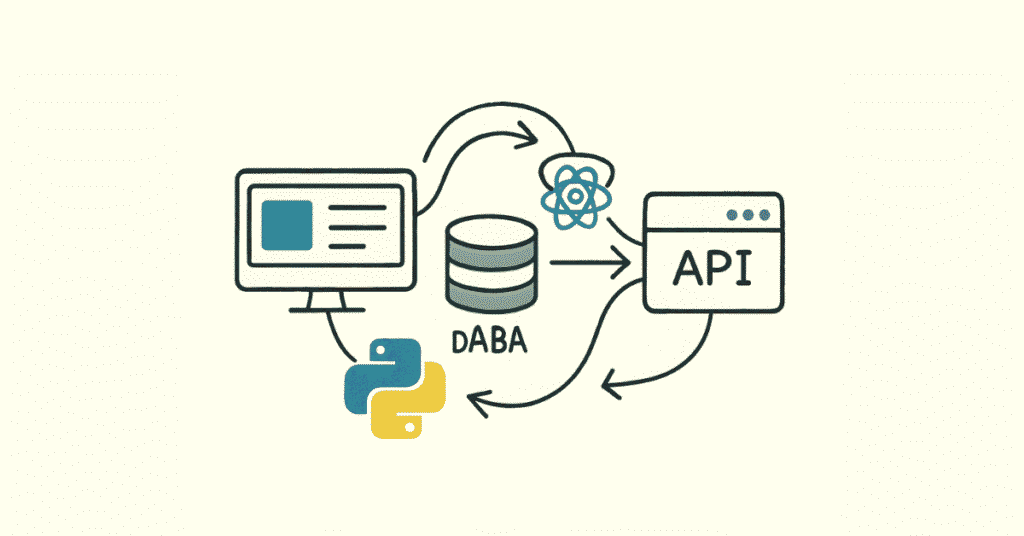
Master end-to-end web development with Python Full Stack powerful ecosystem
Python Full Stack Developers build complete web applications using Python’s versatile ecosystem, with average salaries ranging from ₹5-20 LPA in India and senior Python architects earning ₹40+ LPA. As organizations increasingly adopt Python for web development, data processing, automation, and AI integration, the ability to develop both frontend and backend solutions using Python frameworks has become one of the most valuable and future-proof specializations in software development.
Whether you’re a programming beginner attracted to Python’s simplicity and power, an experienced developer looking to leverage Python’s growing ecosystem, or a professional transitioning into full-stack development, this comprehensive guide provides the proven roadmap to building a successful Python Full Stack career. Having trained over 1,150 Python developers at Frontlines EduTech with a 88% job placement rate, I’ll share the strategies that consistently deliver results in this versatile, high-growth field.
What you’ll master in this guide:
- Complete Python full-stack learning pathway from fundamentals to advanced application development
- Essential frameworks including Django, Flask, FastAPI, React integration, and database management
- Portfolio projects demonstrating real-world applications with scalable architecture and modern practices
- Advanced topics in API development, data integration, machine learning applications, and cloud deployment
- Career advancement opportunities in Python architecture, data engineering, and technical leadership
⚡ Become a Job-Ready Python Full Stack Developer
Master Python, Django, React, APIs & Deployment with our Python Full Stack Course.
1. What is Python Full Stack Development?
Python Full Stack Development involves creating complete web applications using Python for server-side development while integrating modern frontend technologies, databases, and cloud services. Python full-stack developers leverage Python’s extensive ecosystem to build scalable, maintainable applications that span from user interfaces and API development to data processing and machine learning integration, making Python applications uniquely powerful for modern business requirements.
Core Components of Python Full Stack Development:
Backend Development with Python:
- Django Framework – Full-featured web framework with ORM, admin panel, authentication, security features
- Flask Framework – Lightweight, flexible framework for building APIs and small to medium applications
- FastAPI – Modern, high-performance framework for building APIs with automatic documentation and type hints
- Database Integration – PostgreSQL, MongoDB, SQLite integration with ORM and raw queries
Frontend Integration and APIs:
- RESTful API Development – API design, serialization, authentication, rate limiting, documentation
- GraphQL Implementation – Query language, schema design, resolvers, real-time subscriptions
- Frontend Integration – React, Vue.js, Angular integration with Python backends
- Template Engines – Django templates, Jinja2, server-side rendering, dynamic content
Data and Analytics Integration:
- Data Processing – Pandas, NumPy integration for data manipulation and analysis
- Machine Learning – Scikit-learn, TensorFlow, PyTorch integration for intelligent features
- Data Visualization – Matplotlib, Plotly, D3.js for interactive charts and dashboards
- Big Data Integration – Apache Spark, Hadoop connectivity, data pipeline development
DevOps and Deployment:
- Containerization – Docker, Kubernetes, container orchestration for scalable deployment
- Cloud Integration – AWS, GCP, Azure services, serverless functions, managed databases
- CI/CD Pipelines – Automated testing, deployment, monitoring, performance optimization
- Security Implementation – Authentication, authorization, secure coding practices, compliance
Traditional Web Development vs Python Full Stack Development
Traditional Web Development:
- Multiple languages for different components (PHP backend, JavaScript frontend)
- Limited data processing capabilities requiring separate tools
- Manual deployment and scaling processes
- Separate workflows for web development and data analysis
Python Full Stack Advantages:
- Unified Language – Single language for backend, frontend logic, data processing, and automation
- Rich Ecosystem – Extensive library ecosystem for web development, data science, AI/ML, automation
- Rapid Development – Python’s syntax and Django/Flask frameworks enable faster development cycles
- Data Integration – Native integration with data science libraries and machine learning frameworks
- Scalability – Modern frameworks like FastAPI provide high-performance, scalable solutions
2. Why Choose Python Full Stack in 2025?

Python Full Stack Explosive Growth and Industry Adoption
According to Stack Overflow Developer Survey 2025, Python ranks as the 2nd most loved programming language and the most wanted technology. Python full-stack skills are essential across industries:
Industry Python Applications:
- Technology and Startups – Web applications, APIs, data processing, machine learning integration
- Finance and Fintech – Trading platforms, risk analysis, algorithmic trading, payment processing
- Healthcare and Biotech – Electronic health records, medical research, drug discovery, patient management
- E-commerce and Retail – Recommendation engines, price optimization, inventory management, customer analytics
Enterprise Python Adoption:
- Tech Giants – Google, Instagram, Spotify, Netflix using Python for backend systems and data processing
- Financial Institutions – JPMorgan Chase, Goldman Sachs, Bank of America for quantitative analysis and trading
- Scientific Organizations – NASA, CERN, pharmaceutical companies for research and data analysis
- Media Companies – YouTube, Pinterest, Reddit built on Python frameworks for scalable web applications
Premium Compensation for Python Expertise
Python full-stack developers command higher salaries due to versatility and data capabilities:
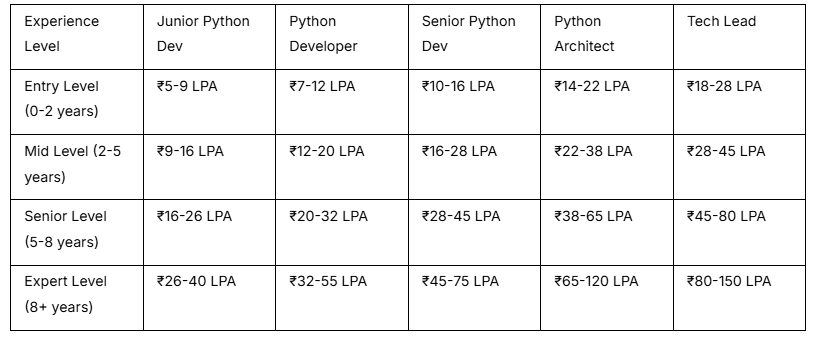
Source: PayScale Python Salaries 2025, Glassdoor Full Stack Python
AI/ML Integration and Future Technologies
Python’s dominance in AI/ML creates unique opportunities for full-stack developers:
- Machine Learning Integration – Native integration of ML models into web applications
- Data Science Applications – Real-time analytics, predictive modeling, business intelligence
- AI-Powered Features – Natural language processing, computer vision, recommendation systems
- Automation Capabilities – Process automation, data pipelines, scheduled tasks, system integration
Versatility and Career Growth Opportunities
Python full-stack expertise opens diverse career paths:
- Web Development – Building scalable web applications and APIs
- Data Engineering – Data pipelines, ETL processes, big data processing
- Machine Learning Engineering – ML model deployment, AI application development
- DevOps and Automation – Infrastructure automation, deployment pipelines, monitoring systems
3. Complete Learning Roadmap (5-7 Months)
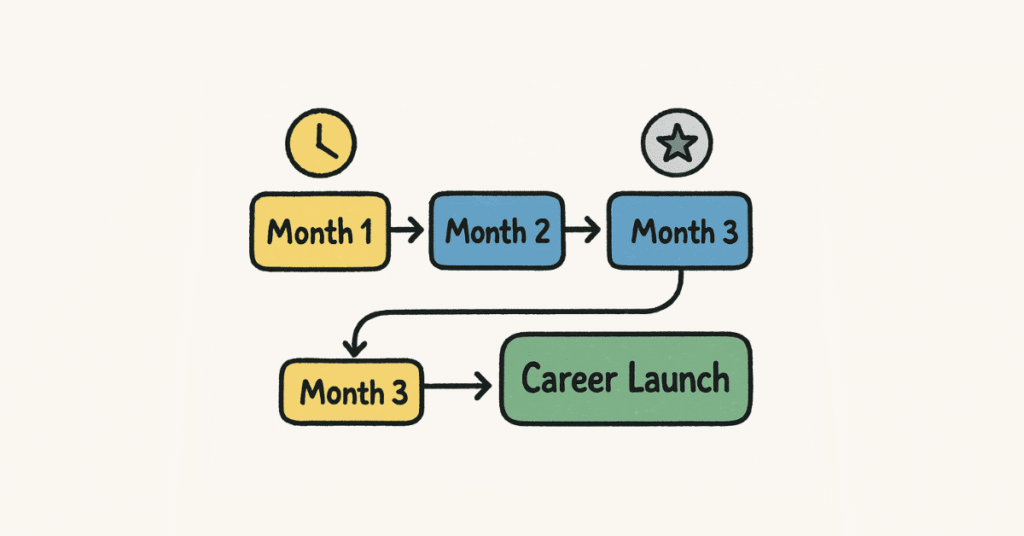
Phase 1: Python Fundamentals and Core Concepts (Month 1-2)
Python Language Fundamentals (3-4 weeks)
Building strong Python foundation is essential for full-stack development:
- Python Syntax and Basics – Variables, data types, operators, control structures, functions
- Data Structures – Lists, tuples, dictionaries, sets, strings, comprehensions
- Object-Oriented Programming – Classes, objects, inheritance, polymorphism, encapsulation
- Error Handling – Exceptions, try-catch blocks, custom exceptions, debugging techniques
Advanced Python Concepts (3-4 weeks)
- File Handling and I/O – File operations, CSV processing, JSON handling, data serialization
- Modules and Packages – Import system, creating modules, package management, virtual environments
- Functional Programming – Lambda functions, map, filter, reduce, decorators, generators
- Testing Fundamentals – Unit testing, pytest, test-driven development, code coverage
Database Concepts and SQL (2-3 weeks)
- Relational Databases – SQL fundamentals, joins, aggregations, subqueries, database design
- PostgreSQL/MySQL – Advanced querying, indexes, transactions, performance optimization
- NoSQL Databases – MongoDB basics, document design, queries, aggregation pipeline
- Database Integration – Python database connectivity, ORMs, connection pooling
Foundation Projects:
- Personal Finance Tracker – Command-line application with file storage and data analysis
- Web Scraping Tool – Data extraction from websites with CSV export and scheduling
- Task Management API – Simple REST API with database integration and user authentication
Phase 2: Django Framework Mastery (Month 2-3)
Django Fundamentals and Architecture (3-4 weeks)
- MVC Architecture – Models, views, controllers, URL routing, template system
- Django Project Structure – Apps, settings, URLs, static files, media handling
- Models and Database – Model definition, migrations, queries, relationships, admin interface
- Views and Templates – Function-based views, class-based views, template inheritance, context
Advanced Django Features (3-4 weeks)
Professional Django Development:
# Advanced Django Application with Modern Features
# File: ecommerce_project/products/models.py
from django.db import models
from django.contrib.auth.models import AbstractUser
from django.core.validators import MinValueValidator, MaxValueValidator
from django.utils.text import slugify
from django.urls import reverse
from django.db import transaction
from django.core.cache import cache
import uuid
from decimal import Decimal
class TimeStampedModel(models.Model):
“””Abstract base model with timestamp fields.”””
created_at = models.DateTimeField(auto_now_add=True)
updated_at = models.DateTimeField(auto_now=True)
class Meta:
abstract = True
class User(AbstractUser):
“””Extended user model with additional fields.”””
email = models.EmailField(unique=True)
phone = models.CharField(max_length=15, blank=True)
date_of_birth = models.DateField(null=True, blank=True)
address = models.TextField(blank=True)
profile_picture = models.ImageField(upload_to=’profiles/’, blank=True)
is_verified = models.BooleanField(default=False)
preferred_language = models.CharField(max_length=10, default=’en’)
USERNAME_FIELD = ’email’
REQUIRED_FIELDS = [‘username’, ‘first_name’, ‘last_name’]
def get_full_name(self):
return f”{self.first_name} {self.last_name}”.strip()
def __str__(self):
return f”{self.get_full_name()} ({self.email})”
class Category(TimeStampedModel):
“””Product category model with hierarchical structure.”””
name = models.CharField(max_length=100)
slug = models.SlugField(unique=True, blank=True)
description = models.TextField(blank=True)
parent = models.ForeignKey(‘self’, on_delete=models.CASCADE, null=True, blank=True, related_name=’children’)
image = models.ImageField(upload_to=’categories/’, blank=True)
is_active = models.BooleanField(default=True)
sort_order = models.PositiveIntegerField(default=0)
class Meta:
verbose_name_plural = ‘Categories’
ordering = [‘sort_order’, ‘name’]
def save(self, *args, **kwargs):
if not self.slug:
self.slug = slugify(self.name)
super().save(*args, kwargs)
def get_absolute_url(self):
return reverse(‘products:category’, kwargs={‘slug’: self.slug})
def get_products_count(self):
“””Get total number of active products in this category and subcategories.”””
cache_key = f’category_products_count_{self.pk}’
count = cache.get(cache_key)
if count is None:
count = Product.objects.filter(
models.Q(category=self) | models.Q(category__parent=self),
is_active=True
).count()
cache.set(cache_key, count, 300) # Cache for 5 minutes
return count
def __str__(self):
return self.name
class ProductManager(models.Manager):
“””Custom manager for Product model.”””
def active(self):
return self.filter(is_active=True, stock__gt=0)
def featured(self):
return self.active().filter(is_featured=True)
def on_sale(self):
return self.active().filter(sale_price__isnull=False, sale_price__lt=models.F(‘price’))
def by_category(self, category):
return self.active().filter(category=category)
def search(self, query):
return self.active().filter(
models.Q(name__icontains=query) |
models.Q(description__icontains=query) |
models.Q(tags__name__icontains=query)
).distinct()
class Product(TimeStampedModel):
“””Product model with comprehensive e-commerce features.”””
id = models.UUIDField(primary_key=True, default=uuid.uuid4, editable=False)
name = models.CharField(max_length=200)
slug = models.SlugField(unique=True, blank=True)
description = models.TextField()
short_description = models.TextField(max_length=500, blank=True)
# Pricing
price = models.DecimalField(max_digits=10, decimal_places=2, validators=[MinValueValidator(Decimal(‘0.01’))])
sale_price = models.DecimalField(max_digits=10, decimal_places=2, null=True, blank=True)
cost_price = models.DecimalField(max_digits=10, decimal_places=2, null=True, blank=True)
# Inventory
sku = models.CharField(max_length=100, unique=True)
stock = models.PositiveIntegerField(default=0)
low_stock_threshold = models.PositiveIntegerField(default=5)
weight = models.DecimalField(max_digits=8, decimal_places=2, null=True, blank=True, help_text=”Weight in kg”)
# Organization
category = models.ForeignKey(Category, on_delete=models.CASCADE, related_name=’products’)
brand = models.ForeignKey(‘Brand’, on_delete=models.SET_NULL, null=True, blank=True)
tags = models.ManyToManyField(‘Tag’, blank=True)
# Status and features
is_active = models.BooleanField(default=True)
is_featured = models.BooleanField(default=False)
is_digital = models.BooleanField(default=False)
# SEO
meta_title = models.CharField(max_length=60, blank=True)
meta_description = models.CharField(max_length=160, blank=True)
# Analytics
view_count = models.PositiveIntegerField(default=0)
purchase_count = models.PositiveIntegerField(default=0)
objects = ProductManager()
class Meta:
ordering = [‘-created_at’]
indexes = [
models.Index(fields=[‘category’, ‘is_active’]),
models.Index(fields=[‘slug’]),
models.Index(fields=[‘sku’]),
models.Index(fields=[‘-created_at’]),
]
def save(self, *args, kwargs):
if not self.slug:
self.slug = slugify(self.name)
# Generate SKU if not provided
if not self.sku:
self.sku = f”PRD-{uuid.uuid4().hex[:8].upper()}”
super().save(*args, kwargs)
# Clear related cache
cache.delete(f’product_detail_{self.slug}’)
cache.delete(f’category_products_count_{self.category.pk}’)
def get_absolute_url(self):
return reverse(‘products:detail’, kwargs={‘slug’: self.slug})
def get_current_price(self):
“””Return sale price if available, otherwise regular price.”””
if self.sale_price and self.sale_price < self.price:
return self.sale_price
return self.price
def get_discount_percentage(self):
“””Calculate discount percentage if on sale.”””
if self.sale_price and self.sale_price < self.price:
return round(((self.price – self.sale_price) / self.price) * 100)
return 0
def is_in_stock(self):
“””Check if product is in stock.”””
return self.stock > 0
def is_low_stock(self):
“””Check if product is running low on stock.”””
return self.stock <= self.low_stock_threshold
def get_main_image(self):
“””Get the main product image.”””
main_image = self.images.filter(is_main=True).first()
return main_image.image if main_image else None
def get_average_rating(self):
“””Calculate average rating from reviews.”””
cache_key = f’product_rating_{self.pk}’
rating = cache.get(cache_key)
if rating is None:
reviews = self.reviews.filter(is_approved=True)
if reviews.exists():
rating = reviews.aggregate(avg_rating=models.Avg(‘rating’))[‘avg_rating’]
rating = round(rating, 1) if rating else 0
else:
rating = 0
cache.set(cache_key, rating, 3600) # Cache for 1 hour
return rating
def get_reviews_count(self):
“””Get total number of approved reviews.”””
return self.reviews.filter(is_approved=True).count()
def increment_view_count(self):
“””Increment product view count.”””
Product.objects.filter(pk=self.pk).update(view_count=models.F(‘view_count’) + 1)
def __str__(self):
return self.name
class ProductImage(TimeStampedModel):
“””Product image model for multiple images per product.”””
product = models.ForeignKey(Product, on_delete=models.CASCADE, related_name=’images’)
image = models.ImageField(upload_to=’products/’)
alt_text = models.CharField(max_length=200, blank=True)
is_main = models.BooleanField(default=False)
sort_order = models.PositiveIntegerField(default=0)
class Meta:
ordering = [‘sort_order’, ‘created_at’]
def save(self, *args, kwargs):
if self.is_main:
# Ensure only one main image per product
ProductImage.objects.filter(product=self.product, is_main=True).update(is_main=False)
super().save(*args, kwargs)
class Brand(TimeStampedModel):
“””Brand model for product manufacturers.”””
name = models.CharField(max_length=100, unique=True)
slug = models.SlugField(unique=True, blank=True)
description = models.TextField(blank=True)
logo = models.ImageField(upload_to=’brands/’, blank=True)
website = models.URLField(blank=True)
is_active = models.BooleanField(default=True)
def save(self, *args, kwargs):
if not self.slug:
self.slug = slugify(self.name)
super().save(*args, kwargs)
def __str__(self):
return self.name
class Tag(models.Model):
“””Tag model for product categorization.”””
name = models.CharField(max_length=50, unique=True)
slug = models.SlugField(unique=True, blank=True)
def save(self, *args, kwargs):
if not self.slug:
self.slug = slugify(self.name)
super().save(*args, kwargs)
def __str__(self):
return self.name
class Review(TimeStampedModel):
“””Product review model with moderation.”””
product = models.ForeignKey(Product, on_delete=models.CASCADE, related_name=’reviews’)
user = models.ForeignKey(User, on_delete=models.CASCADE)
rating = models.PositiveIntegerField(validators=[MinValueValidator(1), MaxValueValidator(5)])
title = models.CharField(max_length=200)
comment = models.TextField()
is_approved = models.BooleanField(default=False)
helpful_count = models.PositiveIntegerField(default=0)
class Meta:
unique_together = [‘product’, ‘user’]
ordering = [‘-created_at’]
def save(self, *args, kwargs):
super().save(*args, kwargs)
# Clear product rating cache
cache.delete(f’product_rating_{self.product.pk}’)
def __str__(self):
return f”{self.user.get_full_name()} – {self.product.name} ({self.rating}/5)”
# File: ecommerce_project/products/views.py
from django.shortcuts import render, get_object_or_404, redirect
from django.contrib.auth.decorators import login_required
from django.contrib import messages
from django.core.paginator import Paginator
from django.db.models import Q, Avg, Count
from django.http import JsonResponse, Http404
from django.views.generic import ListView, DetailView
from django.views.decorators.http import require_http_methods
from django.views.decorators.cache import cache_page
from django.utils.decorators import method_decorator
from django.core.cache import cache
import json
from .models import Product, Category, Brand, Review
from .forms import ReviewForm, ProductFilterForm
from .serializers import ProductSerializer
class ProductListView(ListView):
“””Advanced product listing with filtering, sorting, and search.”””
model = Product
template_name = ‘products/product_list.html’
context_object_name = ‘products’
paginate_by = 12
def get_queryset(self):
queryset = Product.objects.active().select_related(‘category’, ‘brand’).prefetch_related(‘images’, ‘tags’)
# Search functionality
search_query = self.request.GET.get(‘search’)
if search_query:
queryset = queryset.filter(
Q(name__icontains=search_query) |
Q(description__icontains=search_query) |
Q(tags__name__icontains=search_query)
).distinct()
# Category filtering
category_slug = self.request.GET.get(‘category’)
if category_slug:
try:
category = Category.objects.get(slug=category_slug)
queryset = queryset.filter(
Q(category=category) | Q(category__parent=category)
)
except Category.DoesNotExist:
pass
# Brand filtering
brand_slug = self.request.GET.get(‘brand’)
if brand_slug:
queryset = queryset.filter(brand__slug=brand_slug)
# Price range filtering
min_price = self.request.GET.get(‘min_price’)
max_price = self.request.GET.get(‘max_price’)
if min_price:
queryset = queryset.filter(price__gte=min_price)
if max_price:
queryset = queryset.filter(price__lte=max_price)
# Sorting
sort_by = self.request.GET.get(‘sort’, ‘name’)
sort_options = {
‘name’: ‘name’,
‘price_low’: ‘price’,
‘price_high’: ‘-price’,
‘newest’: ‘-created_at’,
‘popular’: ‘-view_count’,
‘rating’: ‘-reviews__rating’
}
if sort_by in sort_options:
if sort_by == ‘rating’:
queryset = queryset.annotate(avg_rating=Avg(‘reviews__rating’)).order_by(‘-avg_rating’)
else:
queryset = queryset.order_by(sort_options[sort_by])
return queryset
def get_context_data(self, kwargs):
context = super().get_context_datakwargs)
# Add filter form
context[‘filter_form’] = ProductFilterForm(self.request.GET)
# Add categories for sidebar
context[‘categories’] = Category.objects.filter(is_active=True, parent__isnull=True)
# Add brands for filtering
context[‘brands’] = Brand.objects.filter(is_active=True).annotate(
product_count=Count(‘products’)
).filter(product_count__gt=0)
# Add current filters for display
context[‘current_filters’] = {
‘search’: self.request.GET.get(‘search’, ”),
‘category’: self.request.GET.get(‘category’, ”),
‘brand’: self.request.GET.get(‘brand’, ”),
‘min_price’: self.request.GET.get(‘min_price’, ”),
‘max_price’: self.request.GET.get(‘max_price’, ”),
‘sort’: self.request.GET.get(‘sort’, ‘name’)
}
return context
@method_decorator(cache_page(60 * 15), name=’dispatch’) # Cache for 15 minutes
class ProductDetailView(DetailView):
“””Detailed product view with reviews and related products.”””
model = Product
template_name = ‘products/product_detail.html’
context_object_name = ‘product’
slug_field = ‘slug’
def get_queryset(self):
return Product.objects.active().select_related(‘category’, ‘brand’).prefetch_related(
‘images’, ‘tags’, ‘reviews__user’
)
def get_object(self, queryset=None):
obj = super().get_object(queryset)
# Increment view count
obj.increment_view_count()
return obj
def get_context_data(self, **kwargs):
context = super().get_context_data(**kwargs)
product = self.object
# Add review form
context[‘review_form’] = ReviewForm()
# Add approved reviews
context[‘reviews’] = product.reviews.filter(is_approved=True).select_related(‘user’)
# Add review statistics
reviews = context[‘reviews’]
if reviews:
context[‘review_stats’] = {
‘average_rating’: product.get_average_rating(),
‘total_reviews’: reviews.count(),
‘rating_distribution’: {
5: reviews.filter(rating=5).count(),
4: reviews.filter(rating=4).count(),
3: reviews.filter(rating=3).count(),
2: reviews.filter(rating=2).count(),
1: reviews.filter(rating=1).count(),
}
}
# Add related products
context[‘related_products’] = Product.objects.active().filter(
category=product.category
).exclude(pk=product.pk)[:4]
# Check if user has already reviewed this product
if self.request.user.is_authenticated:
context[‘user_review’] = product.reviews.filter(user=self.request.user).first()
return context
@login_required
@require_http_methods([“POST”])
def add_review(request, product_slug):
“””Add a product review via AJAX.”””
product = get_object_or_404(Product, slug=product_slug, is_active=True)
# Check if user has already reviewed this product
if Review.objects.filter(product=product, user=request.user).exists():
return JsonResponse({
‘success’: False,
‘error’: ‘You have already reviewed this product.’
})
form = ReviewForm(request.POST)
if form.is_valid():
review = form.save(commit=False)
review.product = product
review.user = request.user
review.save()
messages.success(request, ‘Your review has been submitted and is pending approval.’)
return JsonResponse({
‘success’: True,
‘message’: ‘Review submitted successfully!’
})
else:
return JsonResponse({
‘success’: False,
‘errors’: form.errors
})
def product_search_api(request):
“””API endpoint for product search with autocomplete.”””
query = request.GET.get(‘q’, ”).strip()
if len(query) < 2:
return JsonResponse({‘products’: []})
products = Product.objects.active().filter(
Q(name__icontains=query) | Q(description__icontains=query)
)[:10]
serializer = ProductSerializer(products, many=True)
return JsonResponse({‘products’: serializer.data})
Django REST Framework and API Development (2-3 weeks)
- API Design Principles – RESTful architecture, HTTP methods, status codes, versioning
- Serializers and ViewSets – Data serialization, validation, nested relationships, permissions
- Authentication and Permissions – Token authentication, JWT, custom permissions, throttling
- API Documentation – Swagger/OpenAPI integration, automated documentation, testing tools
Testing and Quality Assurance (1-2 weeks)
- Unit Testing – Model tests, view tests, form tests, test fixtures
- Integration Testing – API testing, database testing, end-to-end workflows
- Performance Testing – Load testing, database query optimization, profiling
- Code Quality – Flake8, Black, pre-commit hooks, continuous integration
Django Projects:
- Blog Management System – Complete CMS with user management, comments, categories, SEO optimization
- E-commerce Platform – Full-featured online store with cart, payments, inventory management
- Social Media API – RESTful API with posts, likes, follows, real-time notifications
Phase 3: Flask and FastAPI Development (Month 3-4)
Flask Framework Fundamentals (3-4 weeks)
- Flask Architecture – Application factory, blueprints, request context, application context
- Routing and Views – URL routing, HTTP methods, request handling, response generation
- Templates and Forms – Jinja2 templating, form handling, validation, flash messages
- Database Integration – SQLAlchemy ORM, database migrations, relationships, queries
FastAPI Modern Development (3-4 weeks)
High-Performance FastAPI Application:
# Advanced FastAPI Application with Modern Features
# File: fastapi_app/main.py
from fastapi import FastAPI, Depends, HTTPException, status, BackgroundTasks, Request
from fastapi.security import HTTPBearer, HTTPAuthorizationCredentials
from fastapi.middleware.cors import CORSMiddleware
from fastapi.middleware.trustedhost import TrustedHostMiddleware
from fastapi.responses import JSONResponse
from sqlalchemy.orm import Session
from contextlib import asynccontextmanager
import asyncio
import logging
from typing import List, Optional
import jwt
from datetime import datetime, timedelta
import redis
import aiofiles
from pydantic import BaseModel, EmailStr, validator
import uvicorn
# Import custom modules
from database import SessionLocal, engine, Base
from models import User, Product, Order
from schemas import UserCreate, UserResponse, ProductCreate, ProductResponse
from auth import create_access_token, verify_token
from tasks import send_email_task, process_order_task
# Setup logging
logging.basicConfig(level=logging.INFO)
logger = logging.getLogger(__name__)
# Redis connection for caching
redis_client = redis.Redis(host=’localhost’, port=6379, db=0, decode_responses=True)
@asynccontextmanager
async def lifespan(app: FastAPI):
“””Async context manager for application lifespan events.”””
# Startup
logger.info(“Starting up FastAPI application…”)
Base.metadata.create_all(bind=engine)
yield
# Shutdown
logger.info(“Shutting down FastAPI application…”)
# FastAPI application with advanced configuration
app = FastAPI(
title=”Advanced E-commerce API”,
description=”High-performance e-commerce platform with FastAPI”,
version=”2.0.0″,
docs_url=”/api/docs”,
redoc_url=”/api/redoc”,
lifespan=lifespan
)
# Security
security = HTTPBearer()
# Middleware configuration
app.add_middleware(
CORSMiddleware,
allow_origins=[“http://localhost:3000”, “https://yourdomain.com”],
allow_credentials=True,
allow_methods=[“*”],
allow_headers=[“*”],
)
app.add_middleware(
TrustedHostMiddleware,
allowed_hosts=[“localhost”, “127.0.0.1”, “yourdomain.com”]
)
# Request logging middleware
@app.middleware(“http”)
async def log_requests(request: Request, call_next):
start_time = datetime.utcnow()
response = await call_next(request)
process_time = (datetime.utcnow() – start_time).total_seconds()
logger.info(
f”{request.method} {request.url.path} – “
f”Status: {response.status_code} – “
f”Time: {process_time:.4f}s”
)
return response
# Database dependency
def get_db():
db = SessionLocal()
try:
yield db
finally:
db.close()
# Authentication dependency
async def get_current_user(
credentials: HTTPAuthorizationCredentials = Depends(security),
db: Session = Depends(get_db)
):
try:
payload = jwt.decode(credentials.credentials, “secret”, algorithms=[“HS256”])
user_id: int = payload.get(“user_id”)
if user_id is None:
raise HTTPException(
status_code=status.HTTP_401_UNAUTHORIZED,
detail=”Invalid authentication credentials”
)
except jwt.PyJWTError:
raise HTTPException(
status_code=status.HTTP_401_UNAUTHORIZED,
detail=”Invalid authentication credentials”
)
user = db.query(User).filter(User.id == user_id).first()
if user is None:
raise HTTPException(
status_code=status.HTTP_401_UNAUTHORIZED,
detail=”User not found”
)
return user
# Pydantic models for advanced validation
class UserRegistration(BaseModel):
email: EmailStr
password: str
first_name: str
last_name: str
phone: Optional[str] = None
@validator(‘password’)
def validate_password(cls, v):
if len(v) < 8:
raise ValueError(‘Password must be at least 8 characters long’)
if not any(c.isupper() for c in v):
raise ValueError(‘Password must contain at least one uppercase letter’)
if not any(c.islower() for c in v):
raise ValueError(‘Password must contain at least one lowercase letter’)
if not any(c.isdigit() for c in v):
raise ValueError(‘Password must contain at least one digit’)
return v
class ProductFilter(BaseModel):
category_id: Optional[int] = None
min_price: Optional[float] = None
max_price: Optional[float] = None
search: Optional[str] = None
sort_by: Optional[str] = “created_at”
sort_order: Optional[str] = “desc”
page: int = 1
limit: int = 20
# Authentication endpoints
@app.post(“/api/auth/register”, response_model=UserResponse)
async def register_user(
user_data: UserRegistration,
background_tasks: BackgroundTasks,
db: Session = Depends(get_db)
):
“””Register a new user with email verification.”””
# Check if user already exists
existing_user = db.query(User).filter(User.email == user_data.email).first()
if existing_user:
raise HTTPException(
status_code=status.HTTP_400_BAD_REQUEST,
detail=”Email already registered”
)
# Create new user
user = User(**user_data.dict())
user.hash_password(user_data.password)
db.add(user)
db.commit()
db.refresh(user)
# Send welcome email in background
background_tasks.add_task(
send_email_task,
user.email,
“Welcome to our platform!”,
f”Hello {user.first_name}, welcome to our e-commerce platform!”
)
logger.info(f”New user registered: {user.email}”)
return UserResponse.from_orm(user)
@app.post(“/api/auth/login”)
async def login_user(email: EmailStr, password: str, db: Session = Depends(get_db)):
“””Authenticate user and return access token.”””
user = db.query(User).filter(User.email == email).first()
if not user or not user.verify_password(password):
raise HTTPException(
status_code=status.HTTP_401_UNAUTHORIZED,
detail=”Incorrect email or password”
)
if not user.is_active:
raise HTTPException(
status_code=status.HTTP_401_UNAUTHORIZED,
detail=”Account is deactivated”
)
# Update last login
user.last_login = datetime.utcnow()
db.commit()
# Create access token
access_token = create_access_token(data={“user_id”: user.id})
logger.info(f”User logged in: {user.email}”)
return {
“access_token”: access_token,
“token_type”: “bearer”,
“user”: UserResponse.from_orm(user)
}
# Product endpoints with caching
@app.get(“/api/products”, response_model=List[ProductResponse])
async def get_products(
filter_params: ProductFilter = Depends(),
db: Session = Depends(get_db)
):
“””Get paginated products with filtering and caching.”””
# Create cache key
cache_key = f”products:{filter_params.dict().__hash__()}”
# Try to get from cache
cached_result = redis_client.get(cache_key)
if cached_result:
logger.info(f”Cache hit for products query: {cache_key}”)
return JSONResponse(content=eval(cached_result))
# Build query
query = db.query(Product).filter(Product.is_active == True)
# Apply filters
if filter_params.category_id:
query = query.filter(Product.category_id == filter_params.category_id)
if filter_params.min_price:
query = query.filter(Product.price >= filter_params.min_price)
if filter_params.max_price:
query = query.filter(Product.price <= filter_params.max_price)
if filter_params.search:
search_term = f”%{filter_params.search}%”
query = query.filter(
Product.name.like(search_term) |
Product.description.like(search_term)
)
# Apply sorting
if filter_params.sort_by == “price”:
if filter_params.sort_order == “desc”:
query = query.order_by(Product.price.desc())
else:
query = query.order_by(Product.price.asc())
elif filter_params.sort_by == “name”:
query = query.order_by(Product.name.asc())
else: # created_at
query = query.order_by(Product.created_at.desc())
# Apply pagination
offset = (filter_params.page – 1) * filter_params.limit
products = query.offset(offset).limit(filter_params.limit).all()
# Convert to response format
result = [ProductResponse.from_orm(product) for product in products]
# Cache the result for 5 minutes
redis_client.setex(cache_key, 300, str([item.dict() for item in result]))
logger.info(f”Retrieved {len(result)} products from database”)
return result
# Health check endpoint
@app.get(“/api/health”)
async def health_check():
“””Health check endpoint for monitoring.”””
return {
“status”: “healthy”,
“timestamp”: datetime.utcnow().isoformat(),
“version”: “2.0.0”
}
if __name__ == “__main__”:
uvicorn.run(
“main:app”,
host=”0.0.0.0″,
port=8000,
reload=True,
workers=4
)
API Integration and Microservices (2-3 weeks)
- RESTful API Design – Resource modeling, HTTP status codes, API versioning, rate limiting
- GraphQL Implementation – Schema definition, resolvers, queries, mutations, subscriptions
- Microservices Communication – Service discovery, message queues, event-driven architecture
- API Security – OAuth 2.0, JWT tokens, API keys, secure headers, input validation
Flask and FastAPI Projects:
- Task Management API – RESTful API with authentication, real-time updates, file uploads
- Data Analytics Dashboard – FastAPI backend with data visualization and real-time processing
- Microservices E-commerce – Distributed system with user, product, order, and payment services
Phase 4: Frontend Integration and Full-Stack Development (Month 4-5)
Frontend Technologies and Integration (4-5 weeks)
- React with Python APIs – Frontend-backend integration, state management, API consumption
- Vue.js and Django – Component-based frontend, Vuex state management, authentication integration
- Modern CSS Frameworks – Tailwind CSS, Bootstrap integration, responsive design principles
- Progressive Web Apps – Service workers, offline functionality, push notifications
Database Design and Optimization (3-4 weeks)
- Advanced PostgreSQL – Complex queries, indexing, performance optimization, stored procedures
- MongoDB Integration – Document design, aggregation pipelines, replica sets, sharding
- Database Security – Access control, encryption, audit logging, backup strategies
- ORM Optimization – Query optimization, N+1 problems, caching strategies, performance monitoring
Real-time Features and WebSockets (2-3 weeks)
- Django Channels – WebSocket integration, real-time chat, notifications, live updates
- FastAPI WebSockets – Real-time communication, connection management, broadcasting
- Celery Task Queue – Background job processing, scheduled tasks, distributed task execution
- Redis Integration – Caching, session storage, pub/sub messaging, rate limiting
Full-Stack Projects:
- Social Media Platform – Complete platform with React frontend, Django backend, real-time features
- E-learning Management System – Video streaming, progress tracking, interactive content, assessments
- Real-time Analytics Dashboard – Live data visualization with Vue.js frontend and FastAPI backend
Phase 5: Data Science Integration and Advanced Topics (Month 5-7)
Data Science and Machine Learning Integration (4-5 weeks)
- Pandas and NumPy Integration – Data processing pipelines, statistical analysis, data cleaning
- Machine Learning Models – Scikit-learn integration, model training, prediction APIs, model deployment
- Data Visualization – Matplotlib, Plotly, interactive dashboards, real-time charts
- Big Data Processing – Apache Spark integration, data lakes, ETL pipelines, stream processing
Choose Advanced Specialization:
AI/ML Full-Stack Developer:
- Machine Learning Pipelines – Model training, validation, deployment, monitoring, A/B testing
- Natural Language Processing – Text analysis, sentiment analysis, chatbot integration, language models
- Computer Vision – Image processing, object detection, facial recognition, automated tagging
- Recommendation Systems – Collaborative filtering, content-based filtering, hybrid approaches
Data Engineering Specialist:
- Data Pipeline Architecture – ETL/ELT processes, data warehousing, stream processing, batch processing
- Cloud Data Services – AWS S3, Redshift, Google BigQuery, Azure Data Factory integration
- Data Quality and Governance – Data validation, lineage tracking, privacy compliance, security
- Performance Optimization – Query optimization, data partitioning, caching strategies, monitoring
Enterprise Python Architect:
- System Architecture – Microservices design, distributed systems, scalability patterns, load balancing
- Security and Compliance – Security auditing, GDPR compliance, data encryption, access control
- DevOps Integration – Docker containers, Kubernetes orchestration, CI/CD pipelines, monitoring
- Team Leadership – Code review processes, documentation standards, mentoring, project management
🗺️ Follow the Complete Python Full Stack Roadmap
Beginner → Backend → Frontend → Deployment → Advanced AI/ML Integration Open Roadmap →
4. Essential Python Technologies and Tools

Python Interpreter and Package Management:
Python 3.9+ serves as the foundation for modern full-stack development, offering enhanced performance, improved typing support, and security updates. Install Python through official python.org distributions or use Anaconda for data science-focused environments that bundle essential scientific computing libraries.
pip (Python Package Installer) manages project dependencies and library installations. Use pip to install frameworks, libraries, and development tools with version specifications ensuring consistent environments across development, testing, and production.
Virtual Environment Management: venv or virtualenv create isolated Python environments for each project. This isolation prevents dependency conflicts when different projects require different package versions, enabling simultaneous work on multiple applications.
Poetry or Pipenv provide advanced dependency management with automatic virtual environment creation, lock files for reproducible builds, and simplified package publishing. These modern tools supersede traditional requirements.txt files for professional development workflows.
Integrated Development Environments and Code Editors
Visual Studio Code with Python Extensions:
VS Code dominates Python development with its lightweight performance, extensive extension marketplace, and integrated debugging capabilities. Install the Python extension by Microsoft for IntelliSense code completion, linting, debugging, and Jupyter notebook support.
Essential VS Code extensions for Python full-stack development include Python, Pylance for enhanced language support, Python Test Explorer for test discovery, auto Docstring for documentation generation, and GitLens for version control visualization. Configure settings .json for automatic formatting on save and consistent code style across projects.
PyCharm Professional offers comprehensive Python development tools including advanced debugging, database tools, Django/Flask support, and remote development capabilities. While heavier than VS Code, PyCharm provides unmatched refactoring tools and intelligent code assistance particularly valuable for large Django applications.
Jupyter Notebook and Jupyter Lab enable interactive Python development essential for data analysis, visualization, and documentation. Use Jupyter for prototyping algorithms, exploring data, and creating shareable notebooks demonstrating technical concepts with live code and visualizations.
Backend Framework Technologies
Django Framework Ecosystem:
Django ORM provides powerful database abstraction supporting PostgreSQL, MySQL, SQLite, and Oracle with intuitive query syntax, relationship management, and migration system. Master ORM optimization techniques including select_related and prefetch_related to minimize database queries and maximize application performance.
Django REST Framework (DRF) extends Django for building robust APIs with serialization, authentication, permissions, throttling, and automatic API documentation. DRF’s viewsets and routers dramatically reduce boilerplate code while maintaining flexibility for custom business logic.
Django Channels adds WebSocket support enabling real-time features like chat applications, live notifications, and collaborative editing. Channels integrates seamlessly with Django’s authentication and ORM while providing async capabilities for high-concurrency scenarios.
Celery task queue integrates with Django for background job processing, scheduled tasks, and distributed task execution. Use Celery for email sending, report generation, data processing pipelines, and any operations that shouldn’t block HTTP request-response cycles.
Flask Framework Ecosystem:
Flask-SQLAlchemy provides SQLAlchemy ORM integration with Flask’s application context. SQLAlchemy offers more flexibility than Django ORM for complex queries, custom column types, and advanced database features.
Flask-RESTful and Flask-RESTPlus simplify REST API development with resource routing, request parsing, response marshaling, and automatic Swagger documentation. These extensions transform Flask into a powerful API framework while maintaining its microframework philosophy.
Flask-Login handles user session management and authentication with remember-me functionality, session protection, and custom user loaders. Combine with Flask-Security for comprehensive authentication and authorization including role management and password recovery.
Flask-SocketIO enables WebSocket communication for real-time bidirectional communication between clients and servers. Build chat applications, live dashboards, and collaborative tools with simplified event-based programming model.
FastAPI Modern Framework:
Pydantic models provide data validation, serialization, and automatic documentation generation using Python type hints. Pydantic’s runtime type checking catches errors early while generating OpenAPI schemas automatically from model definitions.
FastAPI’s automatic interactive API documentation via Swagger UI and ReDoc eliminates manual documentation maintenance. Every endpoint automatically appears in interactive docs allowing developers and stakeholders to test APIs directly from browsers.
Starlette ASGI framework underlies FastAPI providing async/await support, WebSocket support, background tasks, and high performance. FastAPI inherits Starlette’s performance characteristics making it ideal for high-throughput applications and microservices.
Uvicorn and Hypercorn ASGI servers deploy FastAPI applications with worker management, automatic reloading, and production-ready performance. Configure workers appropriately for CPU-bound versus I/O-bound workloads to maximize resource utilization.
Database Technologies and ORMs
PostgreSQL Advanced Features:
pgAdmin provides graphical database administration for schema design, query optimization, backup management, and monitoring. Use pgAdmin during development for visualizing database structure, analyzing query performance, and managing database objects.
psycopg2 and asyncpg connect Python applications to PostgreSQL databases with synchronous and asynchronous interfaces respectively. Choose asyncpg for FastAPI applications requiring maximum throughput and concurrent database operations.
PostgreSQL’s JSONB column type stores semi-structured data with indexing and query capabilities. JSONB bridges relational and document databases enabling flexible schemas within traditional relational models.
Full-text search capabilities built into PostgreSQL eliminate separate search engines for many applications. Implement sophisticated search with ranking, highlighting, and stemming using PostgreSQL’s native text search features.
MongoDB and NoSQL Integration:
PyMongo provides Python driver for MongoDB with comprehensive CRUD operations, aggregation pipeline support, and connection pooling. Use PyMongo for applications requiring flexible schemas, rapid prototyping, or document-oriented data models.
Motor offers async MongoDB driver for use with asyncio and FastAPI. Motor’s non-blocking operations enable high-concurrency applications without thread management complexity.
MongoDB aggregation pipeline transforms and analyzes data with powerful operators for grouping, filtering, sorting, and computing. Master aggregation for building analytics features, generating reports, and processing data within the database.
MongoEngine and Beanie provide ODM (Object-Document Mapping) for MongoDB similar to SQLAlchemy for relational databases. These libraries add type safety, validation, and Pythonic query syntax while maintaining MongoDB’s flexibility.
Frontend Integration Technologies
React with Python Backends:
Axios JavaScript library handles HTTP requests from React frontends to Python APIs with promise-based syntax, request/response interceptors, and automatic JSON transformation. Configure Axios instances with base URLs, authentication headers, and error handling for consistent API communication.
Create-React-App provides zero-configuration React development environment with hot reloading, production builds, and testing support. Proxy API requests during development to Python backends running on different ports avoiding CORS complications.
JWT (JSON Web Tokens) authenticate React frontends with Python backends stateless without server-side session storage. Store tokens in memory or httpOnly cookies preventing XSS attacks while enabling mobile app and SPA authentication.
CORS (Cross-Origin Resource Sharing) configuration allows React frontends on different domains to communicate with Python APIs. Configure django-cors-headers or FastAPI CORSMiddleware appropriately balancing security with development convenience.
Template Engines and Server-Side Rendering:
Jinja2 templating engine renders HTML with Python variables, control structures, template inheritance, and filters. Use Jinja2 for server-side rendering in Flask applications or standalone template generation for email content and reports.
Django’s template system provides similar functionality with additional security features like automatic HTML escaping. Django templates integrate seamlessly with Django’s ORM, forms, and authentication system for rapid development.
Tailwind CSS utility-first framework integrates with Python templates for rapid UI development without writing custom CSS. Use PostCSS and PurgeCSS to remove unused styles keeping production bundles small.
DevOps and Deployment Tools
Docker Containerization:
Docker containers package Python applications with all dependencies creating consistent environments from development through production. Write Dockerfiles defining base images, dependency installation, and application configuration for reproducible builds.
Docker Compose orchestrates multi-container applications defining services for Python backend, PostgreSQL database, Redis cache, and Nginx reverse proxy. Use Docker Compose during development for one-command environment setup matching production architecture.
Multi-stage Docker builds optimize image sizes by separating build dependencies from runtime dependencies. Build wheels in one stage then copy only necessary artifacts to final image reducing container sizes by 60-70%.
Kubernetes orchestrates containerized applications providing automatic scaling, load balancing, rolling updates, and self-healing. Learn Kubernetes fundamentals for deploying Python applications at scale with high availability and resource efficiency.
CI/CD Pipeline Tools:
GitHub Actions automates testing, building, and deployment workflows triggered by code commits, pull requests, or schedules. Configure workflows running pytest, linting, security scans, and deployment to cloud platforms.
GitLab CI/CD provides integrated DevOps platform with version control, CI/CD pipelines, container registry, and monitoring. Use GitLab’s built-in features for complete software development lifecycle management.
Jenkins offers highly customizable automation server supporting complex build pipelines, parallel execution, and extensive plugin ecosystem. Deploy Jenkins for enterprise environments requiring integration with existing tools and workflows.
pytest framework provides comprehensive Python testing with fixtures, parametrization, plugins, and detailed reporting. Write unit tests, integration tests, and API tests using pytest’s intuitive syntax and powerful assertion introspection.
Cloud Platform Services:
AWS Services for Python: Lambda for serverless functions, EC2 for virtual servers, RDS for managed databases, S3 for object storage, CloudFront for CDN, and Elastic Beanstalk for application deployment. Use boto3 Python SDK for programmatic AWS resource management and automation.
Google Cloud Platform: Cloud Run for containerized applications, Cloud Functions for serverless, Cloud SQL for managed databases, Cloud Storage for objects, and App Engine for platform-as-a-service deployment. Integrate with Google AI services for machine learning capabilities.
Heroku provides simplified deployment with git-based workflows, automatic scaling, add-ons for databases, caching, monitoring, and logging. Use Heroku for rapid prototyping and small-to-medium applications without infrastructure management complexity.
Digital Ocean App Platform offers platform-as-a-service with straightforward pricing, predictable performance, and developer-friendly interfaces. Deploy Python applications from GitHub repositories with automatic builds and zero-configuration databases.
Monitoring and Performance Tools
Application Performance Monitoring:
New Relic and Datadog provide comprehensive application monitoring tracking response times, error rates, database query performance, and infrastructure metrics. Integrate APM early identifying performance bottlenecks before they impact users.
Sentry captures application errors with detailed context including stack traces, environment information, breadcrumbs, and user impact. Configure Sentry in development and production environments for proactive error detection and resolution.
Django Debug Toolbar visualizes SQL queries, cache hits, template rendering times, and HTTP headers during development. Use Debug Toolbar for identifying N+1 query problems and optimizing database access patterns.
Logging and Log Management:
Python’s built-in logging module provides flexible logging with configurable handlers, formatters, and log levels. Structure logs with contextual information enabling effective debugging and operational monitoring.
ELK Stack (Elasticsearch, Logstash, Kibana) aggregates, analyzes, and visualizes application logs from distributed systems. Centralized logging enables searching across services, identifying patterns, and creating operational dashboards.
Prometheus and Grafana monitor application metrics with time-series data collection, alerting, and customizable dashboards. Expose custom application metrics tracking business KPIs alongside technical performance indicators.
Security and Authentication Tools
Authentication and Authorization:
OAuth 2.0 and OpenID Connect implement industry-standard authentication enabling social login, single sign-on, and delegated authorization. Use libraries like Authlib or social-auth-app-django for simplified OAuth integration.
JWT authentication provides stateless authentication suitable for APIs and microservices. Sign tokens with strong secrets, implement short expiration times, and use refresh token patterns for security.
django-allauth and Flask-Security-Too provide comprehensive authentication solutions including registration, email verification, password reset, social authentication, and two-factor authentication. These packages handle authentication complexity allowing focus on application business logic.
Security Scanning Tools:
Bandit analyzes Python code identifying common security issues like SQL injection vulnerabilities, weak cryptography, and insecure deserialization. Integrate Bandit into CI/CD pipelines preventing security vulnerabilities from reaching production.
Safety checks Python dependencies against known security vulnerabilities in public databases. Run Safety regularly updating packages with security patches maintaining application security posture.
OWASP ZAP (Zed Attack Proxy) performs dynamic application security testing identifying vulnerabilities in running web applications. Use ZAP during testing phases finding issues like XSS, CSRF, and insecure configurations.
Version Control and Collaboration
Git and GitHub/GitLab:
Git provides distributed version control enabling branching, merging, history tracking, and collaborative development. Master Git workflows including feature branches, pull requests, code reviews, and release management.
.gitignore configuration prevents sensitive files, environment-specific configurations, and build artifacts from version control. Use Python-specific gitignore templates excluding virtual environments, pycache, and IDE configurations.
GitHub offers code hosting, pull request workflows, issue tracking, project management, and CI/CD integration. Leverage GitHub Actions, Pages, and Packages for comprehensive development workflows.
Pre-commit hooks automatically run linting, formatting, and security checks before code commits. Configure pre-commit with Black, Flake8, Bandit, and custom validators ensuring code quality consistency.
Data Science and ML Integration Tools
Data Processing Libraries:
Pandas provides high-performance data structures and analysis tools for structured data manipulation. Use pandas for ETL processes, data cleaning, exploratory analysis, and feature engineering in full-stack applications.
NumPy offers efficient numerical computing with multi-dimensional arrays and mathematical operations. NumPy underlies pandas, scikit-learn, and most Python data science libraries providing performant array operations.
Matplotlib and Plotly create static and interactive visualizations for data exploration and user-facing dashboards. Integrate Plotly with Flask or Django for interactive charts responding to user inputs and real-time data updates.
Machine Learning Frameworks:
Scikit-learn implements classical machine learning algorithms for classification, regression, clustering, and dimensionality reduction. Deploy scikit-learn models as REST APIs providing predictions for web application features.
TensorFlow and PyTorch enable deep learning model development for neural networks, computer vision, and natural language processing. Serve models using TensorFlow Serving or TorchServe for production deployment at scale.
MLflow manages machine learning lifecycle including experimentation, reproducibility, deployment, and model registry. Track experiments, version models, and deploy to various platforms from unified interface.
5. Building Your Python Full Stack Portfolio
Portfolio Strategy and Positioning
Your Python full-stack portfolio distinguishes you in competitive job markets by demonstrating not just coding ability but architectural thinking, data integration capabilities, and production-ready development practices. Unlike portfolios for other languages, Python portfolios gain exceptional value by showcasing the language’s unique strength: seamlessly integrating web development with data science, automation, and machine learning capabilities.
Strategic Differentiation:
Position yourself uniquely by highlighting Python’s versatility across domains. Rather than generic “CRUD application” projects, build applications demonstrating data processing, ML integration, automation, or scientific computing alongside traditional web functionality.
Target Audience Considerations:
Research companies and roles you’re targeting to customize portfolio emphasis. FinTech employers value data processing and security; healthcare companies prioritize compliance and data privacy; startups seek rapid development and scalability; enterprise organizations emphasize maintainability and documentation.
Demonstrate full-stack breadth while showing specialization depth. Include projects spanning Django, Flask, and FastAPI rather than only one framework, but show mastery of your primary framework through complex implementations.
Essential Portfolio Components
Professional Portfolio Website:
Build your portfolio site using Python frameworks demonstrating the technologies you’re promoting. Use Django for content-rich portfolios with admin interfaces, Flask for minimalist portfolios emphasizing simplicity, or FastAPI for API-focused portfolios with interactive documentation.
Homepage Impact: Create immediate impression communicating your specialization within 5 seconds. Include compelling headline beyond “Python Developer” like “Full-Stack Python Developer Specializing in Data-Driven Web Applications” or “Python Engineer Building Scalable APIs with ML Integration.”
Write concise introduction highlighting unique value proposition: technical background, specialization areas, and what problems you solve. Avoid generic developer descriptions; position yourself as solving specific business challenges using Python’s unique capabilities.
Project Showcase Section:
Display 5-8 carefully curated projects demonstrating progressive complexity and diverse capabilities. Quality dramatically outweighs quantity; employers spend limited time reviewing portfolios, making excellent presentation of fewer projects superior to numerous mediocre ones.
For each project include:
Detailed Technical Overview: Explain architecture decisions, framework choices, database design, and deployment strategies. Document why you chose specific technologies demonstrating thoughtful engineering rather than following tutorials mindlessly.
Problem Statement and Solution: Describe business problem addressed, target users, and how your application solves real needs. Context transforms portfolio from skill demonstration to problem-solving showcase.
Technology Stack Specification: List exact versions of Python, frameworks, databases, frontend technologies, and cloud services used. Specificity demonstrates professionalism and prevents ambiguity about capabilities.
Live Demo and Source Code: Provide working deployment URL allowing employers to interact with application functionality. Include GitHub repository link with comprehensive README, setup instructions, and code documentation.
Visual Documentation: Include screenshots, architecture diagrams, database schemas, and video walkthroughs. Visual elements significantly improve portfolio engagement and comprehension.
Challenge and Learning Highlights: Document significant technical challenges overcome, optimization techniques applied, and key learnings gained. This reflection demonstrates growth mindset and technical depth.
Technical Skills Organization:
Structure skills by category for scannable presentation: Backend Frameworks (Django, Flask, FastAPI), Databases (PostgreSQL, MongoDB, Redis), Frontend Technologies (React, Vue.js, HTML/CSS), Data Science (Pandas, NumPy, Scikit-learn), DevOps (Docker, AWS, CI/CD), Testing (pytest, unittest, integration testing).
Indicate proficiency levels honestly: Expert, Advanced, Intermediate, Familiar. Overstating capabilities creates awkward interview situations when depth probing reveals knowledge gaps.
Support skill claims with project evidence linking technologies to portfolio projects demonstrating practical application. Claims without evidence appear hollow compared to demonstrated capabilities.
About Section Storytelling:
Share authentic professional journey explaining path to Python development. Career changers should highlight transferable skills and unique perspectives from previous roles.
Explain what excites you about Python full-stack development and what types of problems you’re passionate about solving. Genuine enthusiasm differentiates memorable candidates from generic applicants.
Mention unique backgrounds, domain expertise, or perspectives you bring. Former data analysts bring analytical thinking; ex-teachers possess strong communication; mechanical engineers understand systems thinking.
Contact and Professional Links:
Make contacting you effortless with multiple options: professional email, phone, LinkedIn, GitHub, Twitter/X, personal website. Hidden contact information frustrates interested employers.
Link to active GitHub profile with consistent contribution history. GitHub activity demonstrates continuous learning and coding discipline.
Include LinkedIn profile optimized with Python keywords, detailed experience, and recommendations. LinkedIn often serves as first impression before portfolio review.
Provide downloadable resume in PDF format for traditional application processes. Some organizations require standard resume formats for HR systems.
Project Categories and Examples
Full-Stack Web Applications:
E-commerce Platform with Recommendations: Django-based online store integrating scikit-learn recommendation engine using collaborative filtering. Demonstrate full CRUD operations, payment integration, inventory management, and personalized product suggestions based on browsing history and purchases.
Social Media Dashboard with Analytics: Flask application with React frontend providing social media management with sentiment analysis using NLTK and data visualization with Plotly. Show WebSocket integration for real-time notifications, celery for scheduled posting, and PostgreSQL for data storage.
Learning Management System: Django LMS with video streaming, progress tracking, quiz generation, and certificate issuance. Include Django channels for real-time chat, AWS S3 for video storage, and detailed reporting dashboards.
API-Focused Projects:
RESTful API with FastAPI: High-performance API serving financial data with automatic OpenAPI documentation, JWT authentication, rate limiting, caching with Redis, and comprehensive test coverage. Demonstrate async operations, Pydantic validation, background tasks, and database connection pooling.
GraphQL API with Django: Implement GraphQL using Graphene-Django for flexible data querying with authentication, complex filtering, pagination, and N+1 query optimization. Show advantages over REST for mobile clients and complex data relationships.
Microservices Architecture: Build distributed system with separate services for user management, product catalog, order processing, and notifications communicating via REST APIs and message queues. Deploy with Docker Compose showing service orchestration and inter-service communication.
Data Science Integration Projects:
Predictive Analytics Dashboard: Flask or FastAPI backend serving machine learning predictions with interactive visualizations. Train scikit-learn model for classification or regression, expose predictions via API, create Vue.js frontend with real-time charts.[4][1][7]
Data Processing Pipeline: Build ETL pipeline using pandas processing large datasets, transforming data, loading into PostgreSQL, and scheduling with Apache Airflow. Demonstrate data quality checks, error handling, and performance optimization.
Computer Vision Application: FastAPI backend serving TensorFlow or PyTorch computer vision model for image classification, object detection, or face recognition. Create React frontend allowing image upload, processing, and results visualization.
Real-Time and WebSocket Projects:
Real-Time Chat Application: Django Channels or Flask-SocketIO chat with rooms, private messages, file sharing, typing indicators, and read receipts. Deploy with Redis for channel layers and PostgreSQL for message history.
Live Collaborative Editor: Build real-time document editing using operational transformation or CRDT algorithms with WebSocket communication. Demonstrate conflict resolution, user presence awareness, and document versioning.
Stock Market Dashboard: Real-time financial data visualization with WebSocket feeds, technical indicators, and historical analysis. Integrate with financial APIs, calculate indicators using NumPy, visualize with Plotly.
Automation and DevOps Projects:
CI/CD Pipeline Implementation: Create comprehensive GitHub Actions or GitLab CI workflows for Python application including testing, linting, security scanning, Docker building, and deployment. Document infrastructure-as-code using Terraform or CloudFormation.
Infrastructure Monitoring System: Build monitoring dashboard aggregating application metrics, logs, and alerts using Prometheus, Grafana, and ELK stack. Demonstrate observability best practices and incident response workflows.
Automated Testing Framework: Develop comprehensive test suite with unit tests, integration tests, API tests, and end-to-end tests using pytest, Selenium, and Postman. Show test coverage reports, continuous testing in CI/CD, and testing best practices.
Portfolio Development Best Practices
Code Quality Excellence:
Write clean, well-documented Python code following PEP 8 style guidelines consistently. Use Black for automatic formatting and Flake8 for style enforcement ensuring professional code presentation.
Implement comprehensive docstrings for modules, classes, and functions using Google or NumPy documentation styles. Documentation demonstrates communication skills and professional development practices.
Apply SOLID principles, design patterns, and architectural best practices appropriate to project complexity. Show understanding of software engineering fundamentals beyond basic functionality.[12][1][4]
Include type hints throughout codebase improving code clarity and enabling static analysis with mypy. Type hints demonstrate modern Python practices and attention to code quality.
Testing and Quality Assurance:
Achieve 80%+ test coverage with meaningful tests focusing on business logic and edge cases. High coverage demonstrates testing discipline and confidence in code correctness.
Write tests first using TDD (Test-Driven Development) for core features showing deliberate development methodology. TDD produces better-designed code and catches bugs earlier.
Include integration tests verifying multi-component functionality and API tests ensuring contract compliance. Integration tests demonstrate understanding of system-level behavior.
Implement continuous testing in CI/CD pipelines with automated test runs on every commit. Automated testing signals professional development workflows.
Documentation Excellence:
Write exceptional README files with clear project descriptions, setup instructions, usage examples, API documentation, and contributing guidelines. README quality often determines whether employers explore projects further.
Include architecture documentation with diagrams explaining system design, data flow, and component interactions. Visual architecture documentation significantly improves project comprehension.
Document API endpoints comprehensively using Swagger/OpenAPI for RESTful APIs or GraphQL introspection. Excellent API documentation demonstrates user-centric thinking.
Create wiki pages or docs folders for complex projects requiring detailed explanation. Comprehensive documentation showcases communication skills valued in collaborative environments.
GitHub Repository Management:
Maintain consistent commit history with meaningful messages explaining change rationale. Commit messages “updated files” signal carelessness while “Optimized database queries reducing API response time by 40%” demonstrates professionalism.
Use feature branches and pull requests even on solo projects showing collaborative workflow understanding. Branching strategies demonstrate version control sophistication.
Configure GitHub Actions for automated testing, building, and deployment. CI/CD integration shows DevOps awareness and production-ready development practices.
Respond to issues professionally even on personal projects if others engage. Community interaction demonstrates communication skills and collaborative spirit.
Deployment and Live Demos:
Deploy every portfolio project to publicly accessible URLs using Heroku, AWS, Google Cloud, or Digital Ocean. Live deployments enable employer interaction without local setup barriers.
Ensure consistent uptime and performance for portfolio demonstrations. Broken demos create terrible impressions and waste recruitment opportunities.
Implement custom domains for professional appearance. projectname.herokuapp.com appears less professional than projectname.yourname.com.
Include deployment documentation explaining infrastructure, environment variables, scaling considerations, and monitoring. Deployment knowledge differentiates production-ready developers from tutorial followers.
Portfolio Presentation and Storytelling
Project Case Studies:
Transform projects into compelling narratives with problem context, solution approach, technical challenges, and measurable outcomes. Stories engage employers more effectively than feature lists.
Include metrics demonstrating impact: “Reduced API response time from 800ms to 120ms through query optimization and Redis caching”. Quantifiable results showcase performance awareness and optimization skills.
Discuss technology trade-offs and alternative approaches considered. Mature engineers understand every technology choice involves compromises between competing priorities.
Explain learnings and how you’d approach the project differently with current knowledge. Self-reflection demonstrates growth mindset and continuous improvement.
Visual Design Quality:
Design portfolio with professional aesthetics matching design quality you’d deliver for clients. Sloppy portfolio design suggests similar standards for professional work.
Ensure responsive design working excellently on mobile devices. Poor mobile experience signals outdated development practices.
Optimize loading performance with image compression, code minification, and caching. Performance problems on personal portfolio raise serious capability questions.
Use consistent branding with cohesive color schemes, typography, and visual elements. Visual consistency demonstrates attention to detail and design awareness.
Continuous Portfolio Evolution:
Update portfolio quarterly with new projects and improved implementations. Stale portfolios suggest stagnant skill development.
Revisit older projects applying new knowledge and modern practices. Refactoring demonstrates growth and commitment to continuous improvement.
Remove outdated or lower-quality projects as skills improve. Your weakest project sets employer expectations floor.
Add blog posts or technical articles explaining interesting problems solved or technologies learned. Technical writing demonstrates communication skills and teaching ability.
🧠 Crack Python Full Stack Interviews Faster
Get 200+ real interview questions on Python, Django, APIs, SQL & React Open Interview Guide →
6. Job Search Strategy
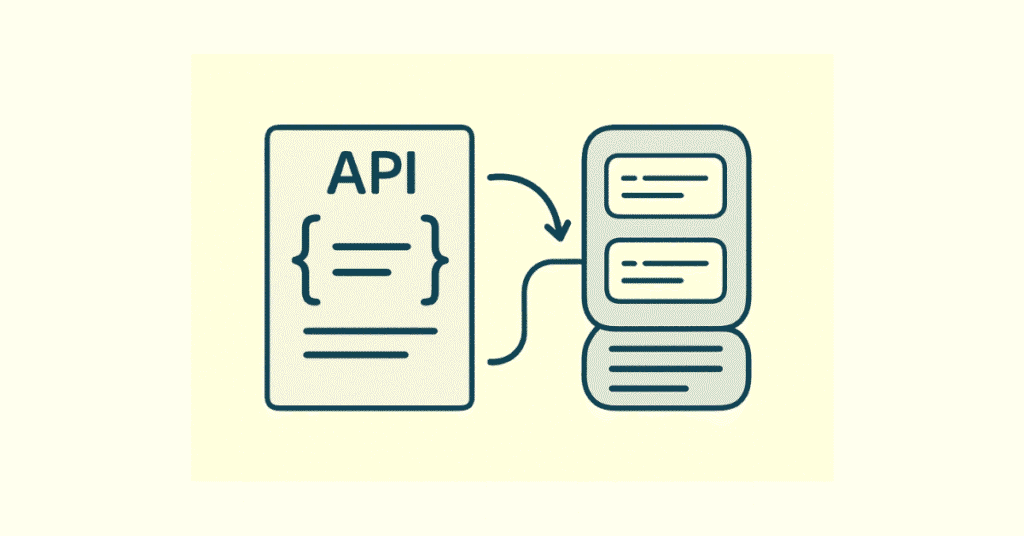
Strategic Job Market Positioning
Target Role Research and Selection:
Research Python developer job market in your geography or for remote positions understanding demand patterns, required technologies, and compensation ranges. Python full-stack roles vary significantly across industries with FinTech emphasizing data processing, healthcare focusing on compliance, and startups valuing rapid development.
Identify companies and organizations aligning with your skills, interests, and values. Apply strategically to aligned positions rather than mass-applying to every Python opening.
Analyze job descriptions extracting common requirements, preferred skills, and emerging technologies. Create skills development plan addressing gaps between your capabilities and market demands.
Python-Specific Positioning:
Emphasize Python’s unique strengths in applications: data integration, ML capabilities, rapid development, automation, and scientific computing. Position yourself beyond generic full-stack developer highlighting data-driven application expertise.
Specialize in high-demand Python areas: Django development for enterprise applications, FastAPI for high-performance APIs, data engineering with Python, ML model deployment, or Python automation and DevOps. Specialization differentiates you from generalist competitors.
Combine Python expertise with domain knowledge creating powerful differentiation. Python developer with finance background, healthcare experience, or scientific research credentials commands premium value.
Professional Online Presence Optimization
LinkedIn Strategic Development:
Craft compelling LinkedIn headline beyond “Python Developer” communicating specialization and value[5][16][15]. Examples: “Full-Stack Python Developer | Django & FastAPI Expert | Building Scalable Data-Driven Applications” or “Python Engineer Specializing in ML Model Deployment and API Development.”
Write comprehensive LinkedIn summary telling professional story, technical journey, and problem-solving approach. Explain background, what attracted you to Python, specialization choices, and types of challenges you solve.
List technical skills comprehensively with endorsements from colleagues, instructors, or collaborators. Skills validation increases profile credibility and improves search ranking.
Share relevant content regularly: Comment on industry posts, share interesting Python articles, discuss technology trends, and showcase learning progress. Active profiles receive significantly more recruiter attention than passive ones.
Request recommendations from colleagues, managers, instructors, or project collaborators. Recommendations provide third-party validation of skills and work quality.
GitHub Professional Profile:
Optimize GitHub profile with professional photo, detailed bio, pinned repositories showcasing best work, and contribution activity graph. Many employers review GitHub before contacting candidates.
Contribute to open-source Python projects demonstrating collaborative development skills. Quality contributions signal professional workflow understanding and community engagement.
Maintain consistent activity with regular commits showing ongoing development practice. Sporadic activity suggests inconsistent engagement while steady commits demonstrate discipline.
Follow influential Python developers and organizations engaging with their content. Community participation increases visibility and learning opportunities.
Resume Optimization for Python Roles:
Structure resume emphasizing technical skills, relevant projects, and measurable achievements. Lead with technical summary highlighting Python frameworks, databases, frontend technologies, and specializations.
Quantify accomplishments with metrics wherever possible. “Built e-commerce platform serving 5,000+ monthly users with 99.9% uptime and 200ms average response time” beats “Developed e-commerce website.”
Include keywords from target job descriptions for ATS optimization. Applicant tracking systems filter resumes based on keyword matches before human review.
Tailor resume for each application highlighting most relevant experience and projects. Generic resumes get filtered while customized applications demonstrate genuine interest.
Keep formatting clean, scannable, and single-page for entry to mid-level positions. Recruiters spend 6-7 seconds initially scanning resumes; clarity matters more than comprehensive detail.
Active Job Search Execution
Strategic Application Approach:
Apply to positions matching 60-70% of listed requirements rather than only perfect matches. Job descriptions often list ideal rather than minimum qualifications.
Prioritize quality applications over quantity. Five carefully tailored applications outperform fifty generic submissions.
Focus on local and hybrid positions where competition is lower than fully remote roles. Remote positions attract exponentially more applicants making local opportunities better odds for entry-level candidates.
Target growing startups and mid-size companies over huge corporations. Smaller companies often provide more opportunities for junior developers and faster hiring processes.
Python-Specific Job Platforms:
Primary General Platforms:
- LinkedIn Jobs: Leverage your network and profile for visibility
- Indeed: Broad job coverage with easy application processes
- Glassdoor: Company reviews and salary information alongside job listings
- Naukri.com: Dominant Indian job portal with extensive technology listings
Python-Specialized Platforms:
- Python.org Job Board: Python-focused positions from community and companies
- Stack Overflow Jobs: Developer-centric listings emphasizing technical skills
- GitHub Jobs: Technology-focused positions integrated with developer profiles
- Remote Python: Curated remote Python developer opportunities
Direct Company Applications:
Visit career pages of target companies applying directly. Direct applications sometimes receive priority over third-party platform submissions.
Set up job alerts on company career pages for immediate notification of new postings. Early applications receive more recruiter attention before position saturation.
Research company technology stacks confirming Python usage before applying. Targeted applications to companies using your technologies yield better results.
Network-Based Opportunity Generation
Strategic Networking Approach:
Networking generates more job opportunities than applications alone with many positions filled through referrals before public posting. Invest significant effort in relationship building parallel to applications.
Networking Activities:
Attend local Python meetups, PyCon conferences, developer workshops, and tech events. In-person connections create stronger relationships than online interactions alone.
Join online Python communities: Reddit r/Python and r/learnpython, Discord servers for Python developers, Slack workspaces focused on Python technologies. Active, helpful participation builds reputation and connections.
Participate in Twitter/X Python community following influential developers, sharing learning progress, and engaging with technical discussions. Public learning demonstrates growth mindset and increases visibility.
Contribute to open-source Python projects attracting attention from maintainers and community members. Quality contributions lead to networking opportunities and sometimes direct job offers.
Informational Interview Strategy:
Request informational interviews with Python developers at target companies. Most professionals willingly share advice and insights when approached respectfully.
Ask about company culture, technical challenges, Python usage, and career paths rather than directly requesting jobs. Information gathering builds relationships potentially leading to opportunities later.
Follow up with thank you messages maintaining connections. Professional relationships develop over time through consistent, genuine engagement.
Referral Generation Tactics:
Leverage existing connections for employee referrals when possible. Referred candidates receive significantly more interview opportunities than cold applications.
Contribute value before requesting referrals. Help connections, share relevant content, or provide assistance establishing relationship foundation.
Be specific about roles when requesting referrals explaining why you’re interested and qualified. Vague referral requests are harder to action than targeted, well-reasoned asks.
Interview Preparation Excellence
Technical Interview Preparation:
Coding Challenge Practice: Complete Python problems on LeetCode, HackerRank, or Codewars focusing on data structures, algorithms, and Python-specific implementations. Regular practice builds problem-solving fluency needed for timed assessments.
Portfolio Deep Dives: Prepare to explain every project detail thoroughly including architecture decisions, database design, API design, deployment strategies, and lessons learned. Interviewers probe projects deeply assessing true understanding versus tutorial following.
Framework Fundamentals: Review core concepts in your tech stack: Django ORM optimization, Flask application factory pattern, FastAPI dependency injection, async/await patterns, database transactions. Strong fundamentals signal solid foundation for continued learning.
System Design Basics: Understand architectural patterns even for junior roles: RESTful API design, database normalization, caching strategies, microservices patterns, scalability considerations. System design questions assess scalability thinking.
Python-Specific Topics:
Language Features: Master Python-specific concepts: decorators, context managers, generators, comprehensions, multiple inheritance, metaclasses. Deep Python knowledge differentiates from surface-level framework users.
Data Science Integration: Prepare to discuss pandas operations, NumPy arrays, scikit-learn workflows, and data processing patterns. Python’s data capabilities often feature in interviews.
Performance Optimization: Understand profiling tools, query optimization, caching strategies, async patterns, and Python performance characteristics. Performance awareness demonstrates production readiness.
Behavioral Interview Preparation:
Prepare STAR method stories (Situation, Task, Action, Result) demonstrating soft skills: collaboration, problem-solving, learning agility, conflict resolution, leadership. Technical skills get interviews; soft skills secure offers.
Practice explaining technical concepts to non-technical audiences. Communication abilities matter as much as coding skills for team collaboration.
Prepare thoughtful questions about company culture, team structure, Python usage, development practices, and growth opportunities. Question quality reveals preparation level and genuine interest.
Post-Interview Follow-Up:
Send personalized thank you emails within 24 hours referencing specific conversation topics. Thoughtful follow-up demonstrates professionalism and genuine interest.
Remain patient but proactive during decision timelines. Polite check-ins after stated decision dates are appropriate and show continued interest.
Learn from rejections requesting feedback when possible. Constructive criticism helps improve future interview performance.
Alternative Entry Pathways
Freelance and Contract Development:
Build initial experience through Upwork, Fiverr, or Toptal freelance platforms. Short-term projects provide real-world experience, portfolio material, and client references.
Offer discounted or pro-bono services to nonprofits or small businesses initially. Real client work trumps personal projects for demonstrating professional capabilities.
Use freelance experience to build testimonials and case studies strengthening job applications. Client validation carries significant weight with employers.
Internships and Entry-Level Programs:
Apply to Python developer internships even with non-traditional backgrounds. Many programs specifically target career changers and bootcamp graduates.
Consider paid apprenticeship programs offering mentorship and structured learning. Apprenticeships combine learning with professional experience building strong foundations.
Open Source Contribution Strategy:
Make meaningful contributions to established open source Python projects. Quality contributions demonstrate collaborative development skills and code review experience.
Progress from documentation improvements and bug fixes to feature implementations. Incremental contributions build confidence and maintainer trust.
Python Community Leadership:
Organize local Python meetups or contribute to Python user groups. Community leadership demonstrates initiative and builds extensive networks.
Speak at meetups or conferences sharing learning experiences or technical insights. Public speaking builds credibility and visibility.
Continuous Improvement During Job Search
Ongoing Skill Development:
Continue learning and building projects throughout job search. Months-long searches are common; maintaining skills prevents stagnation.
Learn technologies appearing frequently in target job descriptions. Adapting skills to market demands increases application success rates.
Build projects addressing gaps identified during interview processes. Learn from feedback improving capabilities between applications.
Mental Health and Persistence:
Maintain healthy routines including exercise, social connection, and non-coding activities. Job search stress affects mental health; balance prevents burnout.
Set process goals (applications sent, projects built, connections made) rather than only outcome goals (interviews received, offers obtained). You control effort, not employer responses.
Join job search accountability groups or partner with other job seekers. Shared challenges feel less isolating and provide mutual support.
Remember rejection is normal and doesn’t reflect your capabilities. Even exceptional candidates face numerous rejections in competitive markets.
7. Salary Expectations and Career Growth
2025 Compensation Benchmarks by Experience and Specialization
Python Developer Track:
- Junior Python Developer (0-2 years): ₹5-9 LPA
- Python Developer (2-5 years): ₹9-16 LPA
- Senior Python Developer (5-8 years): ₹16-26 LPA
- Lead Python Developer (8+ years): ₹26-40 LPA
Python Specialist Tracks:
- Django/Flask Developer: ₹7-20 LPA (web framework expertise)
- FastAPI Developer: ₹10-25 LPA (modern API development)
- Data Science Python Developer: ₹12-30 LPA (ML/AI integration)
- Python Architect: ₹20-50 LPA (system design and leadership)
Full-Stack Python Tracks:
- Full-Stack Python Developer: ₹8-24 LPA
- Python + React Developer: ₹10-28 LPA
- AI/ML Full-Stack Developer: ₹15-35 LPA
- Python Technical Lead: ₹18-45 LPA
Industry and Geographic Salary Variations
High-Paying Industries:
- Financial Technology (Fintech) – 25-35% premium for algorithmic trading and risk analysis
- Healthcare and Biotech – 20-30% premium for research applications and regulatory compliance
- Artificial Intelligence and Machine Learning – 30-40% premium for AI/ML expertise
- Data Analytics and Business Intelligence – 20-25% premium for data science integration
Geographic Salary Distribution:
- Bangalore – Python hub with highest AI/ML opportunities, 20-30% above national average
- Hyderabad – Growing Python ecosystem, 15-25% above national average
- Pune – Strong Python community, 12-20% above national average
- Mumbai – Financial services Python focus, 10-18% above national average
Career Progression Pathways
Technical Specialist Track:
Python Developer (2-5 years)
↓
Senior Python Developer (5-8 years)
↓
Python Architect (8-12 years)
↓
Principal Engineer (12-16 years)
↓
Distinguished Engineer (16+ years)
Data Science Track:
Python Developer (1-3 years)
↓
Data Scientist (3-6 years)
↓
Senior Data Scientist (6-10 years)
↓
Principal Data Scientist (10-14 years)
↓
Chief Data Officer (14+ years)
Leadership Track:
Senior Python Developer (4-7 years)
↓
Technical Lead (7-11 years)
↓
Engineering Manager (11-15 years)
↓
Director of Engineering (15-19 years)
↓
VP Engineering/CTO (19+ years)
Skills for Accelerated Career Growth
Technical Mastery (Years 1-5):
- Python Framework Expertise – Django, Flask, FastAPI proficiency with best practices
- Database and ORM Skills – PostgreSQL, MongoDB, SQLAlchemy, Django ORM optimization
- API Development – RESTful APIs, GraphQL, authentication, documentation, testing
- Frontend Integration – React, Vue.js integration, modern web development practices
Data and ML Integration (Years 3-8):
- Data Science Libraries – Pandas, NumPy, Matplotlib, Jupyter notebooks proficiency
- Machine Learning – Scikit-learn, TensorFlow, model training, deployment, monitoring
- Data Pipeline Development – ETL processes, data warehousing, real-time processing
- Cloud Integration – AWS, GCP, Azure services for Python applications
Leadership and Architecture (Years 8+):
- System Design – Microservices architecture, distributed systems, scalability planning
- Team Leadership – Mentoring, code review, technical decision making, project management
- Business Acumen – Understanding business requirements, ROI analysis, stakeholder communication
- Innovation Leadership – Emerging technology adoption, research integration, thought leadership
✨ Follow Your Python Full Stack Learning Path
Beginner → Python → Django → React → Advanced Full Stack Developer View Learning Path →
8. Success Stories from Our Students
Aditi Patel – From Data Analyst to Python Full Stack Developer
Background: 4 years as data analyst with strong SQL and Excel skills but limited programming experience
Challenge: Wanted to build complete applications beyond just data analysis and reporting
Python Advantage: Leveraged existing data skills while adding web development capabilities
Timeline: 19 months from Python beginner to senior full-stack developer
Current Position: Senior Python Developer at FinTech Startup
Salary Progression: ₹6.8 LPA → ₹11.5 LPA → ₹18.2 LPA → ₹28.5 LPA (over 20 months)
Aditi’s Technical Journey:
- Data Foundation – Used existing analytical thinking to understand application data flow and database design
- Web Development Skills – Mastered Django and React integration for creating data-driven applications
- Machine Learning Integration – Combined web development with predictive modeling and analytics
- Business Understanding – Applied domain knowledge to build applications solving real business problems
Key Success Factors:
- Analytical Mindset – “My data background helped me think systematically about application architecture and user workflows”
- Problem-Solving Focus – “I focused on building applications that solve real problems I encountered in my analytical work”
- Continuous Learning – “Python’s versatility allowed me to gradually expand from data analysis to full-stack development”
Current Impact: Leading development of financial analytics platform processing ₹500+ crores monthly transactions, responsible for ML models predicting market trends with 85% accuracy, managing team of 6 developers.
Vishnu Kumar – From Manual Tester to Python Automation Architect
Background: 5 years in manual testing with good understanding of application workflows but no development experience
Challenge: Wanted to transition from manual testing to development while leveraging testing expertise
Strategic Approach: Combined testing domain knowledge with Python development skills for unique positioning
Timeline: 17 months from Python beginner to automation architect role
Career Evolution: Manual Tester → Python Developer → Test Automation Lead → DevOps Python Specialist
Current Role: Principal Automation Architect at Global Consulting Firm
Automation Excellence and Technical Growth:
- Testing Background – Applied testing mindset to writing robust, error-handled Python applications
- Automation Expertise – Developed comprehensive test automation frameworks using Python and Selenium
- DevOps Integration – Extended Python skills to infrastructure automation, CI/CD pipelines, monitoring
- Team Leadership – Built automation team from 2 to 15 engineers across multiple client projects
Compensation and Career Growth:
- Pre-transition: ₹5.5 LPA (Senior Manual Tester)
- Year 1: ₹9.8 LPA (Python Developer with testing focus)
- Year 2: ₹16.5 LPA (Senior Automation Developer)
- Current: ₹32.8 LPA + bonuses (Principal Automation Architect with client portfolio)
Success Philosophy: “My testing background gave me a unique perspective on Python development. I naturally wrote more reliable code and could automate complex workflows that others found challenging.”
Rajesh Nair – From Mechanical Engineer to AI/ML Full Stack Developer
Background: 6 years as mechanical engineer with strong analytical skills but no software development experience
Challenge: Wanted career change into technology with focus on artificial intelligence and machine learning
Technical Transition: Used engineering problem-solving approach to master Python, ML, and web development
Timeline: 22 months from programming beginner to AI/ML specialist role
Career Evolution: Mechanical Engineer → Python Developer → ML Engineer → AI Full Stack Developer
Current Role: Senior AI Engineer at Healthcare Technology Company
AI/ML Development and Innovation:
- Engineering Mindset – Applied systematic engineering approach to ML model development and deployment
- Full-Stack ML – Built complete ML applications from data pipelines to web interfaces
- Domain Expertise – Specialized in applying AI to engineering and manufacturing problems
- Research Integration – Combined academic ML research with practical application development
Technical Growth and Impact:
- ML Model Development – Created predictive models for equipment maintenance with 92% accuracy
- Web Application Integration – Built Flask/React applications for real-time ML model deployment
- Data Pipeline Architecture – Designed scalable data processing systems handling terabytes of sensor data
- Cross-functional Leadership – Bridged gap between engineering teams and data science initiatives
Compensation Trajectory and Recognition:
- Pre-transition: ₹7.2 LPA (Senior Mechanical Engineer)
- Learning Phase: ₹4.8 LPA (Junior Python Developer – career reset)
- Months 12-18: ₹12.5 LPA (ML Engineer with domain expertise)
- Current: ₹24.8 LPA + equity (Senior AI Engineer with specialized healthcare focus)
Career Transition Insights: “Engineering gave me the methodical approach needed for ML development. When I combined that with Python skills and domain knowledge, I could build AI solutions that actually work in real manufacturing environments.”
👉 Frontlines Edutech offers a Python Full Stack course with live classes, projects, and placement guidance in Telugu, covering frontend (HTML, CSS, JS, React), backend with Python (Django/Flask), databases (MySQL/PostgreSQL), Git, and deployments, with typical fees, and 5–6 month duration.
9. Common Challenges and Solutions
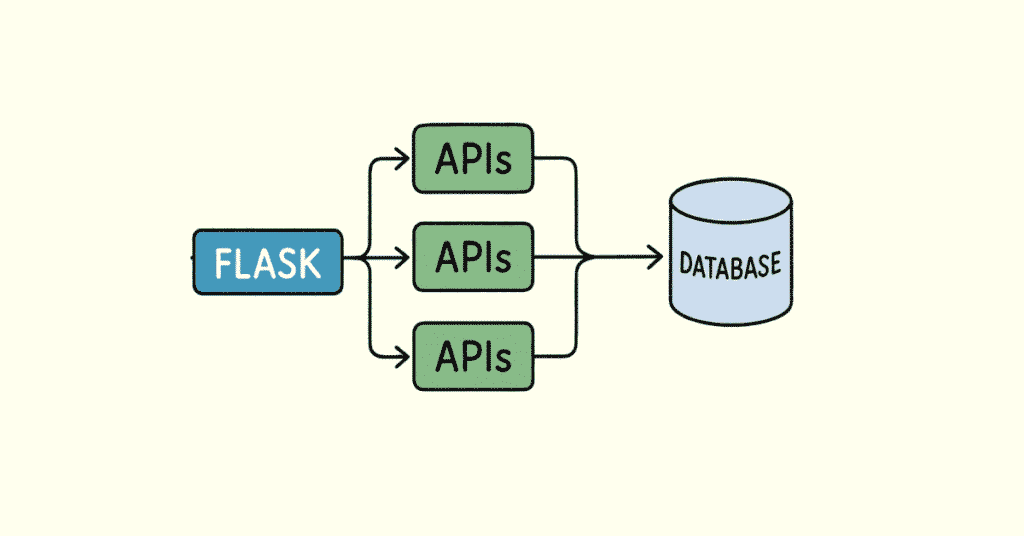
Challenge 1: Python Framework Selection Confusion
Problem: Beginners struggle choosing between Django, Flask, and FastAPI feeling overwhelmed by framework options and conflicting advice about which to learn first.[3][7][1]
Symptoms: Analysis paralysis preventing progress, starting multiple frameworks without mastering any, confusion about framework appropriate use cases, uncertainty about long-term career implications of framework choices.
Solution Strategy:
Choose framework based on learning goals and project types rather than “best” framework debates. Each framework excels in different scenarios: Django for rapid full-featured development, Flask for flexibility and learning fundamentals, FastAPI for high-performance APIs and modern Python features.
Framework Selection Guidelines:
Start with Django if you want batteries-included development, built-in admin interface, comprehensive documentation, and preference for convention over configuration. Django’s integrated approach teaches web development concepts while providing production-ready features immediately.
Choose Flask if you value understanding underlying concepts, prefer explicit over implicit behavior, want microframework flexibility, or plan building APIs and smaller applications. Flask’s minimalism teaches fundamentals other frameworks abstract away.
Learn FastAPI after mastering Python fundamentals when building high-performance APIs, working with modern async patterns, requiring automatic documentation, or specializing in microservices. FastAPI represents cutting-edge Python web development but assumes stronger Python knowledge.
Practical Implementation:
Master one framework thoroughly before exploring others. Deep knowledge of one framework provides foundation for quickly learning others rather than superficial familiarity with multiple.
Build complete applications rather than following tutorials. Real projects cement framework understanding in ways tutorials cannot.
Learn framework concepts transferable across technologies: MVC architecture, ORM patterns, authentication flows, API design principles. Conceptual understanding enables switching frameworks as career needs evolve.
Challenge 2: Database Design and ORM Complexity
Problem: Developers struggle with database schema design, ORM query optimization, and understanding when to use ORM versus raw SQL.
Symptoms: N+1 query problems causing slow application performance, confusing relationships between models, difficulty writing efficient queries, uncertainty about normalization versus denormalization trade-offs.
Solution Strategy:
Learn relational database fundamentals before relying heavily on ORMs. Understanding SQL concepts enables effective ORM usage and troubleshooting performance issues.[7][1][3]
Database Design Mastery:
Study entity-relationship modeling creating clear schemas before writing code. Diagram relationships, identify foreign keys, plan indexes, and consider query patterns during design phase.[1][3][7]
Understand normal forms and when to denormalize for performance. Third normal form prevents data anomalies but sometimes requires denormalization for query efficiency.[7][1]
Practice database design through varied projects: one-to-many (blog posts and comments), many-to-many (students and courses), hierarchical (categories), self-referential (social network follows). Different relationship types teach modeling patterns.
ORM Optimization Techniques:
Use Django Debug Toolbar or SQLAlchemy echo to visualize generated queries. Seeing actual SQL reveals N+1 problems and optimization opportunities.
Master select_related and prefetch_related in Django or joinedload and selectinload in SQLAlchemy. These methods eliminate N+1 queries dramatically improving performance.
Learn when raw SQL is appropriate: complex analytical queries, bulk operations, database-specific features. ORMs provide convenience but sometimes raw SQL offers better performance or clarity.
Index frequently queried fields, foreign keys, and fields used in WHERE clauses. Proper indexing transforms slow queries into fast operations.
Challenge 3: Asynchronous Programming Confusion
Problem: Async/await syntax, event loops, and asynchronous programming patterns confuse developers accustomed to synchronous code.
Symptoms: Mixing sync and async code incorrectly, blocking event loops with synchronous operations, confusion about when to use async, difficulty debugging async code.
Solution Strategy:
Understand asynchronous programming concepts before implementing async features. Async programming represents different paradigm requiring mental model shift from sequential thinking.
Async Fundamentals:
Learn event loop concepts: cooperative multitasking, I/O-bound versus CPU-bound operations, async runtime architecture. Understanding event loops clarifies when async provides benefits.
Start with asyncio basics before tackling FastAPI or Django Channels. Build simple async programs handling concurrent tasks before integrating async into web frameworks.[7][1][3]
Recognize async shines for I/O-bound operations: database queries, API calls, file operations, network communication. CPU-bound operations require multiprocessing, not async.
Practical Async Implementation:
Use async consistently within code paths. Mixing async and sync code in single function causes problems and negates async benefits.
Understand async database drivers: asyncpg for PostgreSQL, motor for MongoDB, async versions of ORM libraries. Blocking database calls inside async functions eliminate concurrency advantages.
Learn async testing with pytest-asyncio. Testing async code requires async test functions and proper event loop handling.
Implement proper error handling in async code with try/except blocks and async context managers. Async exceptions behave differently requiring adjusted error handling patterns.
Challenge 4: Frontend Integration and Full-Stack Coordination
Problem: Backend-focused developers struggle integrating Python APIs with modern frontend frameworks, handling CORS issues, and managing full-stack development workflows.
Symptoms: CORS errors preventing frontend-backend communication, confusion about REST API design principles, difficulty debugging issues spanning frontend and backend, uncertainty about full-stack project structure.
Solution Strategy:
Learn enough frontend development to effectively integrate with Python backends. Full-stack developers need frontend competence even if specializing in backend.
API Design Excellence:
Study RESTful API principles: resource-oriented design, HTTP verb semantics, status code meanings, idempotency, caching headers. Well-designed APIs make frontend integration straightforward.
Design API contracts before implementation using OpenAPI specifications or API blueprints. Contract-first development prevents integration mismatches.
Implement comprehensive error responses with consistent structure, meaningful messages, and appropriate status codes. Good error responses dramatically improve debugging and user experience.
Version APIs appropriately planning for backward compatibility as requirements evolve. API versioning prevents breaking existing clients when adding features.
CORS and Security Understanding:
Configure CORS appropriately for development and production environments. Development needs permissive CORS while production requires restrictive policies.
Implement proper authentication flows: JWT tokens, refresh tokens, secure cookie options. Authentication integration challenges many full-stack beginners.
Understand HTTPS, secure headers, CSP policies, and XSS prevention. Security considerations span frontend and backend requiring full-stack awareness.
Development Workflow:
Use tools like Postman or HTTPie for API testing independent of frontend. Backend testing without frontend dependency accelerates development.
Implement API documentation with Swagger UI, ReDoc, or GraphQL Playground. Interactive documentation enables frontend developers to understand and test endpoints.
Challenge 5: Testing and Quality Assurance Discipline
Problem: Developers skip testing due to perceived time constraints, don’t know what to test, or struggle writing effective tests.
Symptoms: Bugs discovered in production rather than development, fear of refactoring due to lack of test safety net, difficulty maintaining code as complexity grows, inability to verify functionality systematically.
Solution Strategy:
Integrate testing from project beginning rather than treating as optional add-on. Tests save time by catching bugs early and enabling confident refactoring.
Testing Fundamentals:
Learn testing pyramid concept: many unit tests, fewer integration tests, minimal end-to-end tests. This balance provides comprehensive coverage without excessive maintenance burden.
Start with testing critical business logic and gradually expand coverage. Perfect test coverage isn’t necessary; focus on high-value areas first.
Use pytest for its simple syntax, powerful fixtures, and extensive plugin ecosystem. Pytest makes testing approachable reducing barriers to adoption.
Test-Driven Development Practice:
Write tests before implementation for core features. TDD produces better-designed code and comprehensive test suites naturally.
Follow red-green-refactor cycle: write failing test, implement minimum code to pass, refactor while maintaining green tests. This rhythm creates well-tested, clean code.
Test expected behaviour and edge cases including error conditions. Comprehensive tests catch bugs obvious testing misses.
API and Integration Testing:
Test API endpoints with actual HTTP requests verifying responses, status codes, and side effects. Use Django’s Test Client, Flask’s test_client, or Fast API’s Test Client for framework-specific testing.
Mock external dependencies using pytest fixtures or unittest. mock preventing tests from depending on third-party services. Mocked tests run faster and more reliably than tests requiring external connections.
Implement database fixtures providing consistent test data. Fixtures enable testing with known states producing predictable, repeatable results.
Challenge 6: Deployment and DevOps Complexity
Problem: Developers comfortable with local development struggle deploying applications to production environments, configuring servers, and implementing CI/CD pipelines.
Symptoms: Applications working locally but failing in production, difficulty configuring environment variables, confusion about containerization, uncertainty about cloud platform selection, fear of deployment breaking existing functionality.
Solution Strategy:
Learn Docker containerization creating reproducible environments from development through production. Containers eliminate “works on my machine” problems ensuring consistency across environments.
Containerization Mastery:
Start with simple Docker files building from official Python images, installing dependencies, and running applications. Master basic Docker commands before tackling complex orchestration.
Use docker-compose for local multi-container development mimicking production architecture. Compose simplifies managing application, database, cache, and other service containers.
Implement multi-stage builds separating build dependencies from runtime dependencies. Multi-stage builds significantly reduce image sizes improving deployment speed and security.
Cloud Deployment:
Choose cloud platform matching your needs and budget. Heroku offers simplicity for beginners, AWS provides comprehensive services for scalability, Digital Ocean balances simplicity and flexibility.
Follow platform-specific deployment guides rather than generic tutorials. Each platform has unique requirements and best practices.
Implement CI/CD pipelines automating testing and deployment. GitHub Actions, GitLab CI, or CircleCI automatically test code and deploy successful builds.
💰 Ready for High-Paying Python Developer Jobs?
Become job-ready with our Python Full Stack Course.
10. Your Next Steps

Immediate Action Plan (Week 1-2)
Assessment and Goal Setting:
Evaluate your current Python skills honestly identifying strengths and weaknesses across frontend, backend, databases, and DevOps. Self-assessment guides your learning priorities and portfolio development focus.
Set specific, measurable learning goals with deadlines. “Learn Django” is vague; “Build and deploy a Django blog with user authentication, comments, and admin interface by month end” provides clear direction.
Research your local job market or target remote positions analyzing required skills, common technologies, and experience expectations. Market research ensures your learning aligns with actual opportunities.
Learning Environment Setup:
Install Python 3.9+, VS Code with Python extensions, Git, PostgreSQL, and Docker. Complete development environment setup prevents tools from blocking learning momentum.
Create GitHub account and configure your profile with professional photo, bio, and initial repositories. Early GitHub activity demonstrates consistency when employers review your profile months later.
Join Python communities including r/learnpython, Python Discord servers, and local meetup groups. Community connections provide support, accountability, and networking opportunities throughout your journey.
Short-Term Development (Month 1-3)
Foundation Building:
Master Python fundamentals thoroughly including object-oriented programming, error handling, file operations, and standard library. Strong Python basics enable framework learning and problem-solving.
Choose your primary framework (Django, Flask, or FastAPI) and complete comprehensive tutorials building multiple projects. Framework proficiency requires hands-on practice beyond tutorial completion.
Learn SQL and database design creating schemas for various relationship types. Database skills differentiate production-ready developers from tutorial followers.
Study HTML, CSS, and JavaScript essentials enabling basic frontend development. Full-stack developers need frontend competence even when specializing in backend.
First Portfolio Projects:
Build 2-3 complete applications demonstrating CRUD operations, authentication, database relationships, and deployment. Quality over quantity matters; excellent simple projects outperform mediocre complex ones.
Deploy projects to accessible URLs using Heroku, PythonAnywhere, or cloud platforms. Live demonstrations enable employer interaction without setup barriers.
Write comprehensive README files with setup instructions, technology explanations, and architectural decisions. Documentation quality often determines whether employers explore projects deeper.
Medium-Term Growth (Month 4-6)
Advanced Skill Development:
Integrate React or Vue.js with Python backends building modern SPAs. Frontend framework integration demonstrates full-stack capabilities beyond server-side rendering.
Implement comprehensive testing suites with pytest achieving 80%+ coverage. Testing discipline signals professional development practices and production readiness.
Learn Docker containerization deploying applications with docker-compose. Containerization knowledge increasingly expected for junior developers.
Study API design principles building RESTful APIs with authentication, rate limiting, and documentation. API expertise essential for modern web development.
Portfolio Enhancement:
Add 2-3 advanced projects showcasing specialization: data science integration, real-time features with WebSockets, or complex business logic. Advanced projects differentiate your portfolio from beginner competitors.
Contribute to open source Python projects starting with documentation improvements progressing to bug fixes and features. Open source experience demonstrates collaborative development skills.
Create technical blog posts explaining concepts learned, problems solved, or technologies explored. Technical writing showcases communication skills and deepens understanding.
Long-Term Career Launch (Month 7-12)
Job Search Preparation:
Build professional portfolio website showcasing projects, skills, and professional narrative. Portfolio quality directly impacts interview opportunities.
Optimize LinkedIn profile with comprehensive skills, detailed experience, professional headline, and activity demonstrating engagement. LinkedIn often provides first impression before portfolio review.
Prepare for technical interviews practicing coding challenges on LeetCode, studying framework fundamentals, and rehearsing project explanations. Interview performance determines offers despite portfolio quality.
Active Job Seeking:
Apply strategically to positions matching 60-70% of requirements rather than only perfect fits. Entry-level expectations often exceed actual minimum qualifications.
Network actively attending meetups, contributing to communities, and reaching out for informational interviews. Networking generates more opportunities than applications alone.
Consider alternative entry paths including freelancing, internships, or contract work. Real-world experience strengthens applications for permanent positions.
Continuous Professional Development
Staying Current:
Follow Python enhancement proposals (PEPs) and framework release notes staying aware of language and ecosystem evolution. Technology changes rapidly requiring continuous learning.
Experiment with emerging technologies including async patterns, GraphQL, serverless computing, and AI integration. Early adoption of valuable technologies provides competitive advantages.
Revisit older projects applying new knowledge and modern practices. Refactoring demonstrates growth and commitment to continuous improvement.
Community Engagement:
Participate actively in Python communities helping others and sharing knowledge. Teaching reinforces understanding while building reputation and connections.
Attend conferences like PyCon and regional Python events. Conferences provide learning, networking, and inspiration maintaining enthusiasm through challenging periods.
Consider speaking at meetups or conferences sharing experiences and technical insights. Public speaking builds credibility, visibility, and confidence.
Success Mindset
Embracing the Journey:
Accept that learning full-stack development takes time with inevitable struggles and setbacks. Every experienced developer overcame similar challenges; persistence distinguishes successful career changers.
Celebrate small wins including completing tutorials, solving difficult bugs, deploying projects, or receiving interview invitations. Positive reinforcement maintains motivation during long journeys.
Focus on progress rather than perfection. Waiting until you “feel ready” delays career launch indefinitely; employers hire potential and demonstrated learning ability.
Building Resilience:
Expect and normalize rejection during job search. Even exceptional candidates face numerous rejections in competitive markets; persistence yields results.
Maintain work-life balance including exercise, social connection, and hobbies preventing burnout. Sustainable development practices enable long-term career success.
Connect with other learners and junior developers sharing experiences and support. Community connection makes challenging journeys less isolating.
Final Encouragement
Python full-stack development offers rewarding career opportunities combining creativity, problem-solving, and continuous learning. Your unique background, perspectives, and experiences provide value beyond technical skills alone.
The journey from beginner to employed developer varies widely based on background, available time, and circumstances. Some secure positions within months while others require longer timelines; both paths lead to successful careers.
Start today with small consistent steps building momentum through regular practice and project completion. Daily coding habits compound over weeks and months transforming beginners into competent developers.
Your future as a Python full-stack developer begins with the decision to commit to this journey and take the first step. The Python community welcomes you, resources support you, and opportunities await your developed skills.
Welcome to Python full-stack development—your journey starts now.
Conclusion
Python Full Stack Development represents one of the most versatile and future-proof career paths in modern technology, uniquely combining the power of web development with data science, machine learning, and automation capabilities. As organizations increasingly seek professionals who can build complete applications that leverage data insights and intelligent features, Python full-stack developers with expertise spanning web frameworks, database management, and ML integration enjoy exceptional career opportunities, competitive compensation, and the satisfaction of creating applications that drive business innovation.
The journey from programming beginner to proficient Python full-stack developer typically requires 5-7 months of intensive learning and hands-on practice, but Python’s intuitive syntax and comprehensive ecosystem make this transition more accessible than many other programming languages. Unlike specialized single-purpose technologies, Python’s versatility allows developers to work across web development, data analysis, automation, and artificial intelligence within a unified skill set.
Critical Success Factors for Python Full Stack Excellence:
- Framework Mastery – Deep understanding of Django, Flask, and FastAPI with their respective strengths and use cases
- Data Integration Skills – Ability to seamlessly integrate databases, APIs, and data science libraries into web applications
- Full-Stack Architecture – Comprehensive knowledge of frontend integration, backend development, and deployment practices
- Problem-Solving Approach – Systematic methodology for analyzing business requirements and implementing scalable Python solutions
- Continuous Learning Commitment – Staying current with Python ecosystem evolution, new frameworks, and emerging technologies
The most successful Python full-stack developers combine technical expertise with business understanding and the ability to leverage Python’s unique ecosystem advantages. As artificial intelligence and data science become increasingly important for business success, professionals who can build web applications with integrated ML capabilities, data processing, and intelligent automation will continue to command premium compensation and leadership opportunities.
Whether you choose web-focused development, data science integration, AI/ML specialization, or enterprise architecture, Python full-stack skills provide a foundation for diverse career opportunities including startup leadership, consulting expertise, and innovative product development.
Ready to launch your Python Full Stack career and build the intelligent applications of tomorrow?
Connect with our Python developer community and experienced practitioners for guidance and support in your Python full-stack development journey.