
90-Day Digital Marketing Course Roadmap: From Beginner to Job-Ready Marketer
Table of Contents
This 90-day digital marketing roadmap is designed to take you from complete beginner to job-ready marketer with a practical, step-by-step plan. You will start with marketing fundamentals and SEO, then move into Google Ads, social media, content marketing, analytics, and AI tools before finishing with projects and interview preparation. The goal is simple: help students in Hyderabad, Telangana, Andhra Pradesh, and across India learn the digital marketing skills that employers actually ask for. Digital marketing roles are in demand because businesses need visibility, leads, conversions, and measurable growth. By the end of 90 days, you should be ready for entry-level marketing jobs with confidence and a solid project portfolio.
Why Digital Marketing Is a Smart Career Choice
Digital marketing is one of the fastest-growing careers because every business wants customers online. Companies need people who can improve search rankings, run ads, create content, manage social media, and track performance. That is why digital marketing skills are useful across startups, agencies, e-commerce, education, healthcare, real estate, and consulting.
This is also a field where practical work matters more than memorizing theory. If you can bring traffic, generate leads, and explain results with data, you already have what many employers want. That is why this roadmap focuses on hands-on learning from the beginning.
- Digital marketing helps businesses get visibility and sales online.
- It is used across agencies, startups, e-commerce, and enterprise teams.
- Entry-level candidates can grow quickly with strong project work.
- The skill set is useful for both freshers and working professionals.
- Digital marketing knowledge often leads to freelance and remote opportunities too.
🚀 Kickstart your Digital Marketing journey ! Follow our Complete
Digital Marketing Course to learn SEO, Ads, Analytics , Tools & more.
90-Day Learning Plan
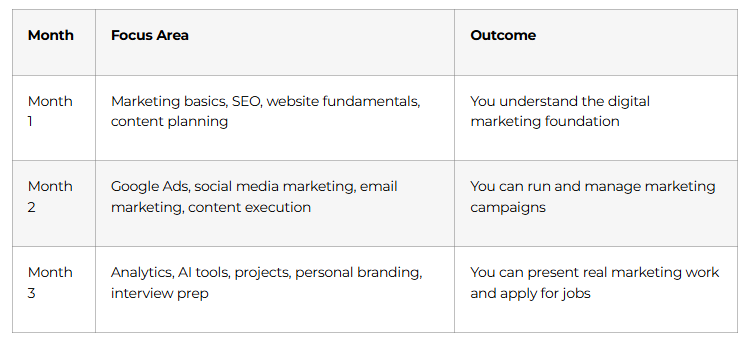
Month 1: Digital Marketing Foundations
Month 1 is all about building the base. If you skip the basics, the advanced channels will feel confusing later. Marketing concepts, SEO, and website fundamentals are the everyday language of digital marketing, so this month gives you the confidence to work on real campaigns.
Week 1: Digital Marketing Basics
Digital marketing is the art and science of promoting products and services online. Learn the difference between organic and paid marketing, understand the customer journey, and study the main channels used in modern marketing. You should also know how brands use websites, search engines, social media, and email together.
- Learn what digital marketing is.
- Understand organic vs. paid marketing.
- Explore the customer journey.
- Study the major digital channels.
- Practice identifying good and bad marketing examples.
Week 2: Website and SEO Fundamentals
SEO is one of the most important parts of digital marketing because it helps websites appear on search engines. Learn how search engines work, what keywords are, and why content structure matters. Also study on-page SEO basics like titles, headings, internal links, and meta descriptions.
SEO Concept | Why It Matters |
Keywords | Match user search intent |
Title Tag | Helps search visibility |
Headings | Organize content clearly |
Internal Links | Improve navigation and topic depth |
Meta Description | Helps improve click-through rate |
Week 3: Content and Copywriting
Content marketing helps brands educate, persuade, and convert audiences. Learn how to write blog posts, landing page copy, social captions, and basic ad copy. Good content should be clear, useful, and aligned with what your audience wants.
- Learn the basics of content strategy.
- Practice writing blog outlines.
- Understand audience pain points.
- Create simple marketing copy.
- Study call-to-action writing.
Week 4: Month 1 Review and Mini Project
By the end of Month 1, you should be able to explain how digital marketing works, identify SEO basics, and write simple content for a brand. Use this week to revise key concepts and build a small project such as a blog content plan for a local business or a simple SEO audit for a sample website.
🔍 what is Digital Marketing ?
Read our How to Become Guide with real examples.
Month 2: Campaigns and Channel Management
Month 2 is where you begin to work like a real digital marketer. You move from theory to campaign execution, channel management, and platform tools. This is the stage where digital marketing starts feeling like a practical job skill instead of a theory subject.
Week 5: Google Ads and Search Marketing
Paid search helps businesses reach people who are actively searching for products or services. Learn campaign structure, keywords, match types, ad copy, and landing page alignment. You should also understand how ad relevance and quality affect performance.
- Learn campaign and ad group structure.
- Understand keyword match types.
- Practice writing search ad copy.
- Review landing page alignment.
- Study quality score basics.
Week 6: Social Media Marketing
Social media marketing helps brands build awareness, community, and engagement. Learn how different platforms work, what type of content performs well, and how to plan a content calendar. This week should also cover paid and organic social strategies.
Platform | Best Use |
Visual brand building and engagement | |
Community and paid reach | |
Professional content and B2B marketing | |
YouTube | Video education and discovery |
Week 7: Email Marketing and Lead Nurturing
Email is still one of the most powerful marketing channels because it supports direct communication and follow-up. Learn how email campaigns work, how subject lines affect opens, and how nurturing sequences guide leads toward action. Also study segmentation and basic automation ideas.
- Learn email list basics.
- Practice subject line writing.
- Understand segmentation.
- Study automated email sequences.
- Review lead nurturing workflows.
Week 8: Content Distribution and Campaign Planning
This week helps you connect all the pieces. Learn how to distribute content across channels and how to plan campaigns around goals like traffic, leads, and conversions. A good marketer does not post randomly; they plan every channel to support the business objective.
Month 3: Analytics, AI, and Career Readiness
Month 3 focuses on making you job-ready. You will combine the channels you learned, measure performance, and prepare projects that you can show employers. A good digital marketing portfolio proves that you can plan, execute, and analyze campaigns, not just memorize terms.
Week 9: Analytics and Tracking
Marketing without analytics is just guessing. Learn website metrics, traffic sources, conversions, engagement, and campaign performance tracking. Understand how to read reports so you can explain what worked and what needs improvement.
- Learn key marketing metrics.
- Understand traffic and conversion sources.
- Study campaign reporting basics.
- Practice reading simple dashboards.
- Review performance patterns and trends.
Week 10: AI Tools in Digital Marketing
AI tools can help marketers create content faster, analyze ideas, and save time on repetitive tasks. Learn how AI supports keyword research, content drafting, social captions, ad ideas, and campaign brainstorming. The key is to use AI as an assistant, not a replacement for strategy.
AI Use Case | Example |
Content Drafting | Write blog outlines faster |
Ad Ideas | Generate headline variations |
SEO Support | Brainstorm keyword clusters |
Social Content | Create caption variations |
Analytics Support | Summarize report insights |
Week 11: Project Building
Use this week to create portfolio projects that prove your skills. Build a sample SEO plan, a Google Ads campaign structure, a social media calendar, or a full digital marketing campaign for a fictional or local business. Make sure each project includes goals, channels, and measurable outcomes.
Week 12: Personal Branding and Interview Prep
The final week should be used for resume building, LinkedIn optimization, mock interviews, and portfolio updates. Focus on explaining your projects clearly because interviewers often care more about your thinking than your memorization. If you are preparing for marketing certifications, this week should include final revision and practice questions.
Digital Marketing Career Paths and Salary Guide
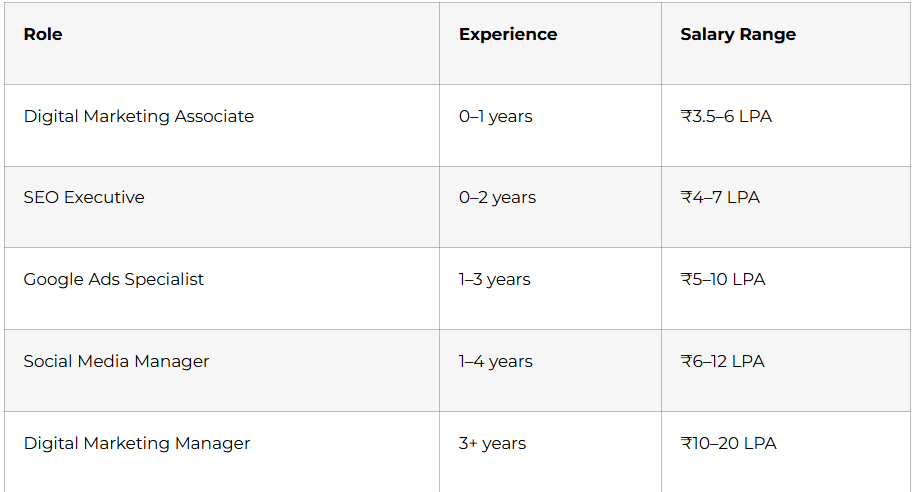
Digital marketing salaries vary by company, city, and specialization, but the field remains one of the most accessible career paths in the online business world. Hyderabad, Bangalore, Pune, Chennai, and Gurgaon are active hiring locations. Candidates who know SEO, ads, content, analytics, and AI tools usually stand out quickly.
Why Choose Frontlines Edutech
Frontlines Edutech helps students learn practical, job-focused skills in a way that feels clear and achievable. The training is designed for beginners who want real marketing understanding, not just theory. Students also benefit from guided learning, interview support, and a roadmap that matches current industry needs.
- Hands-on learning with real projects.
- Beginner-friendly explanations for complex topics.
- Job-focused curriculum with practical outcomes.
- Support for resumes, interviews, and career preparation.
- Training aligned with Indian hiring expectations.
Frequently Asked Questions
🧠 Prepare for Digital Marketing Interviews More Than 200+ real interview questions in our Interview Preparation Guide
Q1. Do I need coding experience to learn digital marketing?
No, you do not need coding experience to start. Basic computer knowledge is enough for the first month, and tools are introduced gradually.
Q2. is the salary for a digital marketing fresher in India?
A digital marketing fresher in India can typically expect around ₹3.5 to ₹6 LPA, depending on the role, company, and skill level. Candidates with projects and certifications can earn more.
Q3. Is digital marketing a good career for beginners?
Yes, digital marketing is a strong career option for beginners because every business needs online visibility. It offers good demand, structured roles, and clear growth paths.
Q4. What will I learn in this 90-day roadmap?
You will learn SEO, Google Ads, social media marketing, content marketing, email marketing, analytics, and AI tools. You will also work on practical projects and interview preparation.
Q5. Can I get a job after learning digital marketing in 90 days?
Yes, you can become job-ready in 90 days if you practice regularly and build projects. A strong portfolio and interview preparation are important for getting shortlisted.
Q6. Does digital marketing use AI tools?
Yes, many marketers now use AI tools for keyword ideas, content drafting, ad copy, and reporting summaries. The important part is to use them with strategy and human judgment.
Q7. What kind of jobs can I apply for after this course?
You can apply for SEO, social media, PPC, content, and digital marketing associate roles. With more experience, you can grow into manager and specialist positions.
Q8. Is digital marketing used in real companies?
Yes, digital marketing is used by startups, agencies, e-commerce brands, and large enterprises to drive traffic, leads, and sales. That is what makes it such a practical career path.
Published by Frontlines Edutech | blog.frontlinesedutech.com
support@frontlinesedutech.com