
How to Become a Web Developer in 2026: Complete Career Guide
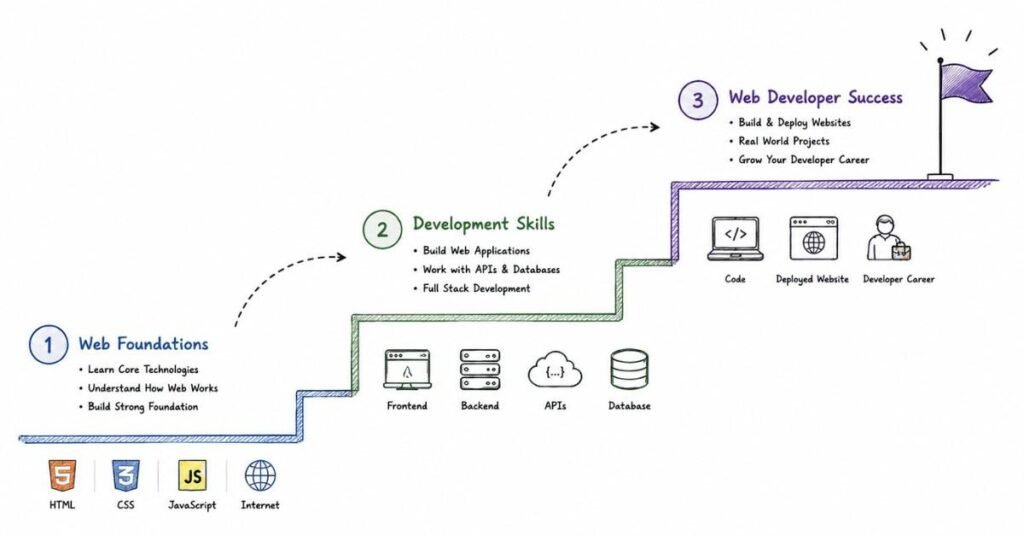
Table of Contents
Web development is one of the most practical and rewarding careers in tech because every business needs websites, web apps, and digital experiences that actually work. If you can learn HTML, CSS, JavaScript, front-end frameworks, back-end logic, databases, and deployment, you can build a strong career in India with solid salary growth and remote opportunities. This guide will show you the exact roadmap to become job-ready in 2026, whether you are a fresher, a student, or someone switching careers.
What a Web Developer Does
A web developer builds websites and web applications that people use every day. The job can include creating layouts, writing interactive features, building APIs, connecting databases, and deploying applications online.
Web development is not just about writing code. It is about turning a business idea into a working digital product that users can access smoothly on phones, tablets, and desktops.
Main responsibilities
- Build responsive and user-friendly web pages.
- Develop front-end and back-end features.
- Connect applications to databases and APIs.
- Test and debug website functionality.
- Optimize performance and user experience.
- Deploy web apps to live servers.
- Work with designers, testers, and product teams.
Why Web Development Is a Smart Career
Web development is a smart career because it has wide demand, clear learning paths, and many entry points. Businesses of every size need websites and applications, so the skill is useful across industries.
The field also suits people who like building things visually and logically at the same time. You can start with simple projects and steadily grow into complex applications.
Why students choose it
- High demand across startups, agencies, and enterprises.
- Beginner-friendly starting point with HTML, CSS, and JavaScript.
- Strong freelance and remote job opportunities.
- Flexible career paths in frontend, backend, and full stack.
- Easy to build a portfolio with real projects.
Web Development Roles Compared
Web development has multiple roles, and each one focuses on a different part of the application.
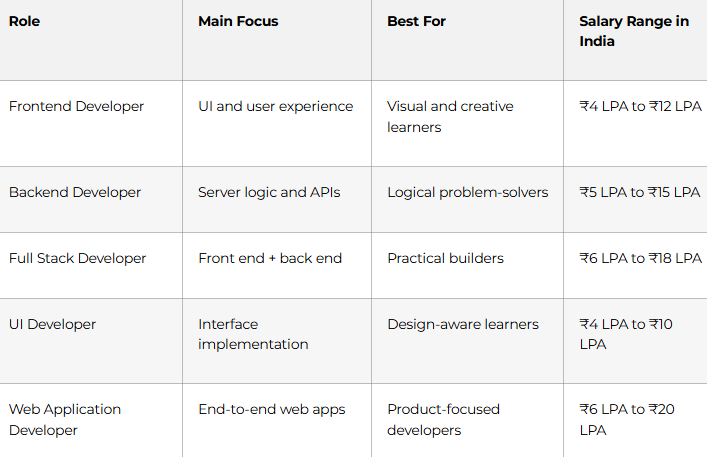
If you are starting out, full stack development is often the most flexible option because it gives you visibility into the complete application flow.
Explore Web Development Career Paths →
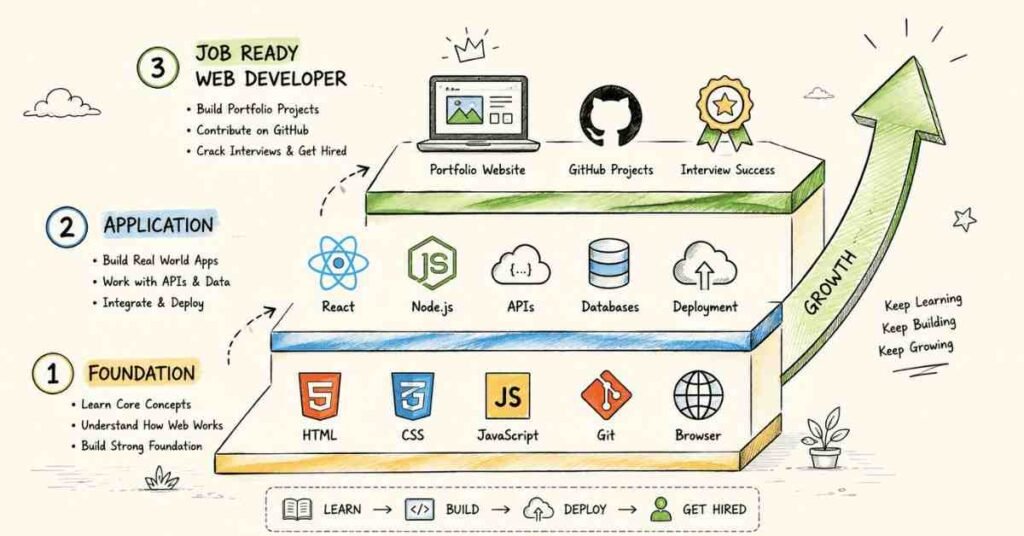
Complete Learning Roadmap
Phase 1: Web Foundations
Before learning frameworks, you need a strong base in the core building blocks of the web. These basics make everything else easier.
Focus on:
- How the internet works.
- HTML structure and semantic tags.
- CSS styling and layouts.
- JavaScript fundamentals.
- Browser behavior.
- Git and GitHub basics.
- Developer tools in the browser.
Phase 2: Front-End Development
Front-end development is the part users see and interact with. This is where you build the visual experience and the interactive flow.
Learn:
- Responsive design.
- Flexbox and Grid.
- JavaScript DOM manipulation.
- Event handling.
- Form validation.
- API calls from the browser.
- React or another modern front-end framework.
Phase 3: Back-End Development
Back-end development handles logic, data, authentication, and server-side processing. This is where your app becomes dynamic and useful.
Learn:
- Server basics.
- REST APIs.
- Authentication and authorization.
- Database operations.
- Request and response flow.
- Error handling.
- Environment variables.
- Deployment basics.
Phase 4: Databases and APIs
Most web applications depend on data. You need to know how to store, retrieve, and manage that data properly.
Learn:
- SQL basics.
- Relational databases.
- Table relationships.
- CRUD operations.
- API integration.
- JSON data structure.
- Pagination and filtering.
- Database design basics.
Phase 5: Deployment and Dev Tools
A web developer should know how to move projects from local machines to live environments. Deployment knowledge helps you stand out in interviews.
Learn:
- Git workflows.
- Hosting and server basics.
- Build and deployment process.
- Domain and DNS basics.
- Environment configuration.
- Performance and debugging tools.
View Web Development Roadmaps →
Frontend, Backend, and Full Stack
A strong web developer should understand how all three areas fit together.
Front-end skills to master
- HTML and semantic structure.
- CSS styling and responsive layouts.
- JavaScript interactions.
- React or similar frameworks.
- API consumption.
- Accessibility basics.
Back-end skills to master
- Server-side logic.
- Database connectivity.
- User authentication.
- API development.
- Security basics.
- Error handling and validation.
Full stack skills to master
- Build the UI.
- Connect to APIs.
- Store data in a database.
- Handle logins and user flows.
- Deploy the complete application.
- Debug both client and server side issues.
Salary Expectations in India
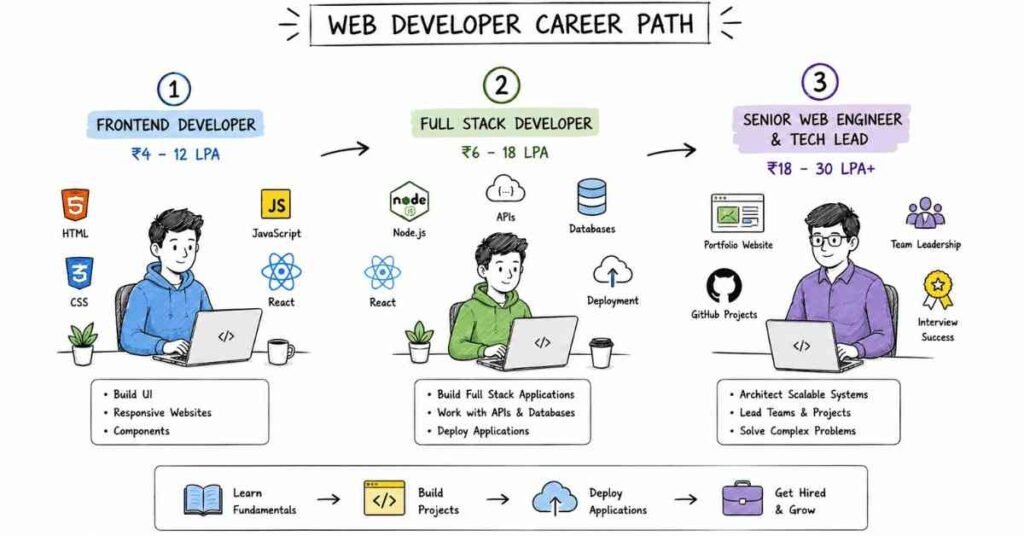
Salary depends on your skill depth, project quality, and the kind of company you join. Developers who can build and deploy complete applications usually grow faster.
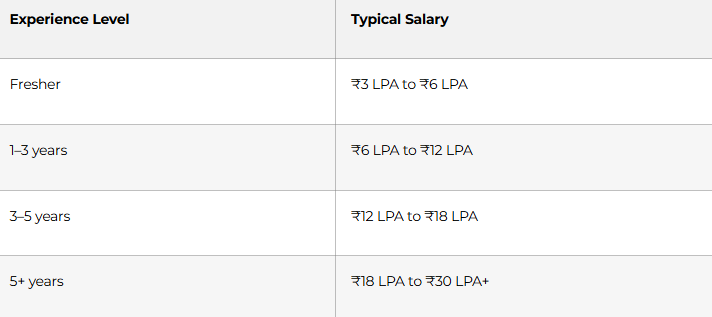
Frontend roles often start slightly lower, while full stack and product-focused roles can grow faster with strong project work.
Portfolio That Gets Interviews
Your portfolio should prove that you can build real websites and applications. Recruiters care more about practical work than theory.
What to include
- Personal portfolio website.
- Responsive landing page.
- Login and signup application.
- CRUD dashboard.
- API-based project.
- Full stack app with deployment link.
- GitHub repository with clear README files.
Portfolio checklist
- Show clean code structure.
- Include screenshots and live links.
- Explain the problem you solved.
- Mention technologies used.
- Add at least one deployed project.
- Keep your repository organized and easy to review.
Strengthen Your Web Development Interview Prep →
Job Search Strategy
If you want to begin now, follow this simple plan.
Week 1
- Learn how the internet and websites work.
- Practice HTML tags.
- Build a basic static page.
- Set up Git and GitHub.
Week 2
- Learn CSS and responsive layouts.
- Practice Flexbox and Grid.
- Create a portfolio section.
- Test your page on mobile and desktop.
Week 3
- Learn JavaScript basics.
- Add interactivity to your page.
- Practice DOM manipulation.
- Start a simple project.
Week 4
- Learn React or backend basics.
- Connect a simple API.
- Deploy one small project.
- Update your resume and LinkedIn profile.
A web developer resume should show both technical ability and practical projects. Employers want to know that you can build useful things and work with real workflows.
Resume keywords
- HTML
- CSS
- JavaScript
- React
- Node.js
- Express
- APIs
- REST
- MongoDB
- MySQL
- Git
- GitHub
- Deployment
Where to apply
- LinkedIn Jobs
- Naukri
- Indeed
- startup career pages
- agency job boards
- internship portals
Interview preparation
Be ready to answer questions like:
- What is the difference between frontend and backend?
- How does a browser render a webpage?
- What is the difference between REST API and GraphQL?
- How do you store and retrieve data from a database?
- How do you make a web app responsive?
- How do you deploy a project?
30-Day Starter Plan
If you want to begin now, follow this simple plan.
Week 1
- Learn how the internet and websites work.
- Practice HTML tags.
- Build a basic static page.
- Set up Git and GitHub.
Week 2
- Learn CSS and responsive layouts.
- Practice Flexbox and Grid.
- Create a portfolio section.
- Test your page on mobile and desktop.
Week 3
- Learn JavaScript basics.
- Add interactivity to your page.
- Practice DOM manipulation.
- Start a simple project.
Week 4
- Learn React or backend basics.
- Connect a simple API.
- Deploy one small project.
- Update your resume and LinkedIn profile.
Why Learn Web Development at Frontlines Edutech
Frontlines Edutech is a practical choice for students and working professionals who want regional support, structured learning, and job-focused training. The best programs combine frontend, backend, project work, and interview preparation in a way that makes job readiness realistic.
What to look for in training
- Strong HTML, CSS, and JavaScript foundation.
- React or backend practice.
- Real project assignments.
- Git and deployment training.
- Resume and interview support.
- Regional-language explanation if needed.
Frequently Asked Questions
Q1.How long does it take to become a web developer?
A.It usually takes 4 to 8 months of consistent learning to become job-ready, depending on your background and how much project work you complete.
Q2.Is web development a good career in India?
A.Yes, it is a strong career because almost every business needs a website or web app. It offers wide job opportunities, freelance work, and remote roles.
Q3.Which skill should I learn first?
A.Start with HTML, CSS, and JavaScript. After that, move into React or backend development depending on the path you choose.
Q4.Do I need coding experience to become a web developer?
A.No, you can start as a beginner. What matters most is regular practice, project building, and consistent learning.
Q5.What is the best specialization for beginners?
A.Frontend development is often the easiest starting point because you can see results quickly. Full stack development is a strong next step if you want broader career options.
Q6.Can I get a job without experience?
A.Yes, if you have a good portfolio, a strong resume, and a few deployed projects. Internships and freelance work can also help.
Q7.Which tools should I learn first?
A.Start with VS Code, Git, GitHub, HTML, CSS, JavaScript, and browser dev tools. Then move to React, Node.js, databases, and deployment tools.
Q8.Is web development remote-friendly?
A.Yes, it is one of the most remote-friendly careers in tech because most work can be done with standard development tools and online collaboration.
Q9.What kind of projects should I show in interviews?
A.Show responsive websites, login systems, dashboards, API integrations, and deployed full stack apps. Employers want proof that you can build complete solutions.