
90-Day System Design Course Roadmap: From Beginner to Job-Ready Engineer
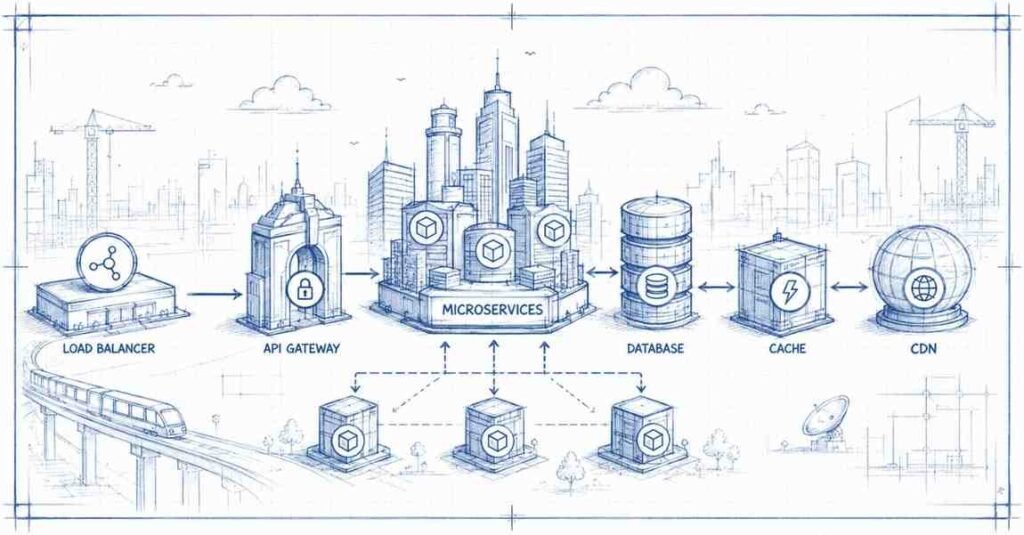
Table of Contents
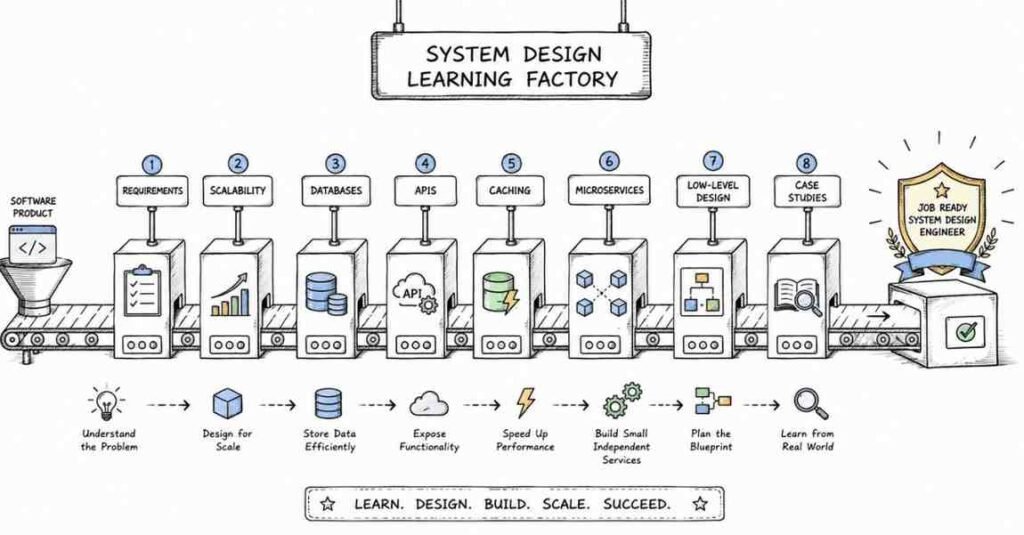
This 90-day system design roadmap is designed to take you from complete beginner to job-ready engineer with a practical, step-by-step plan. You will start with system design fundamentals and requirements gathering, then move into scalability, databases, caching, APIs, distributed systems, low-level design, and interview preparation before finishing with real case studies. The goal is simple: help students in Hyderabad, Telangana, Andhra Pradesh, and across India learn the system design skills that employers actually ask for. System design is in demand because companies need engineers who can build reliable, scalable, and efficient systems. By the end of 90 days, you should be ready to discuss design problems with confidence.
Why System Design Is a Smart Career Choice
System design is one of the most valuable skills in software engineering because every modern product must handle users, traffic, data, and failure gracefully. Companies want engineers who can think beyond code and design systems that stay fast, stable, and cost-effective as they grow. That is why system design is useful across product companies, startups, enterprise teams, and platform engineering roles.
This is also a field where practical understanding matters more than memorizing definitions. If you can explain trade-offs, select the right database, design APIs, and think through scaling issues, you already have what many employers want. That is why this roadmap focuses on hands-on learning from the beginning.
- System design helps engineers build scalable applications.
- It is used across startups, product companies, and enterprise teams.
- Entry-level candidates can grow quickly with strong design thinking.
- The skill set is useful for both freshers and working professionals.
- System design knowledge often leads to strong long-term career growth.
Discover System Design Career All Resources →
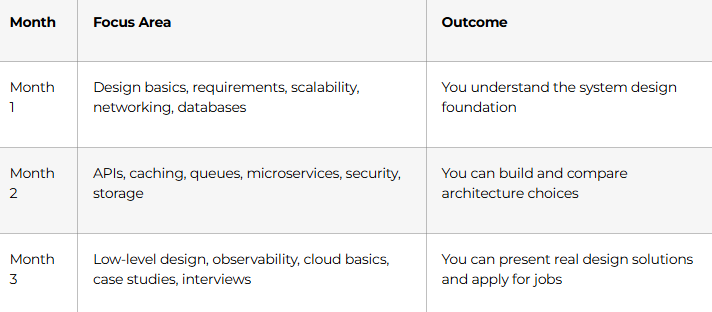
90-Day Learning Plan
Month 1: System Design Foundations
Month 1 is all about building the base. If you skip the basics, the advanced architecture topics will feel confusing later. Requirements, scalability, networking, and database fundamentals are the everyday language of system design, so this month gives you the confidence to work on real problems.
Week 1: What Is System Design?
System design is the process of planning how software should work at scale. Learn the difference between high-level design and low-level design, and understand why architecture decisions matter. You should also know how system design helps teams balance performance, reliability, cost, and maintainability.
- Learn what system design means.
- Understand high-level vs low-level design.
- Explore why architecture decisions matter.
- Study design trade-offs.
- Practice analyzing simple systems.
Week 2: Requirements and Trade-Offs
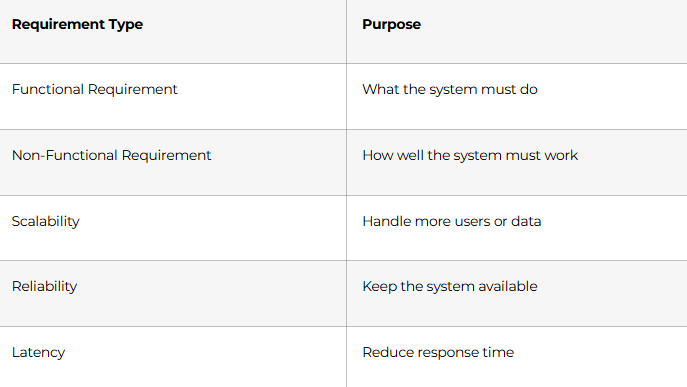
A good design starts with clear requirements. Learn how to separate functional requirements from non-functional requirements and how to ask the right questions before designing a system. This week is important because strong system design begins with understanding what the system must do and how well it must do it.
Week 3: Scalability, Availability, and Reliability
These three ideas appear in almost every system design interview. Learn how to make systems grow without breaking, stay available during failures, and recover quickly when things go wrong. Understanding these ideas helps you design systems that are realistic and production-ready.
- Learn horizontal and vertical scaling.
- Understand availability concepts.
- Study fault tolerance basics.
- Review reliability and redundancy.
- Compare cost versus performance.
Week 4: Networking and Databases
Systems depend on communication and storage. Learn DNS, HTTP/HTTPS, load balancing, and caching basics. Then study databases, including SQL vs NoSQL, indexing, replication, and sharding. By the end of Month 1, you should be able to explain how requests move through a system and where data is stored.
Month 2: Core Architecture Components
Month 2 is where you begin to think like a system designer. You move from basics to the components that power modern applications. This is the stage where system design starts feeling like a practical skill instead of a theory subject.
Week 5: API Design
APIs are how services communicate with each other and with users. Learn REST basics, request methods, status codes, versioning, and clean endpoint structure. Good API design makes systems easier to use, test, and maintain.
- Learn REST API basics.
- Understand GET, POST, PUT, and DELETE.
- Practice response status codes.
- Study versioning ideas.
- Review request and response structure.
Week 6: Caching and Content Delivery
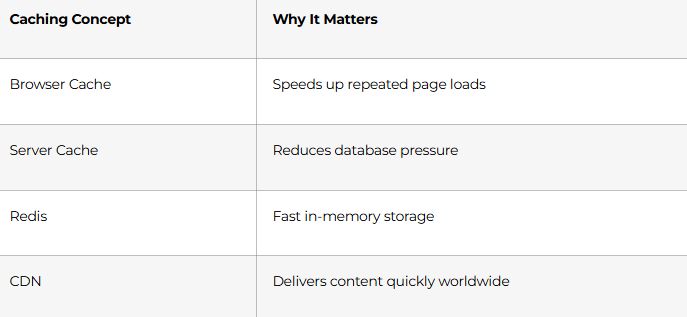
Caching improves speed by storing data closer to the user or reusing recent results. Learn browser caching, server-side caching, Redis basics, and CDN concepts. This week is important because caching is one of the fastest ways to improve performance in a real system.
Week 7: Message Queues and Async Processing
Many systems need to process work in the background instead of immediately. Learn queues, pub-sub, asynchronous processing, and event-driven architecture. This helps you design systems that are smoother, more scalable, and less likely to fail under heavy load.
- Learn why async processing is useful.
- Understand message queues.
- Explore pub-sub communication.
- Study event-driven design.
- Review background job processing.
Week 8: Microservices and Security
Learn the difference between monoliths and microservices, and understand when each approach makes sense. Also study authentication, authorization, OAuth, and basic security thinking. By the end of Month 2, you should be able to compare multiple architecture styles and explain the trade-offs clearly.
Explore the Complete System Design Career Guide →
Month 3: Low-Level Design and Interview Readiness
Month 3 focuses on making you job-ready. You will combine the concepts you learned, practice design patterns, and prepare case studies that you can explain in interviews. A good system design portfolio proves that you can think clearly, organize decisions, and solve real engineering problems.
Week 9: Low-Level Design Basics
Low-level design focuses on classes, objects, interfaces, and relationships inside a system. Learn object-oriented thinking, UML basics, and how to structure code for maintainability. This week is important because many design interviews expect both architecture thinking and code-level clarity.
- Learn object-oriented design basics.
- Understand classes and objects.
- Study interfaces and abstractions.
- Explore UML diagrams.
- Practice structuring simple designs.
Week 10: Design Patterns
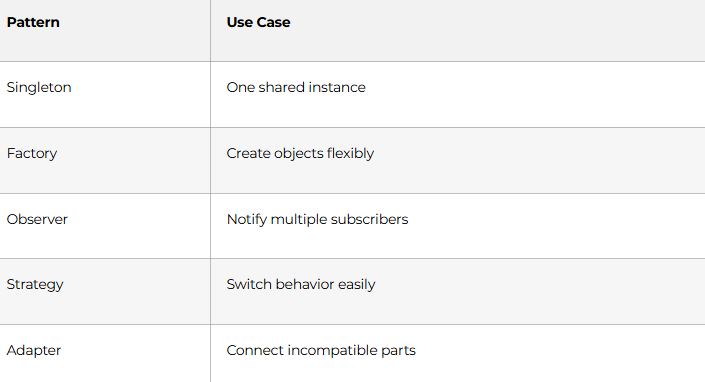
Design patterns help solve common software problems in a reusable way. Learn singleton, factory, observer, strategy, and adapter patterns at a practical level. You do not need to memorize every pattern; you need to understand when a pattern makes a system easier to maintain
Week 11: Observability and Cloud Basics
Modern systems need monitoring and visibility. Learn logging, metrics, alerting, and tracing so you can understand system health. Also study cloud basics like containers, deployment, and infrastructure concepts so you can connect design decisions with real environments.
Week 12: Case Studies and Interview Prep
Use this week to practice complete system design questions. Build designs for a URL shortener, chat app, notification system, file upload platform, or ride-booking flow. Make sure each case study includes requirements, APIs, database choices, caching, scaling, and failure handling.
Crack Your System Design Interviews →
System Design Career Paths and Salary Guide
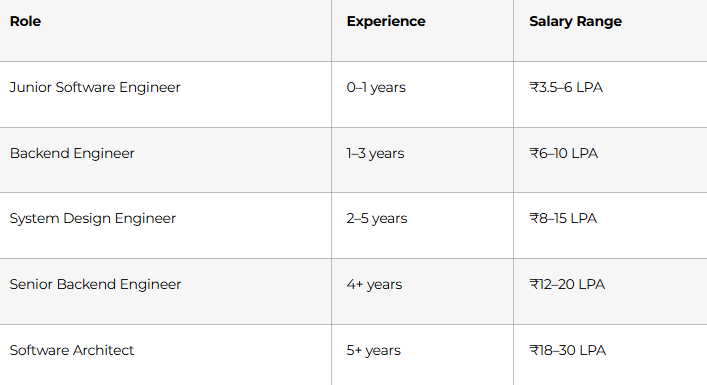
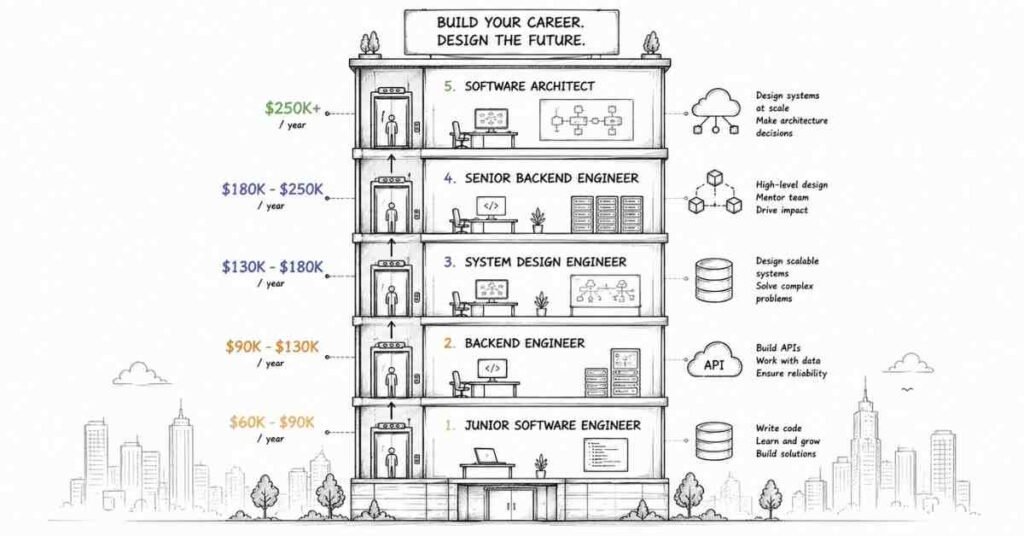
System design salaries vary by company, city, and experience level, but the field remains one of the strongest paths in software engineering. Hyderabad, Bangalore, Pune, Chennai, and Gurgaon are active hiring locations. Candidates who know scalability, APIs, databases, caching, low-level design, and trade-offs usually stand out quickly.
Why Choose Frontlines Edutech?
Frontlines Edutech helps students learn practical, job-focused skills in a way that feels clear and achievable. The training is designed for beginners who want real engineering understanding, not just theory. Students also benefit from guided learning, interview support, and a roadmap that matches current industry needs.
- Hands-on learning with real projects.
- Beginner-friendly explanations for complex topics.
- Job-focused curriculum with practical outcomes.
- Support for resumes, interviews, and career preparation.
- Training aligned with Indian hiring expectations.
Frequently Asked Questions (FAQs)
Q1.Do I need coding experience to learn system design?
A.No, you do not need advanced coding experience to start. Basic programming knowledge is enough for the first month, and design concepts are introduced gradually.
Q2What is the salary for a system design fresher in India?
A.A fresher moving into backend or design-focused roles can typically expect around ₹3.5 to ₹6 LPA, depending on the role, company, and skill level. Candidates with strong projects and communication skills can earn more.
Q3.Is system design a good career for beginners?
A.Yes, system design is a strong skill for beginners because every software product needs scalable architecture. It offers good demand, structured growth, and clear long-term value.
Q4.What will I learn in this 90-day roadmap?
A.You will learn requirements gathering, scalability, networking, databases, APIs, caching, queues, microservices, low-level design, observability, and interview preparation. You will also work on practical case studies and portfolio building.
Q5.Can I get job-ready in system design in 90 days?
A.Yes, you can become job-ready in 90 days if you practice regularly and build case studies. A strong understanding of trade-offs and interview preparation is important for getting shortlisted.
Q6.Does system design use coding heavily?
A.System design is more about architecture, trade-offs, and decision-making than heavy coding. That said, understanding basic code structures, classes, and APIs helps a lot.
Q7.What kind of jobs can I apply for after this course?
A.You can apply for junior software engineer, backend engineer, and design-focused engineering roles. With more experience, you can grow into senior engineer and software architect positions.
Q8.Is system design used in real companies?
A.Yes, system design is used by startups, product companies, and enterprise engineering teams to build reliable and scalable systems. That is what makes it such a practical career path.
Published by Frontlines Edutech | blog.frontlinesedutech.com
support@frontlinesedutech.com